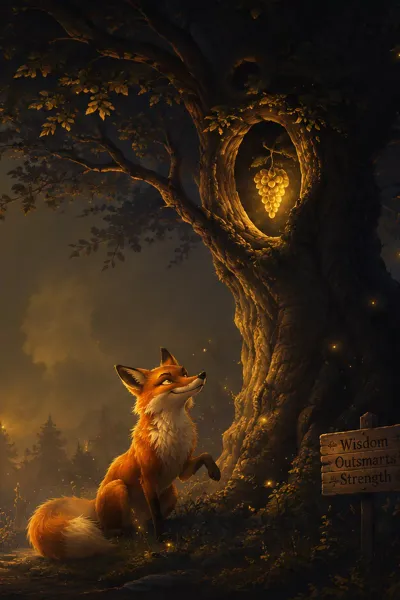
Aesop's Fables in English
Short animal stories, each a few minutes long, where a fox, a crow or a hare gets what its character deserves. The point of each one is stated at the end.
The book is not one story but a collection, and it has no plot running from the first page to the last. Each fable stands alone and can be read in any order, usually in a few minutes. The pattern is nearly always the same: a short setup, one event, a reversal, and a moral. The translation dates from 1912, so the English is slightly formal and old-fashioned in places, but it stays plain. Dialogue is common, since the animals argue, flatter and bargain with each other.
You will like it if
- you want a book you can read ten minutes at a time
- you like stories that get to the point quickly
- you want to meet the originals behind common English sayings
- you want simple vocabulary and lots of repetition of patterns
You will not if
- you want characters you follow over many pages
- you dislike a moral spelled out at the end of every story
- you find animal stories too childish
- you want a modern voice, because this is a 1912 translation
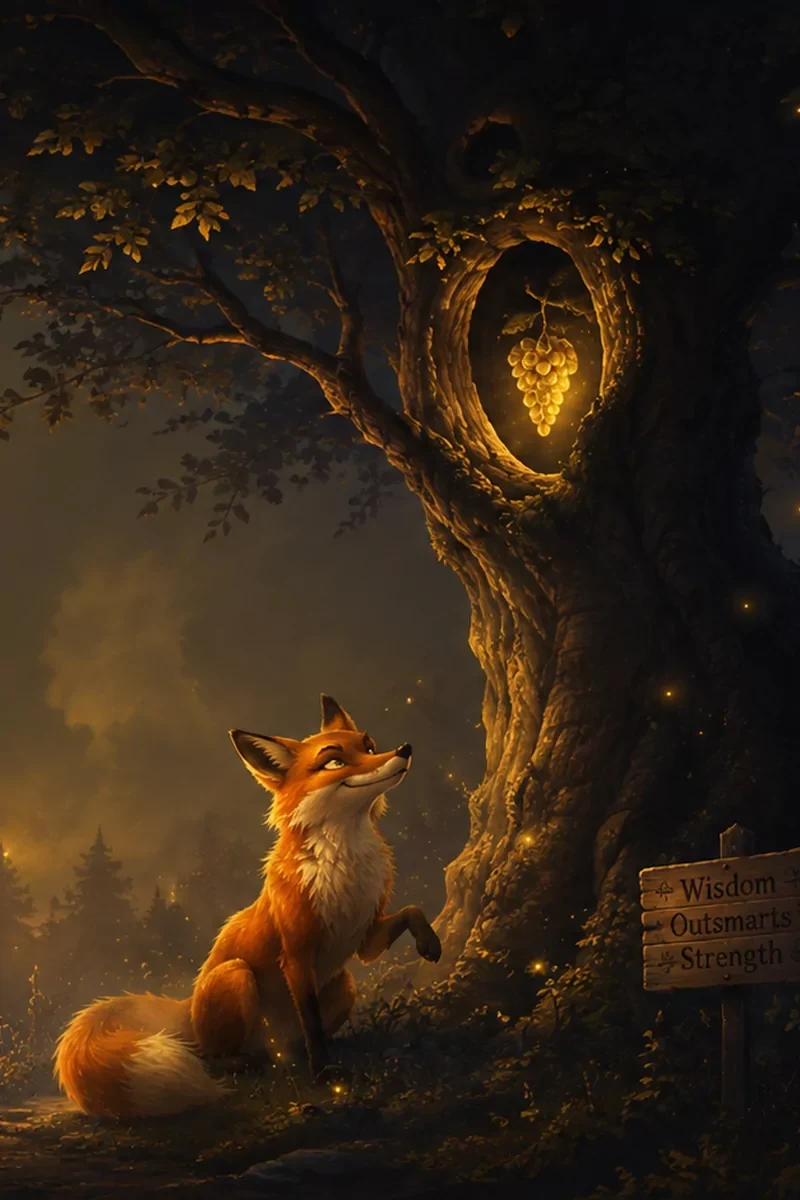
What kind of book“Aesop's Fables” is
Versions of “Aesop's Fables” in English: C1
Same book, adapted to a level you can read without stopping
Pick a version. The bar at the foot of the page opens the one you pick.
Vocabulary by level
- A1 66%
- A2 15%
- B1 8%
- B2 6%
- not in dictionary 2%
A sample from “Aesop's Fables” in English
One passage, the way each version writes it.
Tap any word — we will show the translation
Original · C1.2255 words
Aesop embodies an epigram not uncommon in human history; his fame is all the more deserved because he never deserved it. The firm foundations of common sense, the shrewd shots at uncommon sense, that characterise all the Fables, belong not him but to humanity. In the earliest human history whatever is authentic is universal: and whatever is universal is anonymous. In such cases there is always some central man who had first the trouble of collecting them, and afterwards the fame of creating them. He had the fame; and, on the whole, he earned the fame. There must have been something great and human, something of the human future and the human past, in such a man: even if he only used it to rob the past or deceive the future. The story of Arthur may have been really connected with the most fighting Christianity of falling Rome or with the most heathen traditions hidden in the hills of Wales. But the word “Mappe” or “Malory” will always mean King Arthur; even though we find older and better origins than the Mabinogian; or write later and worse versions than the Idylls of the King. The nursery fairy tales may have come out of Asia with the Indo-European race, now fortunately extinct; they may have been invented by some fine French lady or gentleman like Perrault: they may possibly even be what they profess to be. But we shall always call the best selection of such tales Grimm’s Tales: simply because it is the best collection.
The original language of “Aesop's Fables” and what it gives you
How hard the language is C1.2
The vocabulary is easy: about 66% of the words are in the A1 band and another 15% in A2, and only 4% lie beyond the 5,000 most frequent words. The sentences are the harder part. They average 21.4 words, which is longer than you might expect from such short stories, because the 1912 translation links clauses with commas and semicolons. Together this fits an estimated A2 level for the text, with the sentence length as the thing most likely to slow you down.
What this means in practice: A good first book for a learner, with easy words and an easy shape, once you are used to the slightly long sentences.
What to be ready for
How to read it and not quit
- Read each fable twice: once for the story, once to look at how the long sentences are built from short clauses.
- Watch the articles in the opening lines: a fox in the first mention, the fox after that, since the translation relies on this to track who is who.
- Notice past tenses in sequence (arrived, saw, decided, said) and the pronouns he, she and it for animals, which can be confusing if your first language marks gender differently.
- Look for the moral at the end and try to say it in your own words before you read it, to practise abstract vocabulary.
Contents of “Aesop's Fables” · 285 chapters
- Introductionpage 1
- The Fox and the Grapespage 6
- The Goose That Laid the Golden Eggspage 7
- The Cat and the Micepage 7
- The Mischievous Dogpage 8
- The Charcoal-Burner and the Fullerpage 8
All 285 chaptersShow fewer
- The Mice in Councilpage 8
- The Bat and the Weaselspage 9
- The Dog and the Sowpage 9
- The Fox and the Crowpage 10
- The Horse and the Groompage 10
- The Wolf and the Lambpage 10
- The Peacock and the Cranepage 11
- The Cat and the Birdspage 11
- The Spendthrift and the Swallowpage 11
- The Old Woman and the Doctorpage 12
- The Moon and Her Motherpage 13
- Mercury and the Woodmanpage 13
- The Ass, the Fox, and the Lionpage 14
- The Lion and the Mousepage 15
- The Crow and the Pitcherpage 15
- The Boys and the Frogspage 16
- The North Wind and the Sunpage 16
- The Mistress and Her Servantspage 17
- The Goods and the Illspage 17
- The Hares and the Frogspage 18
- The Fox and the Storkpage 19
- The Wolf in Sheep’s Clothingpage 19
- The Stag in the Ox-Stallpage 19
- The Milkmaid and Her Pailpage 20
- The Dolphins, the Whales, and the Spratpage 21
- The Fox and the Monkeypage 21
- The Ass and the Lapdogpage 22
- The Fir-Tree and the Bramblepage 23
- The Frogs’ Complaint Against the Sunpage 23
- The Dog, the Cock, and the Foxpage 23
- The Gnat and the Bullpage 24
- The Bear and the Travellerspage 24
- The Slave and the Lionpage 25
- The Flea and the Manpage 26
- The Bee and Jupiterpage 27
- The Oak and the Reedspage 27
- The Blind Man and the Cubpage 28
- The Boy and the Snailspage 28
- The Apes and the Two Travellerspage 28
- The Ass and His Burdenspage 29
- The Shepherd’s Boy and the Wolfpage 30
- The Fox and the Goatpage 30
- The Fisherman and the Spratpage 31
- The Boasting Travellerpage 32
- The Crab and His Motherpage 32
- The Ass and His Shadowpage 32
- The Farmer and His Sonspage 33
- The Dog and the Cookpage 33
- The Monkey as Kingpage 34
- The Thieves and the Cockpage 35
- The Farmer and Fortunepage 35
- Jupiter and the Monkeypage 35
- Father and Sonspage 36
- The Lamppage 36
- The Owl and the Birdspage 37
- The Ass in the Lion’s Skinpage 37
- The She-Goats and Their Beardspage 38
- The Old Lionpage 38
- The Boy Bathingpage 39
- The Quack Frogpage 39
- The Swollen Foxpage 39
- The Mouse, the Frog, and the Hawkpage 40
- The Boy and the Nettlespage 40
- The Peasant and the Apple-Treepage 40
- The Jackdaw and the Pigeonspage 41
- Jupiter and the Tortoisepage 42
- The Dog in the Mangerpage 42
- The Two Bagspage 42
- The Oxen and the Axletreespage 42
- The Boy and the Filbertspage 43
- The Frogs Asking for a Kingpage 43
- The Olive-Tree and the Fig-Treepage 44
- The Lion and the Boarpage 44
- The Walnut-Treepage 45
- The Man and the Lionpage 45
- The Tortoise and the Eaglepage 45
- The Kid on the Housetoppage 46
- The Fox Without a Tailpage 46
- The Vain Jackdawpage 47
- The Traveller and His Dogpage 47
- The Shipwrecked Man and the Seapage 47
- The Wild Boar and the Foxpage 48
- Mercury and the Sculptorpage 48
- The Fawn and His Motherpage 49
- The Fox and the Lionpage 49
- The Eagle and His Captorpage 49
- The Blacksmith and His Dogpage 50
- The Stag at the Poolpage 50
- The Dog and the Shadowpage 51
- Mercury and the Tradesmenpage 51
- The Mice and the Weaselspage 52
- The Peacock and Junopage 52
- The Bear and the Foxpage 53
- The Ass and the Old Peasantpage 53
- The Ox and the Frogpage 54
- The Man and the Imagepage 54
- Hercules and the Wagonerpage 55
- The Pomegranate, the Apple-Tree, and the Bramblepage 55
- The Lion, the Bear, and the Foxpage 55
- The Blackamoorpage 56
- The Two Soldiers and the Robberpage 56
- The Lion and the Wild Asspage 57
- The Man and the Satyrpage 57
- The Image-Sellerpage 58
- The Eagle and the Arrowpage 58
- The Rich Man and the Tannerpage 58
- The Wolf, the Mother, and Her Childpage 59
- The Old Woman and the Wine-Jarpage 59
- The Lioness and the Vixenpage 60
- The Viper and the Filepage 60
- The Cat and the Cockpage 60
- The Hare and the Tortoisepage 61
- The Soldier and His Horsepage 61
- The Oxen and the Butcherspage 62
- The Wolf and the Lionpage 62
- The Sheep, the Wolf, and the Stagpage 63
- The Lion and the Three Bullspage 63
- The Horse and His Riderpage 63
- The Goat and the Vinepage 64
- The Two Potspage 64
- The Old Houndpage 64
- The Clown and the Countrymanpage 65
- The Lark and the Farmerpage 66
- The Lion and the Asspage 67
- The Prophetpage 67
- The Hound and the Harepage 67
- The Lion, the Mouse, and the Foxpage 68
- The Trumpeter Taken Prisonerpage 68
- The Wolf and the Cranepage 69
- The Eagle, the Cat, and the Wild Sowpage 69
- The Wolf and the Sheeppage 70
- The Tunny-Fish and the Dolphinpage 70
- The Three Tradesmenpage 71
- The Mouse and the Bullpage 71
- The Hare and the Houndpage 72
- The Town Mouse and the Country Mousepage 72
- The Lion and the Bullpage 73
- The Wolf, the Fox, and the Apepage 73
- The Eagle and the Cockspage 74
- The Escaped Jackdawpage 74
- The Farmer and the Foxpage 74
- Venus and the Catpage 75
- The Crow and the Swanpage 75
- The Stag with One Eyepage 76
- The Fly and the Draught-Mulepage 76
- The Cock and the Jewelpage 77
- The Wolf and the Shepherdpage 77
- The Farmer and the Storkpage 77
- The Charger and the Millerpage 78
- The Grasshopper and the Owlpage 78
- The Grasshopper and the Antspage 79
- The Farmer and the Viperpage 79
- The Two Frogspage 80
- The Cobbler Turned Doctorpage 80
- The Ass, the Cock, and the Lionpage 81
- The Belly and the Memberspage 81
- The Bald Man and the Flypage 82
- The Ass and the Wolfpage 82
- The Monkey and the Camelpage 83
- The Sick Man and the Doctorpage 83
- The Travellers and the Plane-Treepage 84
- The Flea and the Oxpage 84
- The Birds, the Beasts, and the Batpage 85
- The Man and His Two Sweetheartspage 85
- The Eagle, the Jackdaw, and the Shepherdpage 86
- The Wolf and the Boypage 86
- The Miller, His Son, and Their Asspage 87
- The Stag and the Vinepage 88
- The Lamb Chased by a Wolfpage 89
- The Archer and the Lionpage 89
- The Wolf and the Goatpage 90
- The Sick Stagpage 90
- The Ass and the Mulepage 90
- Brother and Sisterpage 91
- The Heifer and the Oxpage 92
- The Kingdom of the Lionpage 92
- The Ass and His Driverpage 93
- The Lion and the Harepage 93
- The Wolves and the Dogspage 93
- The Bull and the Calfpage 94
- The Trees and the Axepage 94
- The Astronomerpage 95
- The Labourer and the Snakepage 95
- The Cage-Bird and the Batpage 96
- The Ass and His Purchaserpage 96
- The Kid and the Wolfpage 97
- The Debtor and His Sowpage 97
- The Bald Huntsmanpage 98
- The Herdsman and the Lost Bullpage 98
- The Mulepage 99
- The Hound and the Foxpage 99
- The Father and His Daughterspage 99
- The Thief and the Innkeeperpage 100
- The Pack-Ass and the Wild Asspage 101
- The Ass and His Masterspage 102
- The Pack-Ass, the Wild Ass, and the Lionpage 102
- The Antpage 103
- The Frogs and the Wellpage 103
- The Crab and the Foxpage 104
- The Fox and the Grasshopperpage 104
- The Farmer, His Boy, and the Rookspage 105
- The Ass and the Dogpage 105
- The Ass Carrying the Imagepage 106
- The Athenian and the Thebanpage 107
- The Goatherd and the Goatpage 107
- The Sheep and the Dogpage 108
- The Shepherd and the Wolfpage 108
- The Lion, Jupiter, and the Elephantpage 109
- The Pig and the Sheeppage 110
- The Gardener and His Dogpage 110
- The Rivers and the Seapage 110
- The Lion in Lovepage 111
- The Beekeeperpage 111
- The Wolf and the Horsepage 112
- The Bat, the Bramble, and the Seagullpage 112
- The Dog and the Wolfpage 113
- The Wasp and the Snakepage 113
- The Eagle and the Beetlepage 114
- The Fowler and the Larkpage 115
- The Fisherman Pipingpage 115
- The Weasel and the Manpage 115
- The Ploughman, the Ass, and the Oxpage 116
- Demades and His Fablepage 116
- The Monkey and the Dolphinpage 117
- The Crow and the Snakepage 117
- The Dogs and the Foxpage 118
- The Nightingale and the Hawkpage 118
- The Rose and the Amaranthpage 118
- The Man, the Horse, the Ox, and the Dogpage 119
- The Wolves, the Sheep, and the Rampage 119
- The Swanpage 120
- The Snake and Jupiterpage 120
- The Wolf and His Shadowpage 120
- The Ploughman and the Wolfpage 121
- Mercury and the Man Bitten by an Antpage 121
- The Wily Lionpage 122
- The Parrot and the Catpage 122
- The Stag and the Lionpage 123
- The Impostorpage 123
- The Dogs and the Hidespage 124
- The Lion, the Fox, and the Asspage 124
- The Fowler, the Partridge, and the Cockpage 125
- The Gnat and the Lionpage 125
- The Farmer and His Dogspage 126
- The Eagle and the Foxpage 126
- The Butcher and His Customerspage 127
- Hercules and Minervapage 128
- The Fox Who Served a Lionpage 128
- The Quack Doctorpage 129
- The Lion, the Wolf, and the Foxpage 129
- Hercules and Plutuspage 130
- The Fox and the Leopardpage 131
- The Fox and the Hedgehogpage 131
- The Crow and the Ravenpage 131
- The Witchpage 132
- The Old Man and Deathpage 132
- The Miserpage 133
- The Foxes and the Riverpage 133
- The Horse and the Stagpage 134
- The Fox and the Bramblepage 135
- The Fox and the Snakepage 135
- The Lion, the Fox, and the Stagpage 135
- The Man Who Lost His Spadepage 137
- The Partridge and the Fowlerpage 138
- The Runaway Slavepage 138
- The Hunter and the Woodmanpage 138
- The Serpent and the Eaglepage 139
- The Rogue and the Oraclepage 139
- The Horse and the Asspage 140
- The Dog Chasing a Wolfpage 140
- Grief and His Duepage 140
- The Hawk, the Kite, and the Pigeonspage 141
- The Woman and the Farmerpage 141
- Prometheus and the Making of Manpage 142
- The Swallow and the Crowpage 142
- The Hunter and the Horsemanpage 142
- The Goatherd and the Wild Goatspage 143
- The Nightingale and the Swallowpage 144
- The Traveller and Fortunepage 144
Reader ratings for “Aesop's Fables”
Nobody has rated it yet. Be the first.
Your rating
Reader reviews of “Aesop's Fables”
No reviews yet.
The story of “Aesop's Fables”
Caxton prints Aesop in English
William Caxton printed an English version of the fables, one of the earliest books of fables to appear in English.
The Vernon Jones translation
V. S. Vernon Jones's plain English retelling appeared in London in 1912, illustrated by Arthur Rackham. The short, clear sentences made it a standard text for readers coming to the fables in English.
A storyteller said to be a slave
Aesop is traditionally placed in ancient Greece, said to have been a slave. The fables were told orally long before anyone wrote them down, and the name came to cover any short animal tale with a moral.
Herodotus, Histories, book 2, mentions Aesop as a slave
Byzantine collection becomes the base text
The monk Maximus Planudes put together a collection of fables around 1300. It was the version most Renaissance printers used when the stories first reached print.
In culture “Aesop's Fables”
9 adaptations and mentions, 1912–1959
Art Rackham's illustrations
Arthur Rackham's drawings for the Vernon Jones text gave the animals their long-lived English look, with gnarled trees and expressive faces.
Film Disney's The Tortoise and the Hare
A Silly Symphony cartoon retelling the race, which won the Academy Award for animated short subjects.
Series Aesop and Son
The Rocky and Bullwinkle Show ran a recurring cartoon segment in which Aesop's son was handed a fable and ended on a pun disguised as a moral.
In the language Sour grapes
From The Fox and the Grapes: a fox who cannot reach the fruit decides it was sour anyway, and the phrase now means pretending you never wanted what you could not get.
In the language Crying wolf
The shepherd boy who raises false alarms is not believed when the wolf finally comes; to cry wolf is to give so many false warnings that a real one is ignored.
In the language The lion's share
In the fable the lion takes nearly everything from a shared hunt, and the phrase now means the largest part of anything.
In the language Slow and steady wins the race
The tortoise beats the hare by never stopping, and the story is still the shorthand for patience beating talent that coasts.
In the language Belling the cat
The mice agree a bell on the cat would save them, but nobody will tie it on; the phrase names a plan that sounds good and that no one will carry out.
In the language A wolf in sheep's clothing
A dangerous creature disguised as a harmless one; people use it for anyone whose friendly manner hides bad intent.
Questions and answers about “Aesop's Fables” in English
Was Aesop a real person?
Probably, but very little is known about him for certain. Ancient Greek writers describe him as a slave who lived around the 6th century BC, and the stories were passed on orally for generations. Many of the fables in collections today were added to his name later.
Which fables are the most famous ones?
The best known include the Tortoise and the Hare, the Fox and the Grapes, the Boy Who Cried Wolf (called the Shepherd's Boy and the Wolf here), and the Ant and the Grasshopper. These are the ones behind phrases such as sour grapes and crying wolf. You can find these classics in the collection.
Did Aesop write the morals at the end of each fable?
Not as a rule. The stories were told aloud first, and the written morals were added by later collectors and translators, so the wording of a moral can change from one edition to the next. The stories themselves are much more stable than the lessons attached to them.
Are Aesop's fables just for children?
No. They became children's reading later, but in ancient Greece they were used by adults to make a point about power, cleverness and greed without naming anyone. Many of them are quite blunt about cruelty, and not every one has a happy ending.
Do I have to read the fables in order?
No. Each fable is complete in itself, so you can open the book anywhere. Characters such as the fox and the lion appear again and again but are not the same person from story to story.
Why do the animals talk and act like people?
It is the whole trick of the form. Using a fox or a crow lets the story be about human faults like vanity or greed without pointing at a real person. The animals also act as quick labels: a lion is strong, a fox is cunning, an ant is hard-working.
Is La Fontaine's version the same as Aesop's?
No. Jean de La Fontaine retold many of the same stories in French verse in the 17th century, adding his own style and humour. If you know his versions, the plots will be familiar, but the English text here is a plain prose translation of the Greek tradition.
Is this a good book for learning English?
Yes, for the vocabulary at least. The words are mostly common ones, each story is short enough to finish in one sitting, and the repeated pattern helps you guess what comes next. The long sentences of the 1912 translation are the main hurdle.
What is the 1912 translation like to read?
It is clear and fairly formal, with the sentence style of an early-20th-century children's book. It sounds slightly old, but it is not hard to follow, and it keeps the dialogue between animals lively.
Will I get bored reading so many similar stories?
If you read the whole book in one go, probably yes, because the fables share a pattern. Most readers dip in a few at a time. Read a handful, then put it down and come back later.
In brief about “Aesop's Fables”
17 fields of imprint data and measured text characteristics. All of it checkable.
- Original title
- Fables · “Aesop's Fables”
- Author
- Aesop
- First published
- 1912
- Original language
- English
- Genre
- Fables & parables · Classics · Animals
- Mood
- Gentle
- Themes
- Society · Greed · Power
- Setting
- Ancient Greece, in a world of farms, fields, forests and rivers where animals talk · Ancient Greece, traditionally the 6th century BC; this English text is a 1912 translation
- Distinct words
- 4,131
- Words per sentence
- 21 words
- Level of the original
- C1.2
- Versions
- C1.2
- Length of the original
- 285 ch. · 39,596 words
- Reading time
- ~3 h 40 min
- Source text
- Standard Ebooks
- Download
- EPUB
Similar what to read after “Aesop's Fables”
Close in spirit
8The same genre and the same register.
Black Beauty
Anna Sewell
C1.4orig.B1
~5 h 30 min · Classics
The Jungle Book
Rudyard Kipling
C1.7orig.
~4 h 40 min · Adventure
The Call of the Wild
Jack London
C2orig.B2C1
~3 h · Adventure

A Little Princess
Frances Hodgson Burnett
C1.4orig.B1
~6 h 10 min · Classics
Alice's Adventures in Wonderland
Lewis Carroll
C1.2orig.B1B2
~2 h 30 min · Classics
Anne of Green Gables
L. M. Montgomery
C1.6orig.B2
~9 h 30 min · Classics
Crime and Punishment
Fyodor Dostoevsky
C1.7orig.C1
~18 h 50 min · Classics
The Picture of Dorian Gray
Oscar Wilde
C1.8orig.B1C1
~7 h 20 min · Gothic & mystery
Book page ≈0.2.0 · Oct 14, 2026