The Picture of Dorian Gray in English
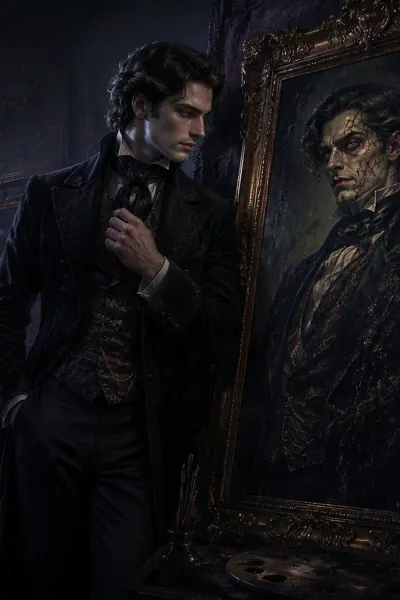
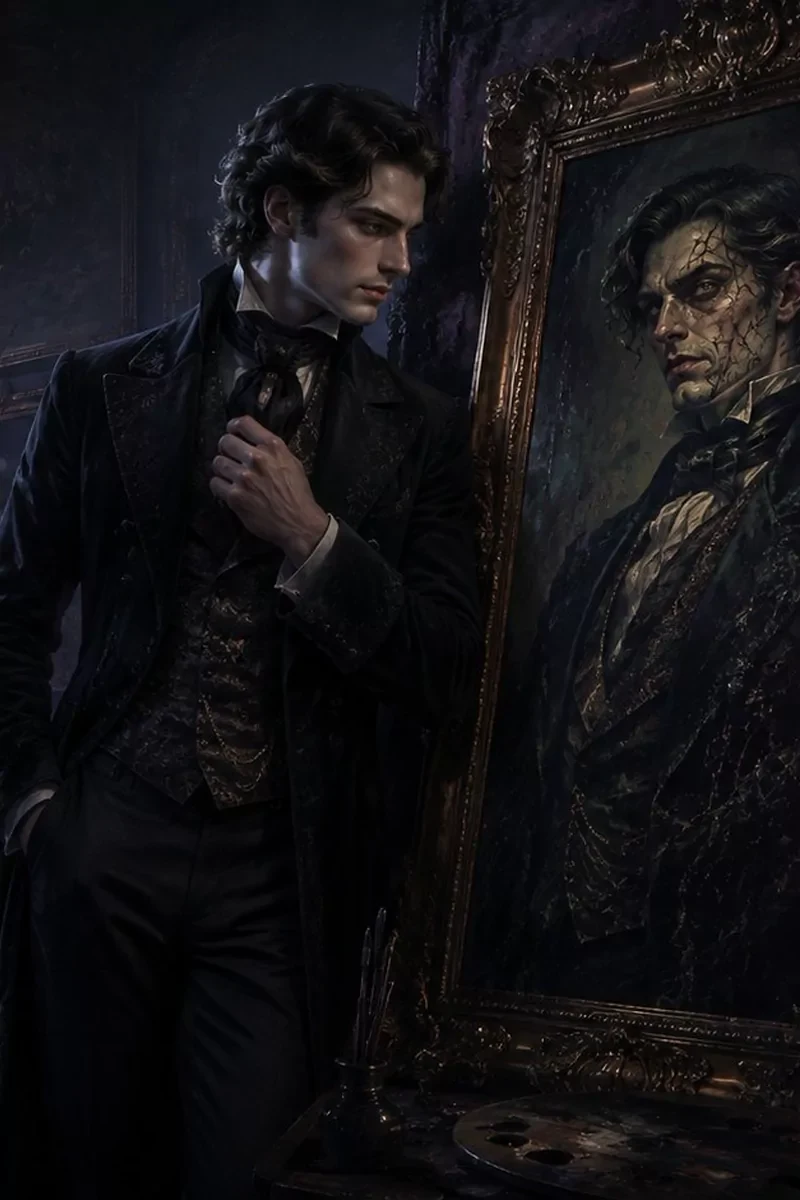
A beautiful young man wishes that his portrait would age in his place, and the wish is granted. From then on nothing he does leaves a mark on his face, only on the canvas.
This is Wilde's only novel, and it reads almost like a play: the first chapters are three men talking in a studio and a garden. After a short, sad love story with a young actress, the book skips over many years in one dense chapter that lists the jewels, perfumes and fabrics Dorian collects. The last part goes back to scenes and turns darker. The dialogue is quick and full of epigrams, short sentences that turn a common idea upside down. The description is rich and visual, all colour, scent and stone, and it sits between very fast conversations.
You will like it if
- you like conversations where every other line is a clever paradox
- you enjoy gothic stories that are about a person's choices, not about monsters
- you want to read the book people quote without having opened it
- you read partly to collect memorable sentences
You will not if
- you want action: most of the middle is talk and description
- you get tired of long lists of jewels, perfumes and fabrics
- you need likable characters: almost nobody stays likable
- you dislike a mood that gets darker as it goes
What kind of book“The Picture of Dorian Gray” is
Versions of “The Picture of Dorian Gray” in English: B1
Same book, adapted to a level you can read without stopping
Pick a version. The bar at the foot of the page opens the one you pick.
Vocabulary by level
- A1 64%
- A2 15%
- B1 8%
- B2 6%
- not in dictionary 3%
A sample from “The Picture of Dorian Gray” in English
One passage, the way each version writes it.
Tap any word — we will show the translation
C1.1184 words
“When America was discovered,” said the Radical member—and he began to give some boring facts. Like all people who try to say everything about a subject, he made his listeners tired. The duchess sighed and used her right to interrupt. “I wish to goodness it never had been discovered at all!” she exclaimed. “Really, our girls have no chance nowadays. It is most unfair.”
“Perhaps, after all, America never has been discovered,” said Mr. Erskine. “I myself would say that it had merely been detected.”
“Oh! but I have seen some of the people who live there,” answered the duchess vaguely. “I must confess that most of them are extremely pretty. And they dress well, too. They get all their dresses in Paris. I wish I could afford to do the same.”
“They say that when good Americans die they go to Paris,” laughed Sir Thomas. He had many old jokes, like a large wardrobe of clothes that Humour had thrown away.
“Really! And where do bad Americans go to when they die?” inquired the duchess.
“They go to America,” murmured Lord Henry.
B1.8182 words
“When America was found,” said Sir Thomas Burdon. And he began to give some long, dull facts. He was like all people who try to say all. So he tired the people who heard him. The Duchess of Harley breathed sadly and used her right to stop him. “I wish it had never been found at all!” she cried. “Really, our girls have no chance now. It is most unfair.”
“Perhaps America was never found at all,” said Mr. Erskine. “I myself would say it was only seen.”
“Oh! I have seen some of them. They live there,” answered the Duchess of Harley. She spoke not clearly. “I must say most of them are very pretty. And they dress well, too. They get all their dresses in Paris. I wish I could pay for the same.”
“They say that when nice Americans die they go to Paris,” laughed Sir Thomas. He had a large store of old, used jokes.
“Really! And where do bad Americans go when they die?” asked the Duchess of Harley.
“They go to America,” said Lord Henry softly.
The original language of “The Picture of Dorian Gray” and what it gives you
How hard the language is C1.8
The sentences are not long: 12.4 words on average. About 79% of the words come from the A1–A2 band (64% + 15%) and only 5% lie beyond the 5,000 most frequent words, so single words are rarely the problem. Even so, our measurement puts the original at C1.8, and the reason is something else: dense paradoxes in the dialogue, ornate descriptive passages, and quotations and borrowed phrases from other languages. Only 3% of the words fall outside the dictionary, so there is very little dialect to fight with. This is why we offer adaptations at B1 and B2.
What this means in practice: Easy words, hard ideas: a book to read for its sentences more than for its speed.
What to be ready for
How to read it and not quit
- Read Lord Henry's paradoxes slowly: when a sentence says the opposite of common sense, that is the joke, not a mistake in your reading.
- Do not copy the minor characters' speech: 'ain't' and 'egad' belong to those voices, not to standard English.
- Watch British 'quite' and 'rather': 'quite' can mean 'completely' or only 'fairly', depending on the word after it, and in the dialogue 'shall' is used where we would usually say 'will' today.
- In the long descriptions, find the main verb first; the stacked adjectives and noun phrases around it are decoration.
Contents of “The Picture of Dorian Gray” · 21 chapters
- Prefacepage 1
- Ipage 2
- I (continued)page 12
- IIpage 21
- II (continued)page 32
- IIIpage 41
All 21 chaptersShow fewer
- III (continued)page 51
- IVpage 58
- IV (continued)page 69
- Vpage 78
- V (continued)page 87
- VIpage 94
- VIIpage 104
- VII (continued)page 112
- VIIIpage 121
- VIII (continued)page 130
- IXpage 139
- IX (continued)page 146
- Xpage 153
- XIpage 165
- XI (continued)page 173
- XI (continued)page 183
- XIIpage 192
- XIIIpage 202
- XIVpage 211
- XIV (continued)page 220
- XVpage 227
- XVIpage 239
- XVIIpage 250
- XVIIIpage 257
- XIXpage 269
- XIX (continued)page 276
- XXpage 282
Reader ratings for “The Picture of Dorian Gray”
Nobody has rated it yet. Be the first.
Your rating
Reader reviews of “The Picture of Dorian Gray”
No reviews yet.
The story of “The Picture of Dorian Gray”
Serialised in Lippincott's Monthly Magazine
The novel first appeared in the July 1890 issue of the magazine in thirteen chapters, to hostile reviews that called it immoral.
Lippincott's Monthly Magazine, July 1890
Expanded book edition with a preface
Wilde added chapters and the famous preface about art for the book edition issued by Ward, Lock and Co. in 1891.
Used against Wilde in court
During his libel case against the Marquess of Queensberry, Wilde was cross-examined about the novel, which was then cited as evidence of immorality.
MGM film
Albert Lewin's film brought the story to a wide new audience and won the Academy Award for cinematography.
In culture “The Picture of Dorian Gray”
8 adaptations and mentions, 1890–2014
In the language "A Dorian Gray"
Someone who seems never to age or to pay for their excesses, while the cost is hidden somewhere out of sight.
In the language "The only way to get rid of a temptation is to yield to it"
Lord Henry's line is among the most-quoted Wilde epigrams about temptation.
In the language "All art is quite useless"
The closing line of Wilde's preface became a slogan of the aesthetic movement and of art for art's sake.
Film The Picture of Dorian Gray (MGM)
The most celebrated screen version, with colour inserts of the portrait in an otherwise black-and-white film.
Art The League of Extraordinary Gentlemen
Alan Moore's comic series put Dorian Gray among its cast of literary characters.
Film Dorian Gray (2009)
A British film version with Ben Barnes in the title role.
Series Penny Dreadful
The television series made Dorian Gray one of its Victorian-monster ensemble.
Art Ivan Albright's portrait of the aged Dorian
The painter Ivan Albright made the decayed portrait used in the 1945 film, now a famous work in its own right.
Questions and answers about “The Picture of Dorian Gray” in English
Is The Picture of Dorian Gray based on a true story?
No, the story is invented. The idea behind it, a man who gives up something of himself to stay young, is old and is often compared to Faust. Wilde set it in the London of his own day, among arguments about art and pleasure.
Was Dorian Gray banned?
It was a scandal rather than a ban. When it first appeared in 1890, many reviewers called it immoral, and Wilde answered them and added a preface for the book edition. It was also quoted against him at his trial in 1895.
Is Dorian Gray a vampire?
No. He is an ordinary man whose face stays young while his portrait takes the damage, and there is no blood-drinking or supernatural creature in the book. The only magic is in the picture, and Wilde never explains how it works.
What happens to the portrait in Dorian Gray?
It changes in Dorian's place: it takes on the age and the marks of the way he lives while he stays young. He hides it, and hiding it becomes part of the plot. Wilde keeps the reader close to Dorian's fear of what the picture shows.
Is 'the only way to get rid of a temptation is to yield to it' really in the book?
Yes, Lord Henry says it early on, in his first conversations with Dorian. Another line people credit to Wilde, 'I can resist everything except temptation', is from his play Lady Windermere's Fan.
How different are the Dorian Gray films from the book?
Quite different in feel: the book is mostly conversation and description, while films tend to make the portrait the centre of a horror story. They also have to cut the long talk and squeeze the years together, so they lose much of Lord Henry. What you get in print is a social comedy that turns dark.
Is Dorian Gray Oscar Wilde's only novel?
Yes. His fame otherwise rests on plays such as The Importance of Being Earnest, plus stories, poems and essays.
What makes Dorian Gray hard to read?
The style, more than the vocabulary: the conversations are packed with paradoxes and the descriptions pile up detail. Readers most often slow down in the middle, where one long chapter lists Dorian's collections of jewels, perfumes and fabrics, but the story picks up speed again after it.
Do I need to know anything before reading Dorian Gray?
No, it stands alone, and Wilde gives you the background you need through the talk. One thing helps: Lord Henry's brilliant speeches are a character's voice, and the book shows where that voice leads.
Why is Dorian Gray taught in school?
It packs big topics into a short, readable story: vanity, the chase after pleasure, the gap between a public face and a private life, and the Victorian argument about art and morals. It is also a good example of Wilde's style, which students can quote.
In brief about “The Picture of Dorian Gray”
17 fields of imprint data and measured text characteristics. All of it checkable.
- Original title
- The Picture of Dorian Gray
- Author
- Oscar Wilde
- First published
- 1890
- Original language
- English
- Genre
- Gothic & mystery · Classics · Philosophy
- Mood
- Dark
- Themes
- Guilt · Identity · Society
- Setting
- London: the studios and drawing rooms of the rich, and the poor streets near the docks · Late Victorian England, around 1890
- Distinct words
- 6,526
- Words per sentence
- 12 words
- Level of the original
- C1.8
- Versions
- C1.8, C1.1, B1.8
- Length of the original
- 30 ch. · 79,055 words
- Reading time
- ~7 h 20 min
- Source text
- Standard Ebooks
- Download
- EPUB
Similar what to read after “The Picture of Dorian Gray”
Close in spirit
8The same genre and the same register.
Crime and Punishment
Fyodor Dostoevsky
C1.7orig.C1
~18 h 50 min · Classics
Dracula
Bram Stoker
C1.8orig.B1B2
~14 h 50 min · Gothic & mystery
The Hound of the Baskervilles
Arthur Conan Doyle
C1.9orig.B1C1
~5 h 30 min · Detective
A Christmas Carol
Charles Dickens
C2orig.B1C1
~2 h 40 min · Classics
Frankenstein
Mary Shelley
C2orig.B1C1
~7 h 10 min · Gothic & mystery
Heart of Darkness
Joseph Conrad
C2orig.
~3 h 30 min · Adventure
Jane Eyre
Charlotte Brontë
C2orig.B1C1
~17 h 20 min · Classics
Strange Case of Dr Jekyll and Mr Hyde
Robert Louis Stevenson
C2orig.B1C1
~2 h 20 min · Gothic & mystery
Book page ≈0.2.0 · Oct 14, 2026