The Secret Garden in English
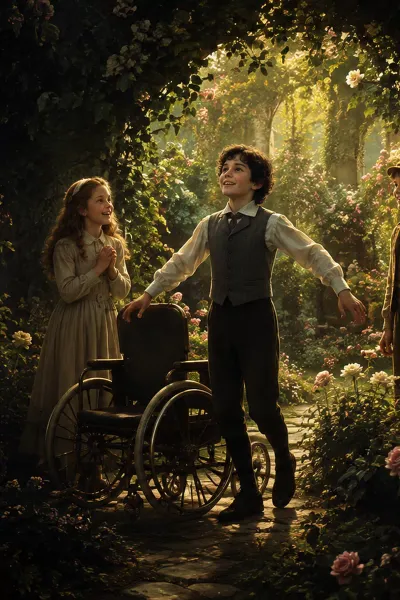
A lonely girl is sent to a big house on the Yorkshire moors and finds a garden that has been locked up for ten years.
The story starts in India with a short, bleak opening, then moves to the moors, where nearly everything happens. It follows Mary's slow change through ordinary days: lessons, walks outside, meals and conversations with the servants. There are three main children and one unnamed garden, and the plot grows as the garden does. The narration is plain and warm, with clear descriptions of weather, plants and animals. Some characters speak with a Yorkshire accent, written as it sounds.
You will like it if
- you like quiet, gentle stories about nature and recovery
- you want clear descriptions and everyday vocabulary
- you enjoy a character who changes slowly and believably
- you are interested in how a place and friendship can help someone get better
You will not if
- you want fast plots; the pace is slow, especially in the middle
- you dislike spiritual or self-help ideas, because the book talks about positive thinking and a kind of Magic
- you find the opening chapters in India uncomfortable, because they reflect the colonial attitudes of the time
- you struggle with spelled-out dialect, as the Yorkshire speech takes a few pages to decode
What kind of book“The Secret Garden” is
Versions of “The Secret Garden” in English: B1
Same book, adapted to a level you can read without stopping
Pick a version. The bar at the foot of the page opens the one you pick.
Vocabulary by level
- A1 66%
- A2 15%
- B1 7%
- B2 6%
- not in dictionary 3%
A sample from “The Secret Garden” in English
One passage, the way each version writes it.
Tap any word — we will show the translation
Original · C1.2337 words
There Is No One Left
When Mary Lennox was sent to Misselthwaite Manor to live with her uncle everybody said she was the most disagreeable-looking child ever seen. It was true, too. She had a little thin face and a little thin body, thin light hair and a sour expression. Her hair was yellow, and her face was yellow because she had been born in India and had always been ill in one way or another. Her father had held a position under the English Government and had always been busy and ill himself, and her mother had been a great beauty who cared only to go to parties and amuse herself with gay people. She had not wanted a little girl at all, and when Mary was born she handed her over to the care of an Ayah, who was made to understand that if she wished to please the Mem Sahib she must keep the child out of sight as much as possible. So when she was a sickly, fretful, ugly little baby she was kept out of the way, and when she became a sickly, fretful, toddling thing she was kept out of the way also. She never remembered seeing familiarly anything but the dark faces of her Ayah and the other native servants, and as they always obeyed her and gave her her own way in everything, because the Mem Sahib would be angry if she was disturbed by her crying, by the time she was six years old she was as tyrannical and selfish a little pig as ever lived. The young English governess who came to teach her to read and write disliked her so much that she gave up her place in three months, and when other governesses came to try to fill it they always went away in a shorter time than the first one. So if Mary had not chosen to really want to know how to read books she would never have learned her letters at all.
B1.7227 words
There Is No One Left
When Mary Lennox went to live with her uncle at Misselthwaite Manor, everyone said she was the most disagreeable child they had ever seen. She had a thin face, a thin body, thin yellow hair, and a sour look. She was born in India and was often ill. Her father worked for the English government and was always busy and ill. Her mother was a beautiful woman who only wanted to go to parties and have fun. She did not want a little girl. When Mary was born, she gave her to an Ayah. The Ayah had to keep Mary out of sight. So Mary grew up as a sickly, ugly baby. She only saw the dark faces of her Ayah and the other servants. They always obeyed her because her mother did not want to hear her cry. By the time she was six, she was a selfish and tyrannical child. The English governess who came to teach her hated her and left after three months. Other governesses came and went even faster. If Mary had not wanted to read books, she would never have learned her letters.
One very hot morning, when she was about nine years old, she woke up feeling very angry. She became angrier when she saw that the servant by her bed was not her Ayah.
The original language of “The Secret Garden” and what it gives you
How hard the language is C1.2
This is one of the gentler classics to start with. The average sentence is only 14.3 words, 66% of the words are A1 and a further 15% are A2, just 4% are beyond the 5,000 most frequent words, and 3% are not in the dictionary. Our estimate for the original, which is not a measurement, is B1, and we ship an adaptation at A2. The main obstacle is the Yorkshire speech of some characters, together with some period vocabulary for plants and gardening.
What this means in practice: A gentle, readable classic with a slow pace; the dialect is the only real hurdle.
What to be ready for
How to read it and not quit
- Don't try to learn the Yorkshire forms as normal English: ‘tha'’ and ‘thee’ are local words for ‘you’.
- Notice the many verbs of weather and movement (blow, creep, push, bloom), which carry much of the description.
- Watch how reported speech and direct speech alternate, and try to follow who is speaking before you read the tag.
- If the dialect slows you down, read Martha's lines twice: the second time, the sounds usually make the words clear.
Contents of “The Secret Garden” · 27 chapters
- Ipage 1
- IIpage 4
- IIIpage 12
- IVpage 17
- IV (continued)page 27
- Vpage 32
All 27 chaptersShow fewer
- VIpage 38
- VIIpage 45
- VIIIpage 50
- IXpage 58
- Xpage 67
- XIpage 77
- XIIpage 86
- XIIIpage 95
- XIII (continued)page 109
- XIVpage 110
- XVpage 122
- XVIpage 131
- XVIIpage 138
- XVIIIpage 144
- XIXpage 150
- XXpage 161
- XXIpage 168
- XXIIpage 178
- XXIIIpage 183
- XXIII (continued)page 194
- XXIVpage 194
- XXVpage 206
- XXVIpage 211
- XXVIIpage 219
- XXVII (continued)page 228
Reader ratings for “The Secret Garden”
Nobody has rated it yet. Be the first.
Your rating
Reader reviews of “The Secret Garden”
No reviews yet.
The story of “The Secret Garden”
Serialised
The story first ran in a magazine, The American Magazine, from late 1910 into 1911.
Published as a book
It came out as a book in 1911 in the United States and Britain, with illustrations by Maria Louise Kirk in the American edition.
A real walled garden
Burnett rented Great Maytham Hall in Kent for some years before writing the book, and its walled rose garden is traditionally named as the model for Mary's garden.
Healing ideas
Burnett was interested in New Thought and Christian Science, and the book's "Magic" and its idea that thoughts shape health reflect that interest.
In culture “The Secret Garden”
8 adaptations and mentions, 1911–2020
In the language "Secret garden"
The title became a standard phrase for a private hidden place where someone finds peace or heals.
Film The Secret Garden (MGM)
MGM's 1949 film with Margaret O'Brien shifts from black and white to colour when Mary enters the garden.
Art Tasha Tudor's illustrated edition
Tudor's 1962 illustrations became one of the best-known visual versions of the Yorkshire garden.
Series BBC serial
The BBC adapted the book as a television serial in 1975.
Film The Secret Garden (Hallmark)
A Hallmark Hall of Fame television film with Gennie James and Derek Jacobi.
Stage The Secret Garden (Broadway)
The Broadway musical with a score by Lucy Simon opened in 1991.
Film The Secret Garden (Agnieszka Holland)
The 1993 film is a faithful, atmospheric version often regarded as the best-known screen adaptation.
Film The Secret Garden (2020)
A British adaptation with Colin Firth brought the story to a new generation.
Questions and answers about “The Secret Garden” in English
Is The Secret Garden a children's book?
Yes, it was written about children and is often read by them, but adults read it too. The story is simple on the surface and quietly serious underneath.
What is wrong with Colin?
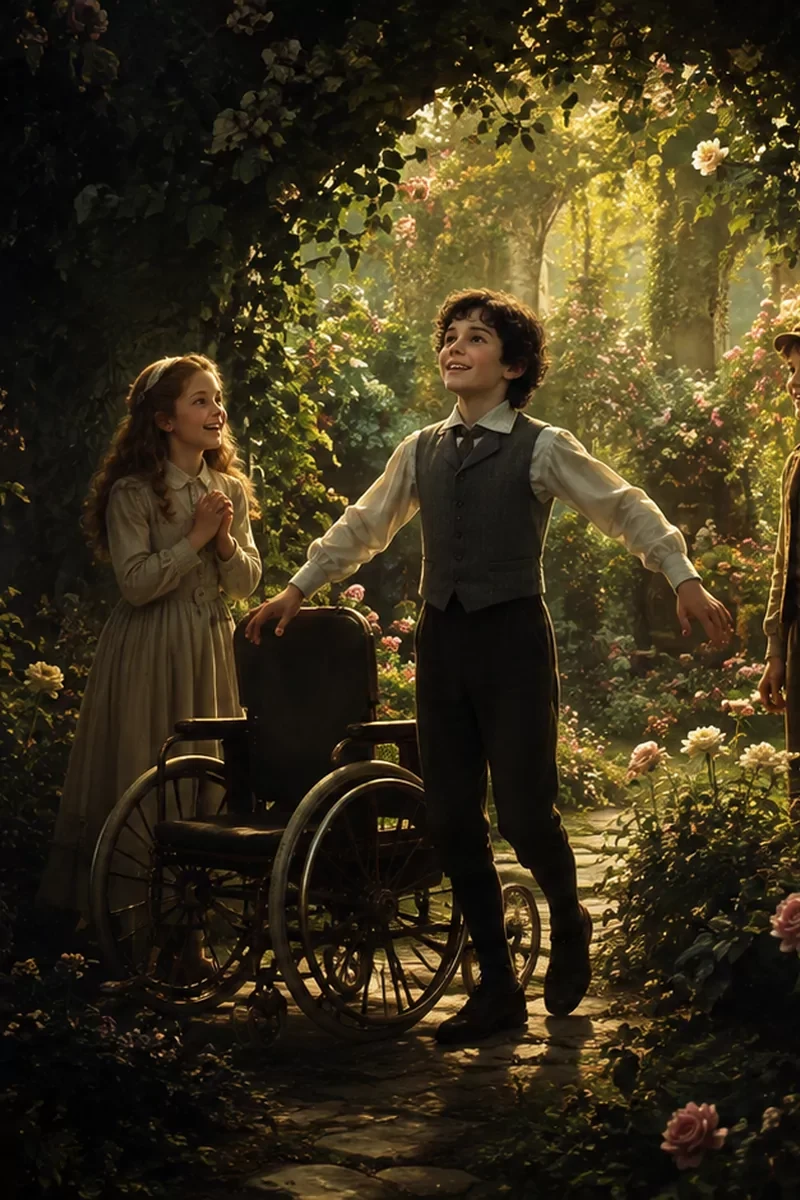
Colin is Mary's cousin, a boy who has been kept in bed all his life because everyone, including him, believes he is ill and will die young. Part of the book is about whether the belief or the illness is the real problem.
What does the robin do in the story?
The robin leads Mary to the place where the garden key is buried and she finds the door soon after. It is the first friendly creature she meets, and it starts her change.
Is The Secret Garden based on a real garden?
The garden is invented, but it is often said to have been inspired by the walled rose garden at Great Maytham Hall in Kent, where Burnett lived for some years. She was a keen gardener.
What is the ‘Magic’ in the book?
Colin and Mary use the word for a force that makes things grow and people get better. The book never says exactly what it is, so you can read it as nature, belief or something more.
Why is Mary so unpleasant at the start?
Mary has been neglected in India by parents who ignored her and servants who obeyed her every wish. Burnett makes this the cause of her temper, which is why her change is the centre of the story.
Which film version is closest to the book?
The 1993 film directed by Agnieszka Holland is usually recommended. Like most films it compresses the long middle part, but it keeps the garden, the three children and the mood.
Do I need to understand the Yorkshire dialect?
Not completely. You can follow the story without every word, because the context makes most of it clear, and there are only a few dialect words that return often, such as ‘tha'’ for ‘you’.
Is The Secret Garden a good book for learners of English?
Yes, it is one of the easier classic novels. The sentences are short, the vocabulary repeats, and the story is gentle, though the slow pace and the dialect can tire you in the middle.
In brief about “The Secret Garden”
17 fields of imprint data and measured text characteristics. All of it checkable.
- Original title
- The Secret Garden
- Author
- Frances Hodgson Burnett
- First published
- 1911
- Original language
- English
- Genre
- Classics · Adventure
- Mood
- Gentle
- Themes
- Nature · Childhood · Friendship · Home
- Setting
- Misselthwaite Manor on the Yorkshire moors, England, after an opening in British India · The early twentieth century
- Distinct words
- 4,834
- Words per sentence
- 14 words
- Level of the original
- C1.2
- Versions
- C1.2, B1.7
- Length of the original
- 31 ch. · 80,949 words
- Reading time
- ~7 h 30 min
- Source text
- Standard Ebooks
- Download
- EPUB
Similar what to read after “The Secret Garden”
By the same author
1The same hand, a different story.
Close in spirit
7The same genre and the same register.
Alice's Adventures in Wonderland
Lewis Carroll
C1.2orig.B1B2
~2 h 30 min · Classics
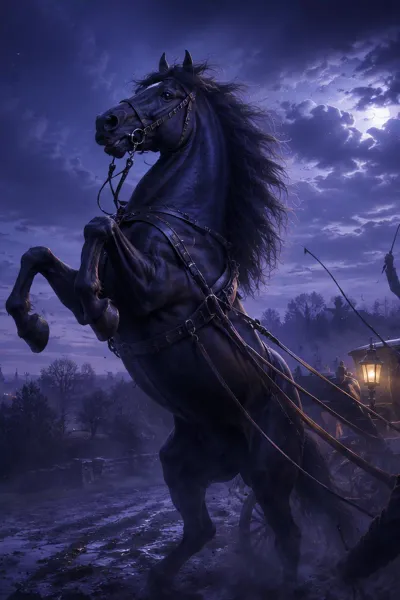
Black Beauty
Anna Sewell
C1.4orig.B1
~5 h 30 min · Classics
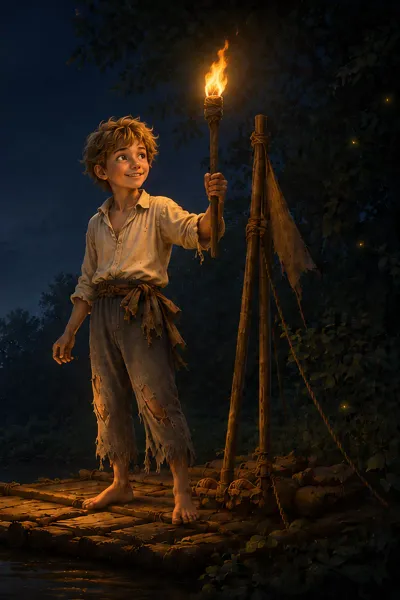
Adventures of Huckleberry Finn
Mark Twain
C1.6orig.B1
~10 h 20 min · Adventure
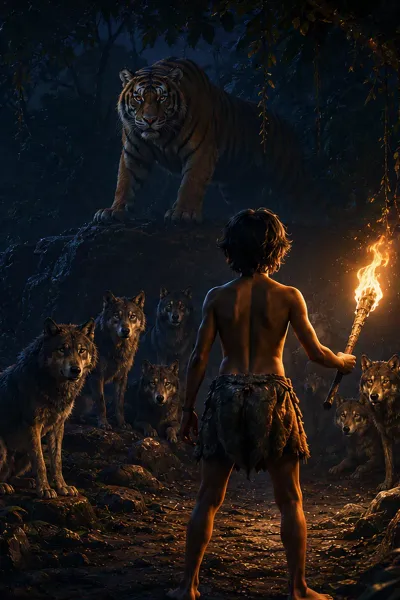
The Jungle Book
Rudyard Kipling
C1.7orig.
~4 h 40 min · Adventure
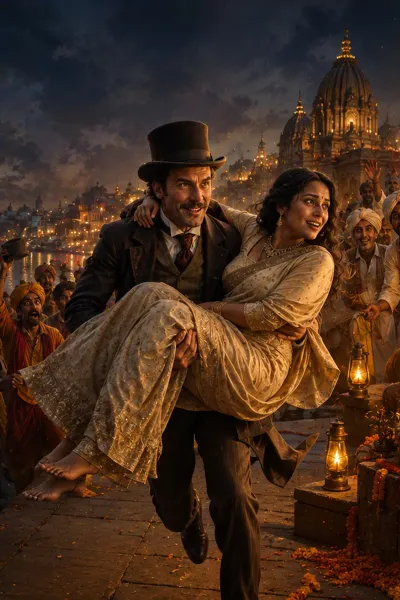
Around the World in Eighty Days
Jules Verne
C2orig.C1
~5 h 50 min · Adventure
The Call of the Wild
Jack London
C2orig.B2C1
~3 h · Adventure
Heart of Darkness
Joseph Conrad
C2orig.
~3 h 30 min · Adventure
Book page ≈0.2.0 · Oct 14, 2026