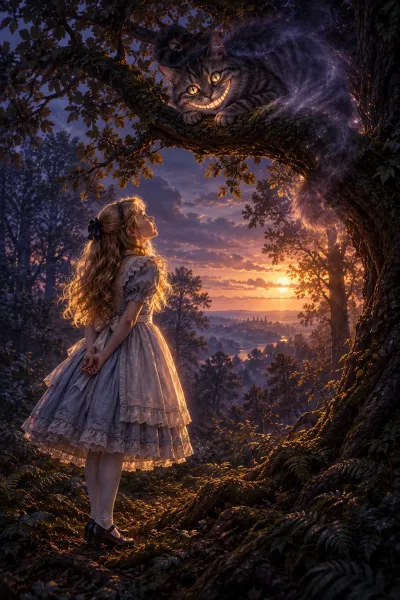
Alice's Adventures in Wonderland in English
?
The decimal shows where the book sits within the level: C1.0 is the start of C1, C1.9 is nearly C2 How we measure
Bored on a riverbank, a seven-year-old girl follows a White Rabbit with a pocket watch down a burrow into an underground world where animals, playing cards, and nursery figures argue by their own maddening rules.
The book is twelve short chapters built like a relay of odd encounters: Alice walks away from one impossible conversation only to walk straight into the next. The first half is mostly about her body refusing to stay one size as she tries to fit through a tiny garden door; the second half brings her into that garden, where the Queen of Hearts settles every disagreement by ordering an execution and a courtroom trial brings the whole pack of cards down around her ears. Carroll writes in the chatty voice of someone telling the story out loud in a rowing boat, pausing inside parentheses to explain what a hard word means or what Alice is thinking to herself. Almost every chapter interrupts the prose with a comic poem that turns a serious Victorian classroom recitation inside out.
- short chapters where a new strange scene starts every few pages
- dry logical humour built on people taking idioms at face value
- rude, impatient characters who refuse to be polite to a child
- spotting how everyday English phrases come apart under pressure
- episodic dream structure with no real plot goal beyond getting into a garden
- heavy reliance on sound-alike puns that don't land until you hear them aloud
- parodies of Victorian schoolroom poems you have probably never met
- characters who change the subject instead of answering a straight question
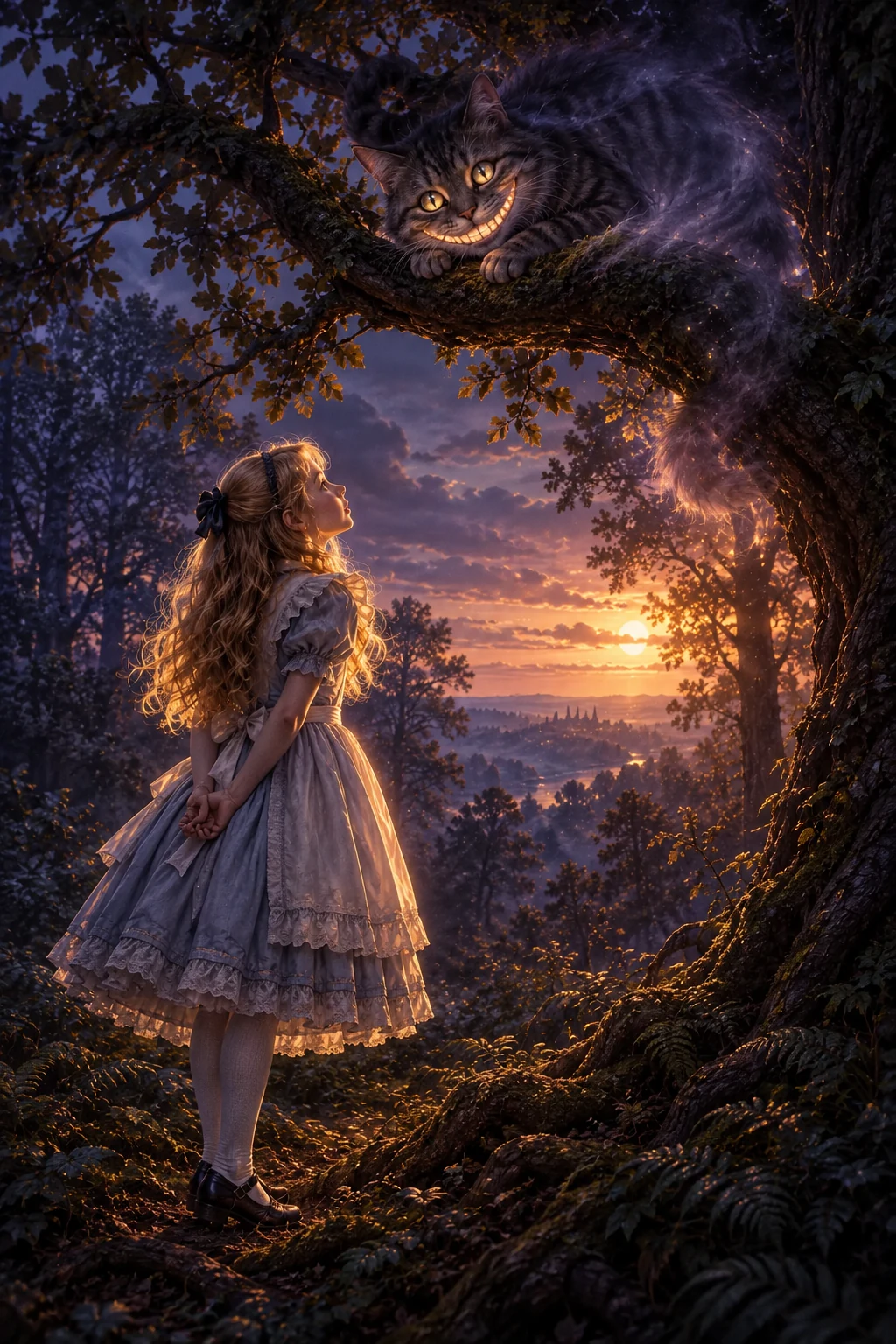
What kind of book “Alice's Adventures in Wonderland” is
Versions of “Alice's Adventures in Wonderland” in English: B1
Same book, adapted to a level you can read without stopping
Pick a version. The bar at the foot of the page opens the one you pick.
?
The decimal shows where the book sits within the level: C1.0 is the start of C1, C1.9 is nearly C2 How we measure
Vocabulary by level
- A1 68%
- A2 14%
- B1 6%
- B2 8%
- not in dictionary 1%
The original language of “Alice's Adventures in Wonderland” and what it gives you
How hard the language is C1.2
Our lexical measurement places the original at C1.2 (in the C1 band), which surprises people expecting a simple nursery tale. Most of the vocabulary on the page is everyday English, and the sentences are only moderately long, though Carroll packs them with parenthetical asides and mid-sentence shifts of thought. What pushes the text into C1 is the constant wordplay: characters confuse words that sound identical, invent nonstandard grammar on the spot, and recite parodies of nineteenth-century verse. You are rarely stuck on an obscure noun, but you frequently have to read a line twice to catch the double meaning.
What this means in practice: Read the C1.2 original if you want the puns and Victorian phrasing intact; choose the B2.1 or B1.5 adaptation if you want the story and its absurdist logic with gentler vocabulary and fewer traps.
What to be ready for
How to read it and not quit
- Read confusing exchanges out loud: when the Mouse says his tale is 'long and sad' and Alice hears 'tail', the joke is in the identical pronunciation of two different spellings.
- Do not copy the characters' grammar when they break rules on purpose—Alice's famous 'curiouser and curiouser' is a deliberate mistake that the book itself laughs at.
- Watch for idioms being treated as physical facts: 'beating time' in music class becomes a quarrel with a man named Time who refuses to adjust the clocks.
- Keep an eye on Carroll's parentheses and italics, which show where the narrator whispers an aside to you or where a character stresses a single word to start an argument.
A sample from “Alice's Adventures in Wonderland” in English
Tap any word — we will show the translation
Arrow keys move between words, Enter shows the translation.B2.1187 words
“You won’t do that!” thought Alice. She waited until she thought she heard the Rabbit just below the window. Then she suddenly opened her hand wide and grabbed at the air. She caught nothing, but she heard a little scream, a fall, and the crash of breaking glass. From these sounds she guessed it was just possible that it had fallen into a cucumber-frame (low garden structure with a glass cover to protect plants), or something similar.
Next came the Rabbit’s angry voice. “Pat! Pat! Where are you?” Then came a voice she had never heard before. “Sure then I’m here! Digging for apples, your honour!”
“Digging for apples, indeed!” said the Rabbit angrily. “Here! Come and help me out of this!” (Sounds of more breaking glass.)
“Now tell me, Pat, what’s that in the window?”
“Sure, it’s an arm, your honour!” (He said “arm” as “arrum.”)
“An arm, you goose! Who ever saw one that size? Why, it fills the whole window!”
“Sure, it does, your honour: but it’s still an arm.”
“Well, it has no right to be there, anyway. Go and take it away!”
Illustrations for “Alice's Adventures in Wonderland”
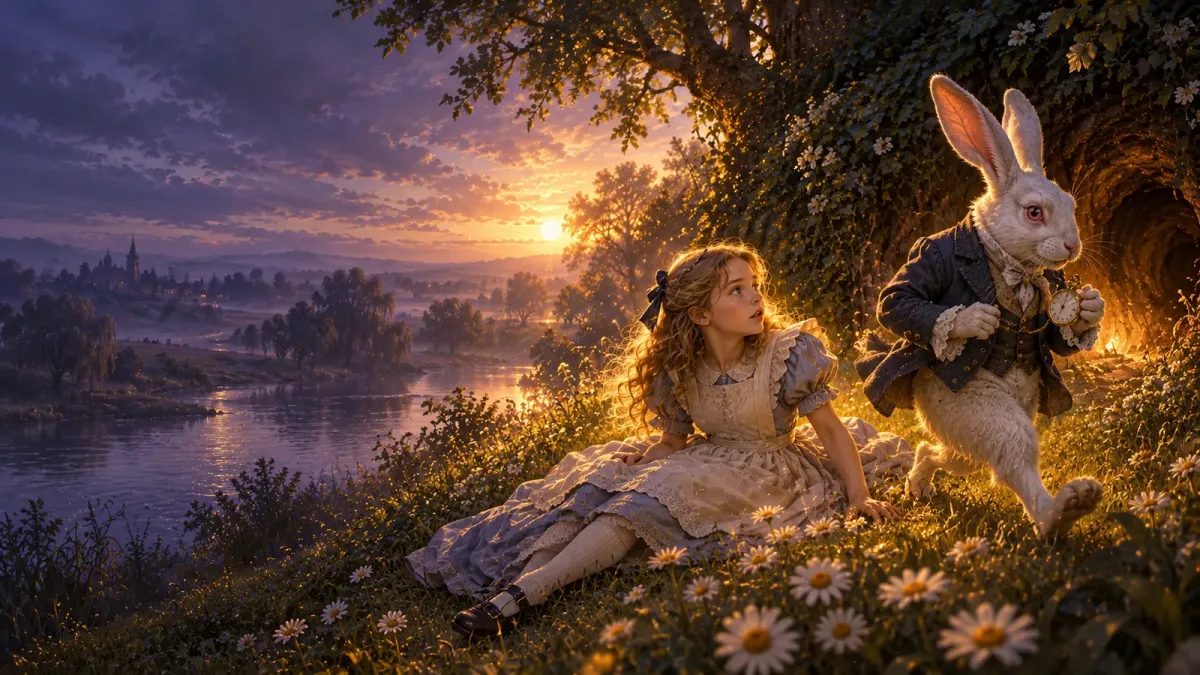
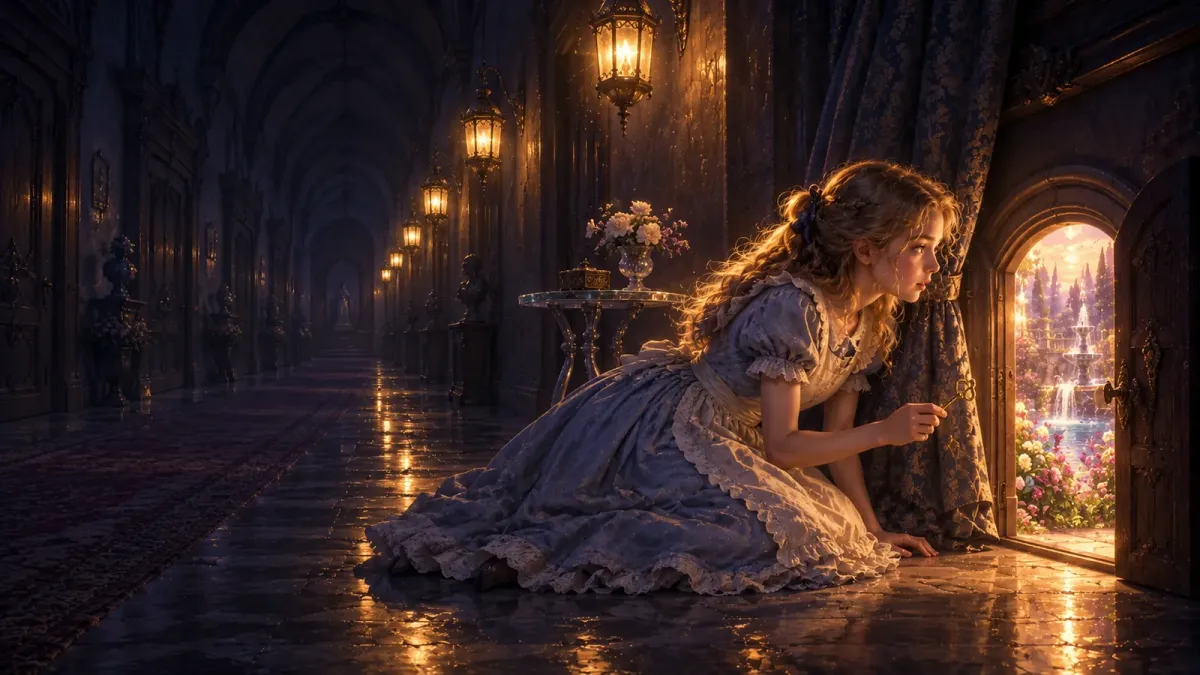
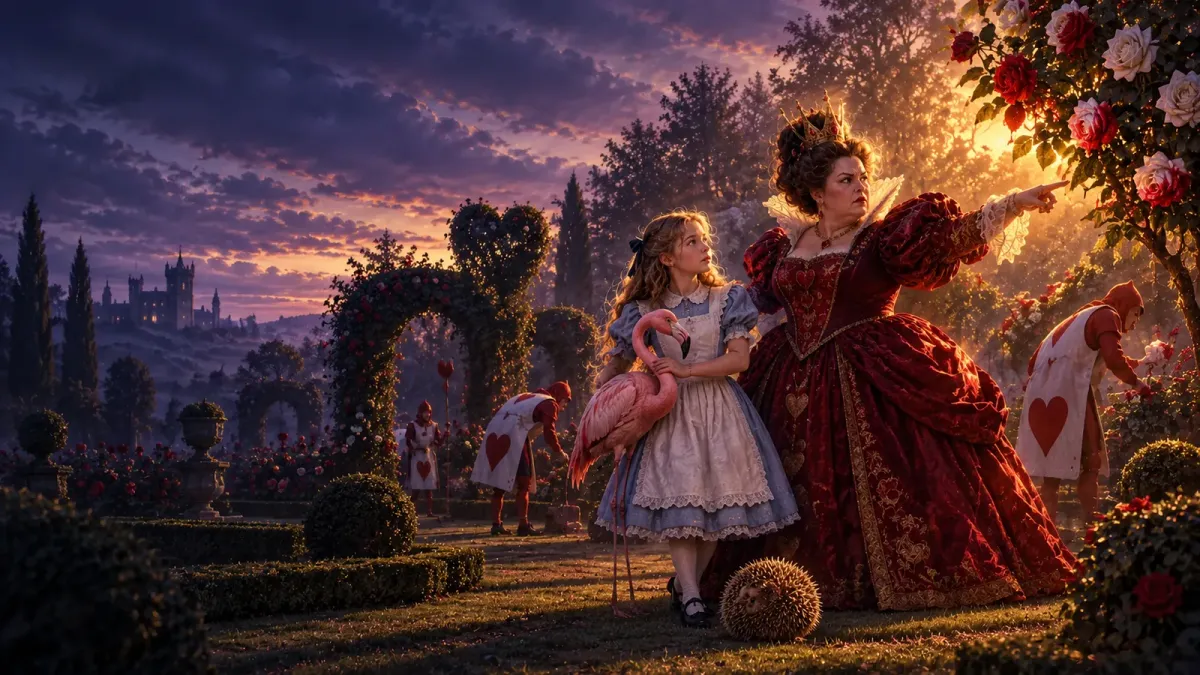
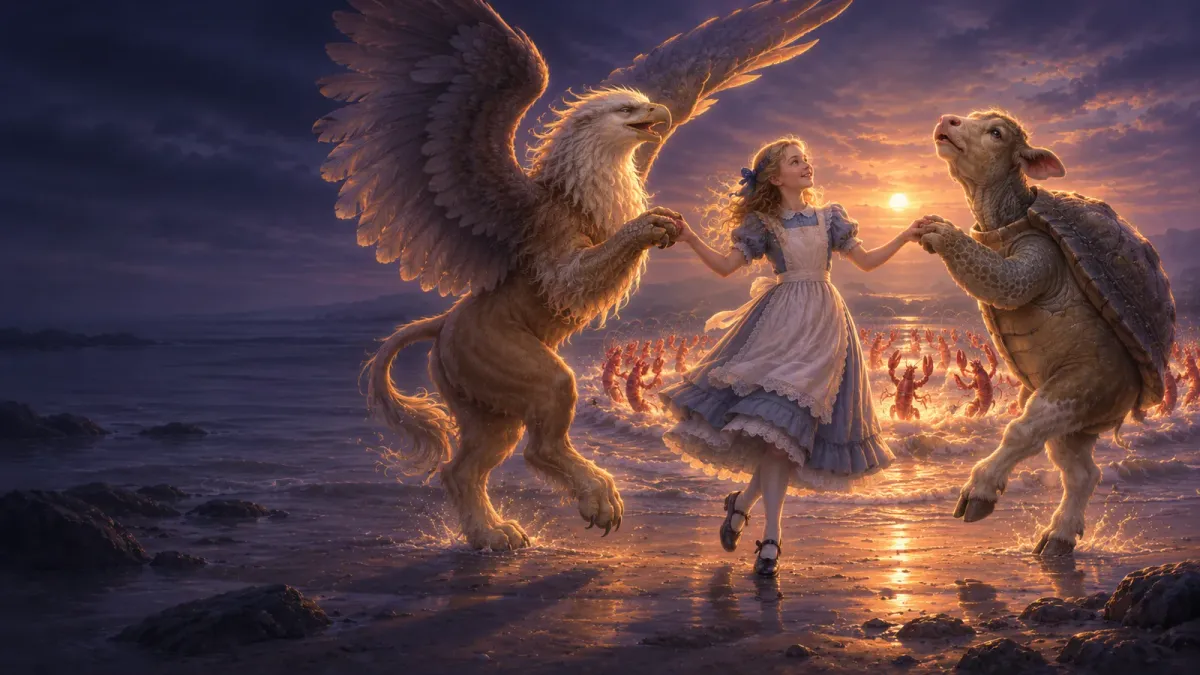
7 scenes from “Alice's Adventures in Wonderland”, in story order and without the ending.
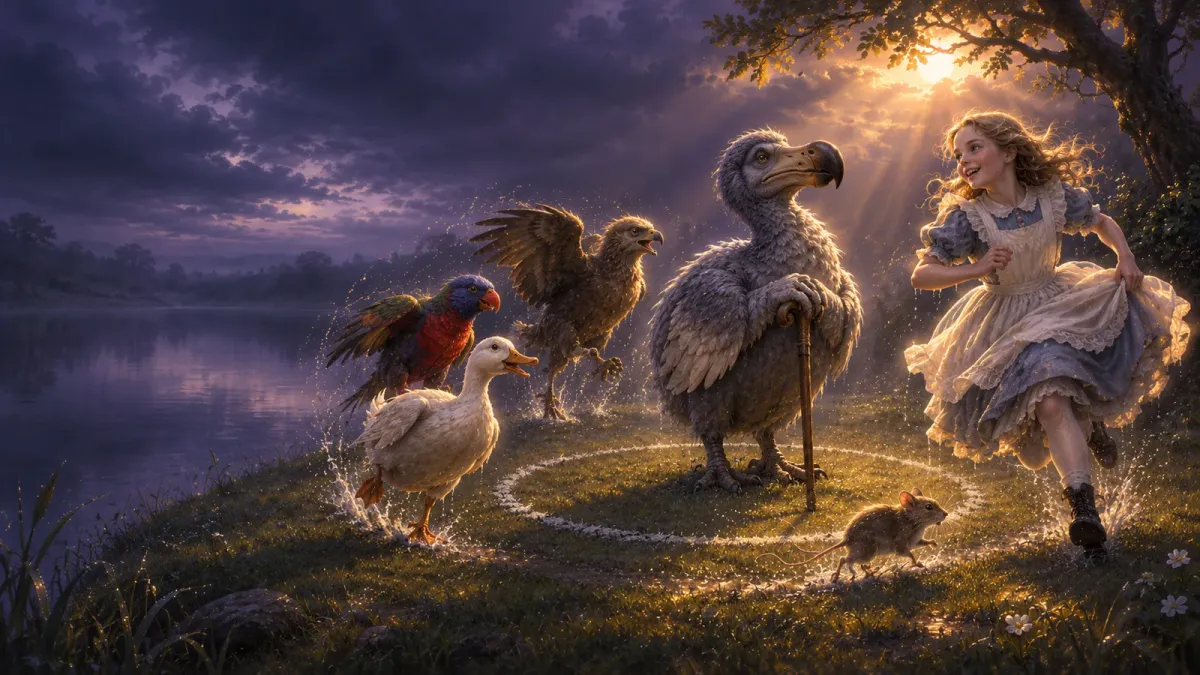
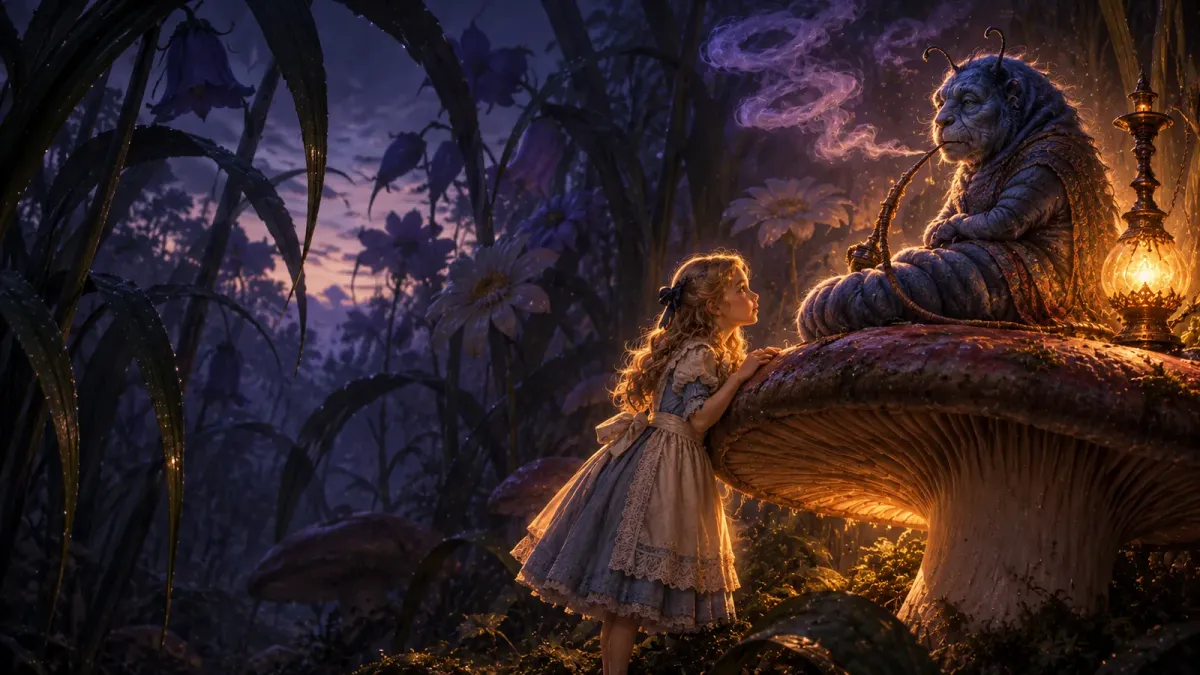
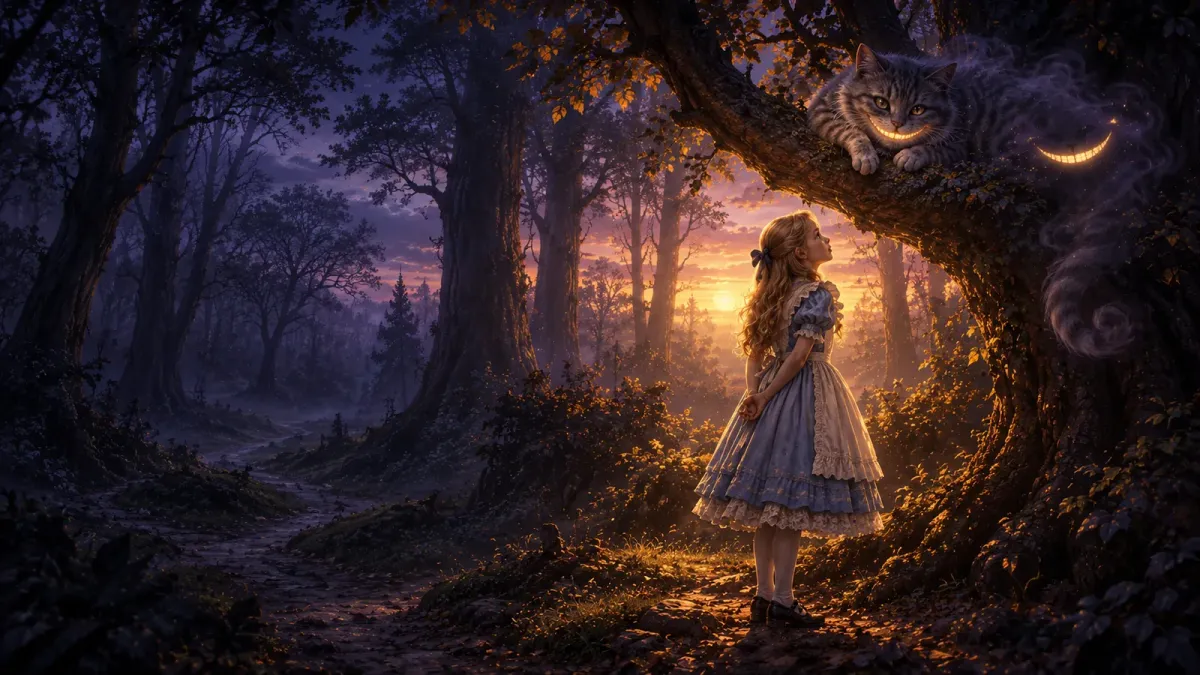
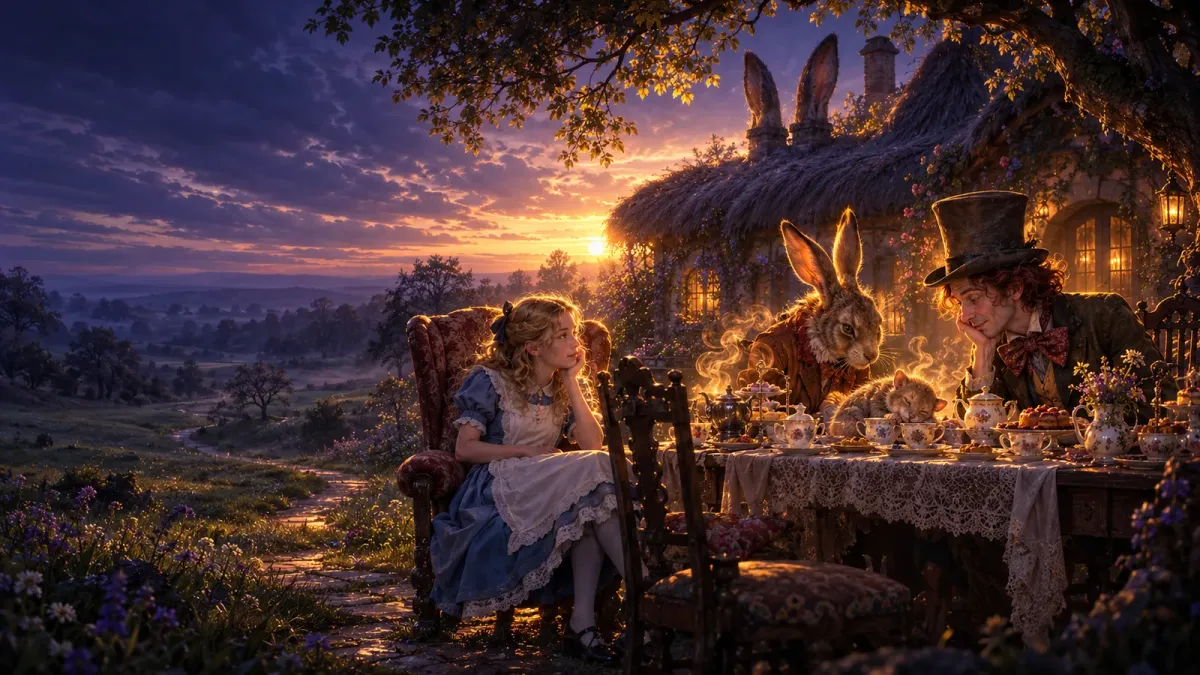
Contents of “Alice's Adventures in Wonderland” · 13 chapters
All 13 chaptersShow fewer
Reader ratings for “Alice's Adventures in Wonderland”
5.01 rating
Your rating
Reader reviews of “Alice's Adventures in Wonderland”
No reviews yet.
The story of “Alice's Adventures in Wonderland”
A story told at the oars
On 4 July 1862, Oxford mathematician Charles Lutwidge Dodgson and Robinson Duckworth rowed Dean Henry Liddell's three young daughters up the Isis. To pass the time on the water, Dodgson made up a tale about a bored girl named Alice looking for adventure—and ten-year-old Alice Liddell asked him to write it down for her.
Dodgson's diaries
Where the Cheshire Cat walked in
Two years later, in November, Dodgson handed Alice Liddell a handwritten manuscript with his own drawings, called Alice's Adventures Under Ground. Before that gift was even in her hands, he was already doubling the 15,500-word story for commercial print, bringing in the Cheshire Cat and the Mad Tea-Party.
British Library manuscript records
Two thousand copies nobody could keep
Macmillan printed 2,000 copies in mid-1865 under the pen name Lewis Carroll, only for illustrator John Tenniel to declare himself completely unhappy with how the pictures came out. Dodgson called back the whole run at his own expense, shipped the unbound sheets to Appleton in New York, and had Richard Clay print a fresh edition late that year, dated 1866.
Macmillan archive and Dodgson's letters
The childhood gift that paid the tax bill
Hit with heavy estate duties after her husband died, an elderly Alice Liddell Hargreaves sent her handwritten gift copy to auction at Sotheby's in London. American dealer A. S. W. Rosenbach paid £15,400 for it—a record price for a British literary manuscript at the time—before a group of American donors gave it back to the British Museum in 1948.
Sotheby's auction records and British Library
Too polite to the animals
In China's Hunan province, Governor Ho Chien banned the book from schools because giving human language to animals insulted human beings. Let children put animals and people on the same level, he argued, and social disaster would follow.
In culture “Alice's Adventures in Wonderland”
11 adaptations and mentions, 1865–2007
In the language Down the rabbit hole
In the opening chapter, Alice follows the White Rabbit straight into its burrow without a plan for getting out. Now the phrase means getting pulled into a strange, time-eating inquiry where one question opens five more—especially when you start clicking links online.
Oxford English Dictionary
In the language Curiouser and curiouser
Stretching out like a telescope in Chapter II, Alice forgets her grammar and blurts this out. English kept the mistake: people still say it, half-joking, when something strange keeps getting stranger.
Oxford English Dictionary
Stage Wonderland moves into the West End
With Carroll's blessing, dramatist Henry Savile Clarke and composer Walter Slaughter turned the book into a two-act operetta at London's Prince of Wales Theatre. That production started an annual Christmas stage tradition.
Film Twelve minutes of camera tricks
Cecil Hepworth and Percy Stow put Alice on screen for the first time, with May Clark in the lead. At roughly twelve minutes, it was the longest British film made up to that point, using camera dissolves to shrink and grow Alice and fade the Cheshire Cat out of sight.
British Film Institute
Film The blue dress everyone remembers
Walt Disney had chased an Alice film since his silent Alice Comedies in the 1920s, finally combining scenes from both books into one animated musical. The box office was disappointing at first, yet the film's colors and Kathryn Beaumont's Alice in her blue dress became the version most people picture first.
In the language When the room changes size
British psychiatrist John Todd gave the book's name to a neurological condition often seen in migraine sufferers. People with micropsia or macropsia see their own hands, or objects across the room, as sharply smaller or larger than they really are.
Canadian Medical Association Journal (1955)
Music The caterpillar on the radio
Grace Slick wrote 'White Rabbit' for Jefferson Airplane's album Surrealistic Pillow, turning Alice's size-changing pills, the hookah-smoking caterpillar, and the mushroom into metaphors for psychedelic drugs. The track climbed to number eight on the US Billboard Hot 100.
Art Salvador Dalí gives Alice a skipping rope
Commissioned by Random House's Maecenas Press for a limited portfolio edition, surrealist painter Salvador Dalí made one heliogravure for each of the twelve chapters plus an original etching. A girl skipping rope runs through every scene, tying the portfolio together.
Film A rabbit leaking sawdust
Czech surrealist filmmaker Jan Švankmajer threw out Tenniel's parlor whimsy in Něco z Alenky, mixing live action with stop-motion animation. His White Rabbit is a stuffed carcass leaking sawdust among animal skulls, and a single child actor voices every character in the film.
Game Back to Wonderland with a blade
Designed by American McGee and published by Electronic Arts, this third-person action game picks up as a macabre sequel. A traumatized Alice, locked in an asylum, goes back into a ruined Wonderland with a Vorpal Blade to win back her sanity.
Stage Wordplay set for an opera house
Written for the Bavarian State Opera by composer Unsuk Chin and playwright David Henry Hwang, Alice in Wonderland turns Carroll's verbal games into shifting musical pastiche. Conductor Kent Nagano led the premiere in Munich.
Questions and answers about “Alice's Adventures in Wonderland” in English
Why is a raven like a writing-desk?
In the book, the riddle has no answer at all—the Hatter admits he has no idea, and Carroll originally made it up as a joke without a solution. Thirty years later, after readers wouldn't stop asking him for the answer, Carroll added a preface suggesting: 'Because it can produce a few notes, tho they are very flat; and it is nevar put with the wrong end in front!' (cleverly spelling 'never' as 'nevar', which is 'raven' backwards).
Why aren't Tweedledum and Tweedledee or the Jabberwocky in this book?
Those characters and poems belong to the 1871 sequel, Through the Looking-Glass, and What Alice Found There. Film adaptations—starting with Walt Disney's 1951 animated version—almost always merge the two books into a single trip, so readers often expect the twins, Humpty Dumpty, and the Jabberwock to turn up here. In this first book, the central games are playing cards and croquet; the sequel is built around a game of chess.
Is the Queen of Hearts the same character as the Red Queen?
No, they are two different rulers from two different games in the two separate Alice books. The Queen of Hearts appears in this book as the foul-tempered monarch from a pack of playing cards who shouts 'Off with his head!' at every annoyance. The Red Queen is a chess piece in the sequel, Through the Looking-Glass, though screen adaptations routinely mash the two characters together into one villain.
What is a 'Mock Turtle', and why is it crying?
The creature is a visual pun on 'mock turtle soup', a popular Victorian dish made by boiling a calf's head and hooves to imitate expensive green turtle soup. Because the soup is 'mock' (fake) turtle made from veal, Carroll gives his creature the shell and flippers of a sea turtle combined with the head, hind hooves, and tail of a calf. It weeps nonstop out of nostalgia for the days when it used to be a 'real Turtle' at school.
Where does the phrase 'mad as a hatter' come from, and did Carroll invent it?
Carroll did not invent either 'mad as a hatter' or 'mad as a March hare'; both were already everyday British idioms decades before 1865. Hatmakers in the nineteenth century often developed tremors and mood swings from mercury poisoning caused by curing felt hats, while hares behave erratically during their March breeding season. Carroll simply took the two familiar expressions and invited them to sit down together at a tea table.
Why are all the poems in the book so strange?
Every poem Alice tries to recite in Wonderland is a parody of a genuine, earnest verse that nineteenth-century British children had to memorise for their lessons. When she attempts the moral hymn 'How doth the little busy bee', her mouth turns it into a poem about a cheerful crocodile eating fishes. 'Twinkle, twinkle, little star' becomes 'Twinkle, twinkle, little bat' in the Hatter's song at the tea-table. Even if you do not know the forgotten Victorian originals, the joke works because Alice herself is horrified that her memory has gone wrong.
How old is Alice in the book?
Alice's age is never stated in this book. In the sequel, Through the Looking-Glass, she tells Humpty Dumpty that she is seven years and six months old. Studios almost always cast older girls or teenagers to play her on screen. Her formal vocabulary makes her sound older to modern ears, but that simply reflects how a tutored daughter of an Oxford dean was taught to speak.
In brief about “Alice's Adventures in Wonderland”
17 fields of imprint data and measured text characteristics. All of it checkable.
- Original title
- Alice's Adventures in Wonderland
- Author
- Lewis Carroll
- First published
- 1865
- Original language
- English
- Genre
- Classics · Adventure · Humor
- Mood
- Dreamlike
- Themes
- Childhood · Identity · Society · Coming of age
- Setting
- An English riverbank and Wonderland, an underground world · Mid-19th century (the Victorian era)
- Distinct words
- 2,537
- Words per sentence
- 17 words
- Level of the original
- C1.2How we measure
- Versions
- C1.2, B2.1, B1.5
- Length of the original
- 13 ch. · 26,733 words
- Reading time
- ~2 h 30 min
- Source text
- Standard Ebooks
- Download
- EPUB
Similar what to read after “Alice's Adventures in Wonderland”
By the same author
1The same hand, a different story.
Close in spirit
7The same genre and the same register.
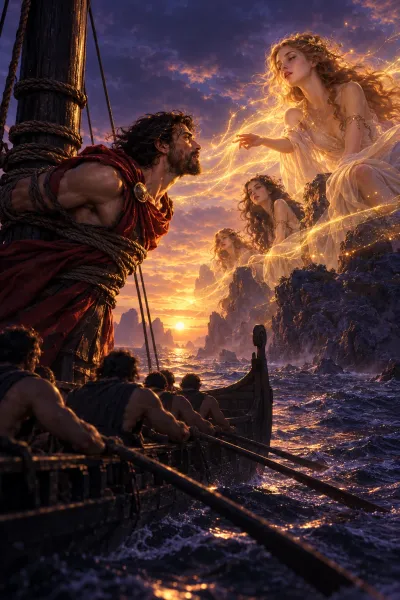
The Odyssey
Homer
C1.8orig.B1B2
~11 h 50 min · Classics
The Railway Children
E. Nesbit
C1.2orig.B1
~5 h 30 min · Classics
Black Beauty
Anna Sewell
C1.4orig.B1
~5 h 30 min · Classics
Carmen
Prosper Mérimée
C1.8orig.B1B2
~2 h 10 min · Classics
Captain Blood
Rafael Sabatini
C2orig.
~10 h 30 min · Adventure
Around the World in Eighty Days
Jules Verne
C2orig.B1B2
~5 h 50 min · Adventure

White Fang
Jack London
C2orig.B1B2
~6 h 40 min · Adventure