English books and audiobooks for C1 learners
C1 is the level where English classics are read in the original. Alice's Adventures in Wonderland, The Hound of the Baskervilles, Dracula, The Great Gatsby, The Jungle Book: at C1 these are the author's own text, nothing retold. For books whose original is harder still, the shelf has editions that stay close to it. On books.dev all of it is free to read and comes with narration.
Be honest about your level first, though. The move from editions to the author's own text is the biggest jump on the whole route, and a confident B2 is often mistaken for C1. A few minutes of checking saves weeks of wrestling with a book that is not ready for you yet.
The most popular C1 books in the world
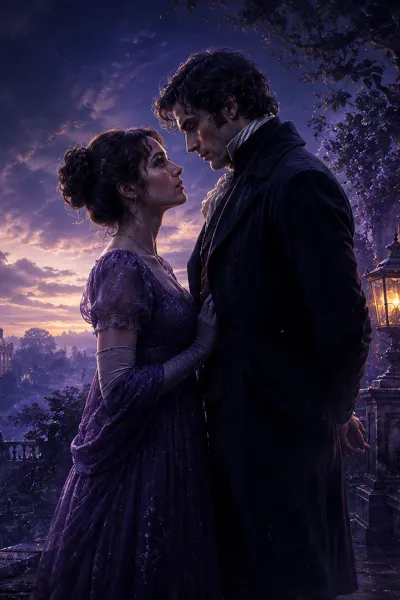
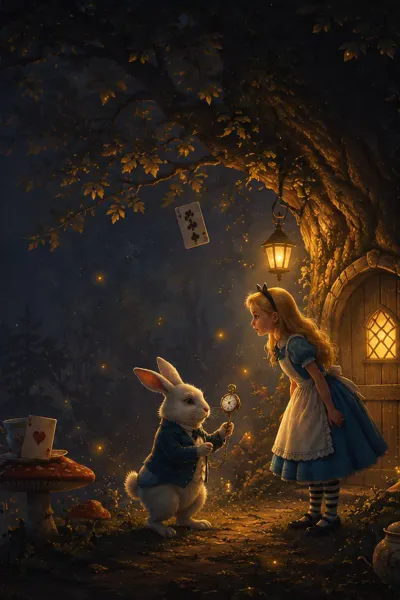
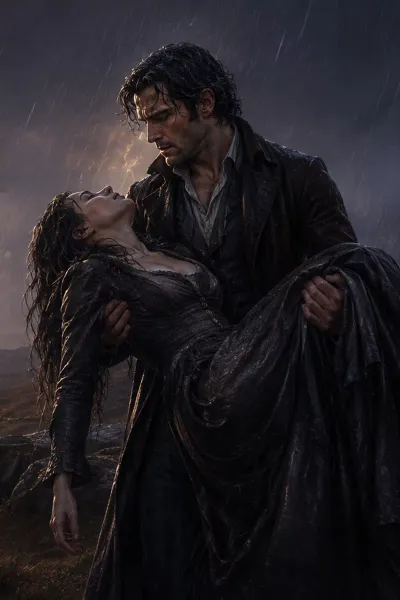
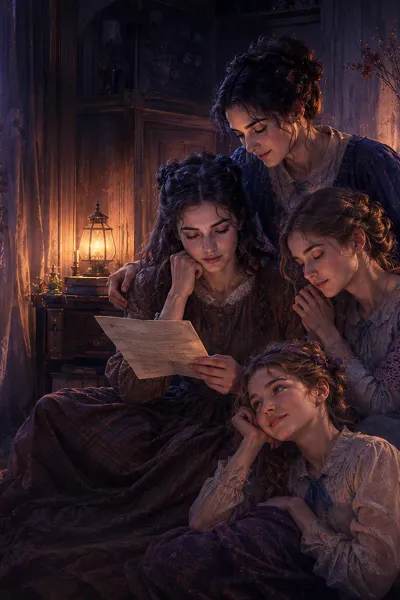
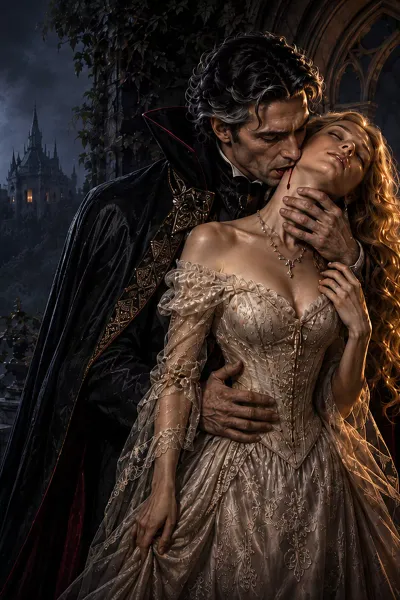
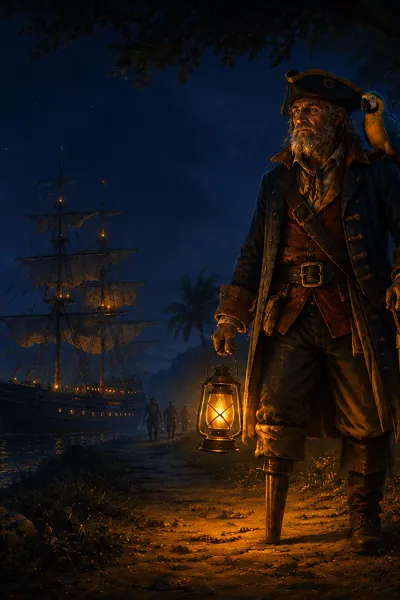
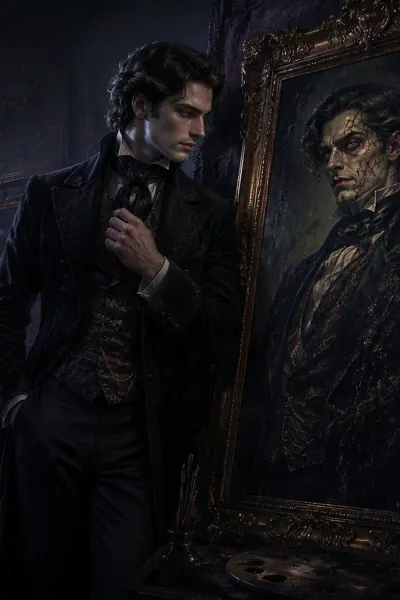
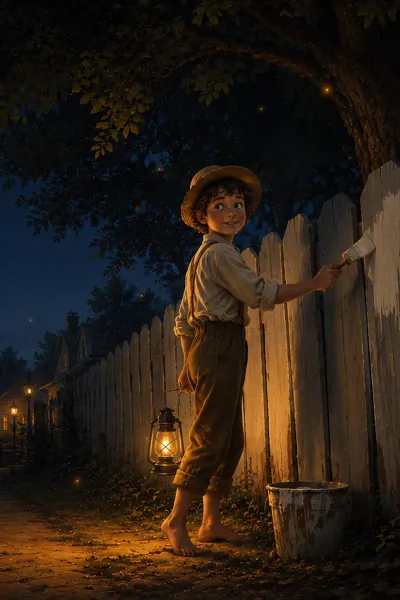
These are the C1 books that rank highest in worldwide reader demand. The whole shelf is here: every C1 book, easiest first. It updates itself as new books reach the catalog.
What reading at C1 means
On the CEFR scale C1 is Advanced. At this step you understand long, demanding texts, pick up implied meaning and irony, and read fiction without systematic help from a dictionary.
For reading, the main thing is this: you finally hear the author's voice. Until now you have been watching a film with very good dubbing. At C1 you switch to the original soundtrack, and it turns out Dickens has his own sentence rhythm, Conan Doyle a dry precision, and Carroll plays hide-and-seek with words.
Two kinds of book on the shelf
Every edition's level on books.dev is measured from its text by a program, and originals are measured on the same scale as adaptations. That is why the C1 shelf holds two kinds of book.
- Originals that measure C1 themselves. Classics written clearly enough: both Alice books, Just So Stories and The Jungle Book, The Secret Garden, The Hound of the Baskervilles, Dracula, The Great Gatsby.
- Editions of books whose original is harder, at C2. For example Pride and Prejudice, Treasure Island, A Christmas Carol. Here the shelf shows the edition closest to the author's text, a little easier than it.
The book's page tells you which edition is the author's own: the original is marked "Original". Why classics so often land at C1 or C2 is explained in how we measure reading levels.
Why there are so many children's books at C1
Alice, The Jungle Book and The Secret Garden were written for children, but for nineteenth-century children who grew up inside the language. Their vocabulary and humour assume a native ear and a lost era. For a learner that makes them honest C1, and at the same time the gentlest way into originals.
How an original differs from an edition
An edition that follows the original chapter by chapter keeps the plot, the characters, the order of scenes and most of the dialogue. The skeleton is the same. What it inevitably trims is some of the muscle, and that is exactly what comes back in the original.
- Long sentences. The edition cuts them up. In the original a thought unfolds in one go, and often that is the narrator's whole character.
- Digressions. The author's musings and the characters' thoughts on life. They get shortened for pace, and in the original they are a good part of the pleasure.
- Rare and old words. The edition swaps them for familiar ones; the original leaves them as they were a century and a half ago.
- Dialect. Sailors, servants and children written down the way the author heard them. Editions usually even it out into standard English.
So the difference is not the plot, it is the texture. Like a joke retold by a friend versus the same joke told by a great comedian: almost the same words, but only one of them is funny.
Check yourself: are you ready for originals?
Answer four questions honestly.
- Do B2 editions read fluently but feel smoothed out?
- Do you notice how something is written, not only what is written?
- Does an unknown word rarely stop you, because you get it from the scene or calmly skip it?
- Does a long novel not scare you?
Three or four yeses: go for it. Fewer: stay a while with B2 books. The original is not going anywhere; it has been waiting for a century and a half.
Where to start
“Curiouser and curiouser!” cried Alice (she was so much surprised, that for the moment she quite forgot how to speak good English).
Take this line apart. "Curiouser" is a mistake; correct English is "more curious". Carroll breaks the grammar on purpose and owns up to it right away, in brackets. Did you catch the joke before the explanation? Then you already have C1.
Short books
Your first original, like your first book ever, should be one you can finish. The short books at this level include originals, such as Alice's Adventures in Wonderland, and editions close to the original: Jekyll and Hyde and The Call of the Wild, whose own texts already measure C2. They are all under short C1 books.
The easy end of the band
Sort the shelf from easiest to hardest and first come Through the Looking-Glass, Just So Stories and Aesop's Fables. Short forms, clear language, fairy-tale logic: the perfect warm-up.
A book you already know
Read a book in a B2 edition? Its original is the best bridge. You know the plot, your attention is free for the language, and the gap between the edition and the author's text turns into a style lesson of its own.
What to pick by genre
C1 has the widest choice, and here a genre is really a choice of voice. Adventure prose sounds brisk, gothic sounds thick, romance sounds ironic.
Adventure
In the original, adventure classics are the easiest read: the action pulls you on, and descriptions serve the plot. Here are Kipling's The Jungle Book, Treasure Island, Tom Sawyer and Jules Verne's Around the World in Eighty Days. All under C1 adventure.
Gothic
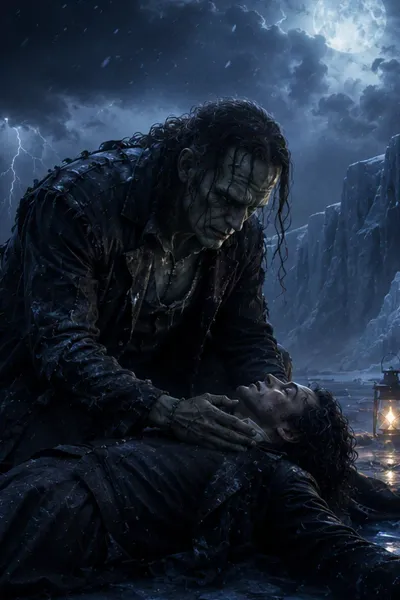
Gothic comes fully alive in the original: atmosphere is built in long periodic sentences, and those are the first thing adaptations cut. Here are Dracula, The Picture of Dorian Gray, The Hound of the Baskervilles, Jane Eyre, Wuthering Heights and Frankenstein. All under C1 gothic.
Dracula is an especially good first big original. It is made of diaries and letters, that is, of short self-contained pieces: easy to read one per evening, like a series one episode at a time.

Novels of manners and love
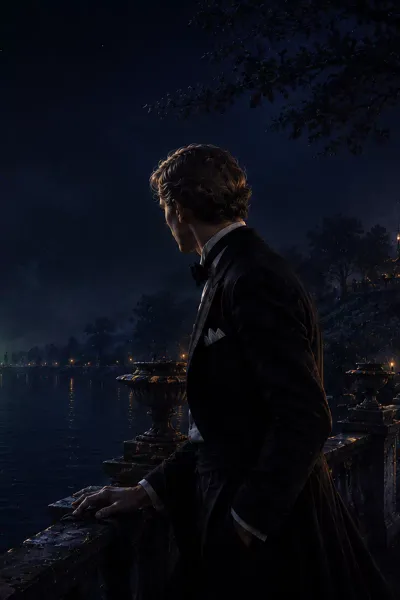
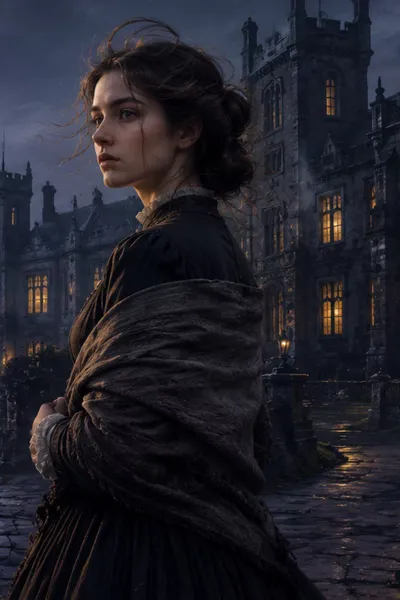
Here lies the main pleasure of C1: irony. Pride and Prejudice, The Great Gatsby, Little Women, Jane Eyre. All under C1 romance.
“It is a truth universally acknowledged, that a single man in possession of a good fortune, must be in want of a wife.”
Read it again and ask yourself: who is really "in want" here, the rich bachelor or the neighbourhood mothers with daughters to marry off? Austen says one thing and means exactly the opposite. That kind of irony only comes through in the original.
Animal stories
A gentle genre for first originals: a clear plot, a warm tone, and precise, rich language about nature. Here are The Jungle Book, The Call of the Wild, Kenneth Grahame's The Wind in the Willows and Black Beauty. All under C1 animal stories.
Humor
The best proof that you have reached C1: in the original, the jokes rest on wordplay no translation or adaptation can carry. Here are Alice, Three Men in a Boat, Tom Sawyer and Adventures of Huckleberry Finn. All under C1 humor.
“I like work: it fascinates me. I can sit and look at it for hours.”
Note that Huckleberry Finn is narrated by a boy from the American South in his own dialect. That is a deliberate choice by Twain, not a string of typos. You get used to it in a couple of chapters, and if a line will not give, read it aloud.
Philosophy
Books people return to for the ideas rather than the plot: Dostoevsky's Crime and Punishment, Machiavelli's The Prince, The Picture of Dorian Gray, A Christmas Carol. Dostoevsky and Machiavelli are, of course, in English translation. All under C1 philosophy.
The real challenge at C1: the English of another era
At C1 grammar no longer stops you. Something else does: almost all the classics on the shelf were written in the nineteenth century, and their English is not the English of today's series. It is as if you moved to the same country, but a hundred and fifty years earlier.
- Old words. Ere, whilst, hitherto, countenance. A native speaker recognises them but would never say them. Understand, do not learn.
- Words whose meaning has shifted. The sneakiest group. "Nice" in Austen can mean "precise, fastidious" rather than "pleasant".
- Long periods. A sentence half a page long. Read to the full stop without parsing as you go: the meaning often only comes together at the end.
- Everyday realities. A clergyman's "living" is the income from his parish, not his life.
- Dialect. Twain, Brontë and Stevenson write down common people's speech as they heard it. Aloud it is often clearer.
If a familiar word sounds odd in a sentence, treat it as a signal. It probably has an older meaning there, and it is worth checking what it means in this exact place.
How to read an original
The general routine is in how to read books in English. Originals need a few extra habits.
An explanation in context beats a translation
At C1 a dictionary often fails you: the word has ten senses and you need an eleventh, the one it had in 1850. Tapping a word on books.dev opens a card that explains its meaning in this very sentence. For words whose meaning has shifted, that is worth a lot.
Do not learn archaisms
Save only living words you want to use yourself. Understanding "countenance" is useful; learning it is not. A simple rule: save a word if you can picture yourself saying it out loud in 2026.
Let yourself read descriptions faster
Nineteenth-century writers did not ration their descriptions, and not all of them move the plot. A paragraph of landscape will not open up, but the story is clear? Move on. Native readers do the same; they just do not admit it.
Listen for the author's voice
At C1 narration is not about understanding, it is about style. A long sentence read aloud suddenly gets a rhythm you could not hear with your eyes. Try listening to the first chapter of every new book: it is the fastest way to tune in to an author.
More on reading and listening at the same time, level by level, in English audiobooks for learners.
A route into originals
The move to the author's text works best in steps: from clear language to dense, from short forms to novels.
- Just So Stories. Short tales meant to be read aloud. Rhythm and wordplay from page one.
- Alice's Adventures in Wonderland. Puns, parodies, logic traps: a gym for "how is this said".
- The Hound of the Baskervilles. Your first full novel. Conan Doyle writes clearly, and the mystery will not let you stop.
- The Great Gatsby. A short, rich twentieth-century novel. A contrast after Victorian prose.
- Dracula. A big novel built from diaries and letters. After it, long classics stop being scary.
You can go in your own order. The point is that each next book is a little denser than the last, not the hardest one right away.
Common mistakes at C1
- Learning archaisms. They clutter your flashcards and crowd out words you will actually use.
- Allowing yourself nothing but originals. An edition close to the original of a C2 book is a sensible choice, not a step back.
- Reading only classics. Nineteenth-century English is not what people speak today. Mix in the twentieth century.
- Going back to the dictionary for every word. The goal at C1 is to read fluently, not to understand every word.
- Comparing yourself to native speakers. They do not know half the words in Wuthering Heights either. Honestly.
What comes after C1
The next step is C2, near-native level. That is where the hardest originals live: Pride and Prejudice, Treasure Island and Tom Sawyer in the author's own text. The sign you are ready: C1 originals read like ordinary books, with no feeling of work.
And if C1 is still a struggle, going back to B2 books is a perfectly normal move. Reading has no exam, only the pleasure of the book.
Are all C1 books originals?
No. Many are: if an original measures C1 itself, that is what the shelf shows. For books whose original is harder, the C1 shelf has an edition close to the author's text. The book's page tells you which edition is the original.
Why read editions at C1 if I can read the original?
Because many classic originals measure C2. At C1 you can read them, but with a dictionary on every page. An edition close to the original keeps nearly all of the author's text and lets you read fluently.
Why are classics harder than modern books?
Nineteenth-century English differs from today's: longer sentences, more old words and words that have changed meaning, many realities of a vanished age. A modern novel with the same plot usually reads more easily.
Which original should I start with?
A short, clear one: Alice's Adventures in Wonderland, Through the Looking-Glass or Just So Stories, all three readable at C1 in the author's own text. Or the original of a book you have already read in a B2 edition.
Do I need to know English history to read classics in the original?
No. The plot and characters make sense without any preparation. The realities of the period become clear from context, and when a detail gets in the way, tapping the word explains what it means at that point in the book.
Is it free?
Yes. Reading and the dictionary on books.dev are free for everyone.