Graded readers online: adapted classics by level (B1, B2, C1)
A graded reader is the same story told in simpler language: shorter sentences, fewer rare words, and the plot and characters stay the author's. The books.dev catalog has 73 editions at B1, 55 at B2 and 20 at C1, and every level is measured, not intended. There are no A1–A2 editions yet.
A language model writes the editions from the text of the original, and a person does not proofread them. You can open any edition in the browser, listen to it or download it as EPUB.
What is a graded reader?
A graded reader is a book where the same story is told in simpler language: shorter sentences, more common words, and the rare ones explained. The plot, the characters and the order of events come from the author. What changes is how many times per page you have to stop at a word you do not know.
The word "adapted" sounds like a verdict: a thin booklet, the whole plot squeezed into three paragraphs, and the story over by page forty-two because there were no more pages. Here it is different. A typical B1 edition in the catalog keeps 99% of the original's length, and Little Women at B1 is even longer: 204 thousand words against 186.
Here is the whole catalog in one table. The third column shows how many words on a standard page of 275 words lie outside the basic A1–B2 word list, that is, how many times you will probably reach for a dictionary:
| Level | Books | Beyond A1–B2 | Where to start |
|---|---|---|---|
| B1 | 73 | ≈5 | The Wonderful Wizard of Oz, B1.2, 3.7 h |
| B2 | 53 | ≈9 | The Jungle Book, B2.8, 4.8 h |
| C1 | 20 | ≈10 | A Christmas Carol, C1.1, 2.8 h |
| A1–A2 | none yet | — | books for beginners |
| Original, for comparison | 103 | ≈20 | — |
The figures are medians over the catalog on 16 November 2026. The digit after the dot in a label is the place inside the level: B1.0 is the very start, B1.9 is almost B2. How the program sets a label is on the page how we measure reading levels.
Short B1 graded readers for a first book
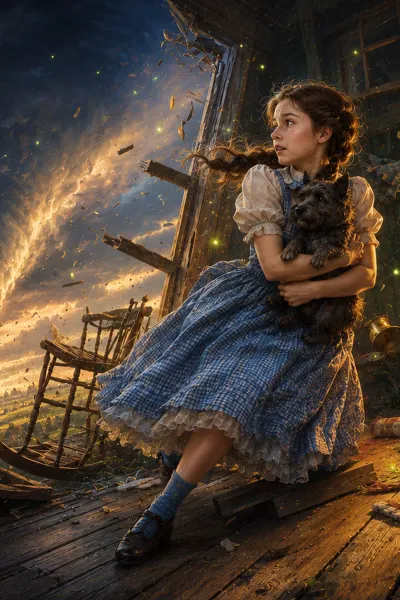
The Wonderful Wizard of Oz
L. Frank Baum
B2.6orig.B1.2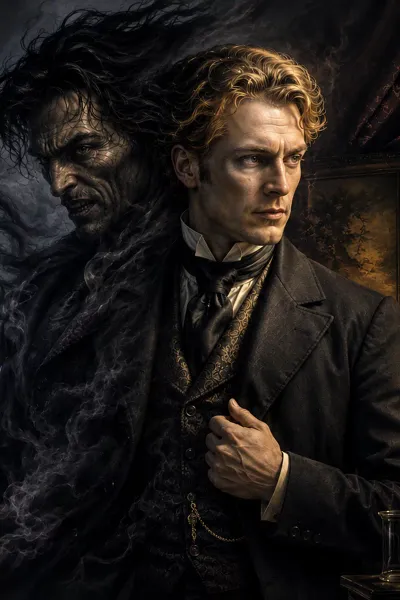
Strange Case of Dr Jekyll and Mr Hyde
Robert Louis Stevenson
C2orig.B1.8C1.5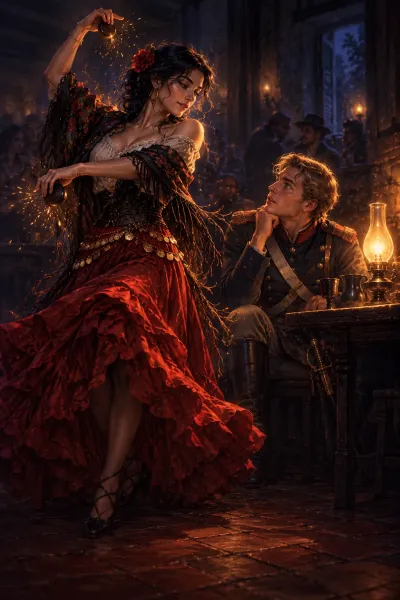
Carmen
Prosper Mérimée
C1.8orig.B1.8B2.8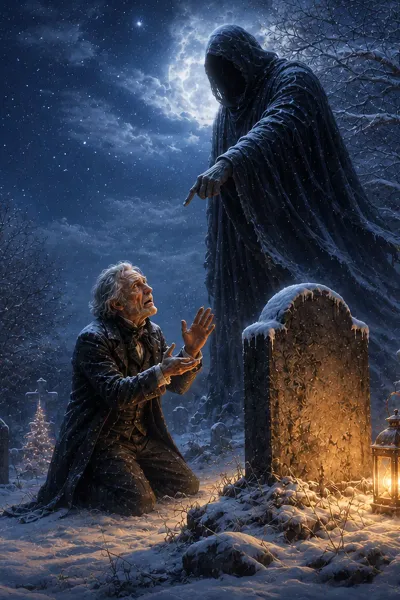
A Christmas Carol
Charles Dickens
C2orig.B1.8C1.1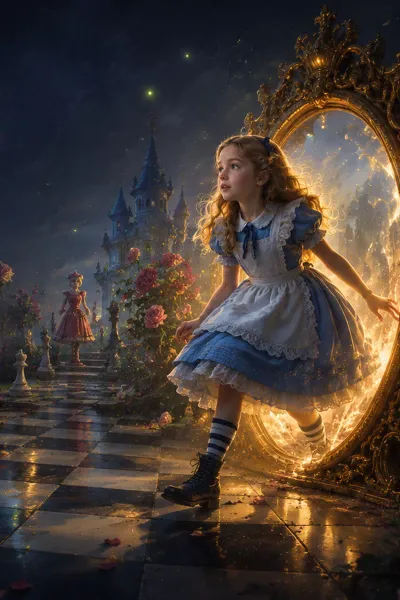
Through the Looking-Glass
Lewis Carroll
C1.1orig.B1.6
The Call of the Wild
Jack London
C2orig.B1.6C1.3
Just So Stories
Rudyard Kipling
C1.1orig.B1.4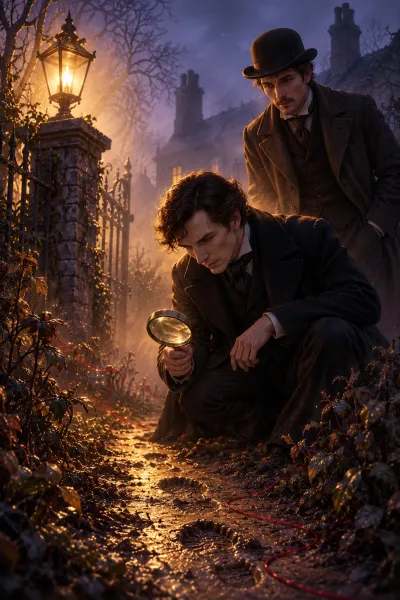
A Study in Scarlet
Arthur Conan Doyle
C2orig.B1.8B2.9
Graded reader, adapted, simplified, original: what the words mean
People use these words loosely, so here is how we use them. A graded reader, in the usual sense, is an "easy reading" book for extensive reading. It may be adapted from a classic or written from scratch, and publishers usually limit its vocabulary by frequency-based headword counts[1]. "Adapted" and "simplified" mostly mean the same thing: an existing book retold in easier language. The original (also called unabridged or unadapted) is the author's own text.
By that strict publisher meaning, our editions are not graded readers. They are not written to a fixed headword list. A program measures the level of the finished text and gives it a label. We still use the term in the title, because it is the one people search for, and the job is the same: an easier text to read a lot of.
Graded readers by level: B1, B2, C1
Before you choose a level, ask yourself one question: how many stops per page can you take without losing the thread? Five is still reading. Twenty is already digging. The level of the edition is chosen by this number, not by your grade at school.
One book can stand in two lists at once: most books in the catalog have two editions at different levels. Why that helps is in the section about the ladder below.
Graded readers at B1: 73 books
Editions measured at B1.0–B1.9: short sentences, common words, length and plot as in the original. This is the main level of the catalog: almost every book has a B1 edition. The shortest are collected above, and by genre in the table below. The easiest are covered in the article on easy English books, and the full list by length is in the article on English books at B1.
Graded readers at B2: 53 books
Editions measured at B2.0–B2.9: the book almost in the author's voice, longer sentences, more different words. A good step if a B1 edition reads easily and the original is still far off. Short ones to start:
| Book | Edition | Time |
|---|---|---|
| Alice's Adventures in Wonderland | B2.1 | 2.5 h |
| The Time Machine | B2.9 | 3.2 h |
| The Jungle Book | B2.8 | 4.8 h |
| Around the World in Eighty Days | B2.8 | 5.8 h |
| White Fang | B2.6 | 7 h |
| Anne of Green Gables | B2.6 | 9.8 h |
The full list is in the article on English books at B2.
Graded readers at C1: 20 books
The last step before the original: about ten unknown words per page instead of twenty, and about three quarters as many different words as the original. We prepared all 20 editions at C1 for B2, but the measurement put them at C1, so they stand here. The level we aimed for and the level we measured are different things, and the catalog always shows the measured one.
| Book | Edition | Time |
|---|---|---|
| A Christmas Carol | C1.1 | 2.8 h |
| The Great Gatsby | C1.0 | 4.8 h |
| The Hound of the Baskervilles | C1.2 | 5.5 h |
| The Picture of Dorian Gray | C1.1 | 7.7 h |
| Pride and Prejudice | C1.1 | 11.3 h |
| Jane Eyre | C1.3 | 18.3 h |
The full list is in the article on English books at C1.
Are there graded readers for A1 and A2?
Not on books.dev yet. The easiest edition in the catalog is Tao Te Ching at B1.0, followed by The Wonderful Wizard of Oz at B1.2. We prepared two editions for A2, Alice's Adventures in Wonderland and Tao Te Ching, but the measurement put them at B1.5 and B1.0, so they stand among the B1 books.
How far is that from A2? In a typical B1 edition, A1–A2 words make up 86% of the text. The other 14%, about every seventh word, lie beyond A2. It is like a path where every seventh step lands in a puddle: you can get there, but it will not be a stroll.
For A1–A2 you need publisher series. For example, Oxford Bookworms starts with a Starter level of 250 words (A1), and Stage 1, with 400 words, is meant for A1–A2[2].
How a graded reader differs from the original
Let us take an adaptation apart into three numbers. They change in different ways, and that is the whole point.
- The length hardly changes. A typical B1 edition is 99% of the words of the original. Events, characters and lines stay, and a rare word is often replaced by an explanation that is longer than the word.
- There are half as many different words. In a typical B1 edition there are 47% of the original's. The book tells the same story with a smaller set of words, and each word comes up more often.
- Sentences are half as long. A typical original has 18.4 words per sentence, a B1 edition 8.2. One thought, one sentence.
The B2 edition is the middle of the road. Its length is the same, about two thirds of the different words remain, and a sentence shortens to 12.8 words on average.
On well-known books
On the left the original, on the right our B1 edition:
| Book | Different words | Words per sentence |
|---|---|---|
| Dracula | 9,080 → 4,220 | 18.2 → 7.9 |
| Pride and Prejudice | 6,186 → 3,114 | 19.9 → 8.3 |
| Jane Eyre | 12,729 → 4,749 | 19.5 → 7.7 |
| Little Women | 10,578 → 5,141 | 21.8 → 9.5 |
| The Great Gatsby | 5,474 → 2,970 | 14.5 → 8.0 |
| Treasure Island | 5,910 → 2,707 | 18.6 → 8.0 |
| The Secret Garden | 4,834 → 2,906 | 14.3 → 8.1 |
Different words are counted by base form: "run", "ran" and "running" are one word.
There are exceptions in length too. Tao Te Ching in the B1.0 edition is about a quarter of the original, and Alice's Adventures in Wonderland in the B1.5 edition is about three quarters. The other B1 editions are close to their originals in length.
Original and graded reader: one paragraph side by side
Enough numbers; let us look at the text itself. Here are the first sentences of The Secret Garden in Frances Hodgson Burnett's original:
“When Mary Lennox was sent to Misselthwaite Manor to live with her uncle everybody said she was the most disagreeable-looking child ever seen. It was true, too.”
And here is the same place in the B1.4 edition:
“Mary Lennox was sent to live with her uncle at Misselthwaite Manor (large old house in the country with land around it). Everybody said she was the most unpleasant-looking child ever seen. It was true, too.”
Look at what happened. A long sentence split in two. "Disagreeable-looking" became "unpleasant-looking": the same meaning, an easier word. The name of the estate stayed, but next to it, in brackets, is a note on what it is. And the short, dry "It was true, too" came through the adaptation without a single change.
The colour shows how common a word is: no colour means the first thousand most common English words, green the second and third thousand, yellow up to five thousand, orange up to ten, red rarer still. The frequencies come from the 25,000-word list behind the books.dev vocabulary test.
That is how our editions work: a rare word you cannot do without is explained in brackets the first time it appears. This is why an edition can be longer than the original, as with Little Women.
How many words you will look up
The main difference between an original and an edition is not the length but how often you stop. Here is how many words beyond the basic A1–B2 word list fall on a standard page:
| Text | Beyond A1–B2 per page |
|---|---|
| Original | ≈20 |
| C1 edition | ≈10 |
| B2 edition | ≈9 |
| B1 edition | ≈5 |
The page is a standard one: 275 words, the size the site counts with. The figures are medians over the catalog. The A1–B2 word list is made of the words of the first four CEFR levels in the open level lists.
Picture an evening with an original. Twenty times per page you decide: reach for the dictionary or guess from context. By page ten that is two hundred decisions, and the plot is hanging by a thread. With a B1 edition there will be fifty decisions in the same ten pages. That is reading, not digging.
How many words you need at each level, and what share of a book they cover, is in the article on English levels and how many words reading takes.
Original or graded reader: which to take
Open the first page of the book in the original and count how many times you had to stop. Then find your row:
| If on the first page… | …take |
|---|---|
| A couple of unknown words, the plot is clear | The original |
| A few words per paragraph, the plot is clear | The B2 or C1 edition of the same book |
| Something unknown in every line, the thread slips | The B1 edition |
| Even the B1 edition is hard | The easiest B1 editions from the article on easy English books |
The first page is always the hardest: on it you meet the characters and the author's manner at the same time. So it is more reliable to count on the third page.
If you are at B2 and want an original, one book needs no adaptation at all: The Wonderful Wizard of Oz. It is the only original in the catalog below C1, and its label is B2.6.
The Wonderful Wizard of Oz
L. Frank Baum
B2.6orig.The only original below C1: label B2.6. There is also a B1.2 edition.
The ladder on one book
The calmest way to an original is to climb up one story. On 16 November 2026, 17 books in the catalog have a B1 edition, a C1 edition and the original. A second meeting with a story is easier than the first: you already know the characters and the turns.
- The Picture of Dorian Gray: B1.8 → C1.1 → original C1.8.
- Pride and Prejudice: B1.8 → C1.1 → original C2.
- The Adventures of Sherlock Holmes: B1.8 → C1.0 → original C1.8.
Books with a ladder: a B1 edition, a C1 edition and the original
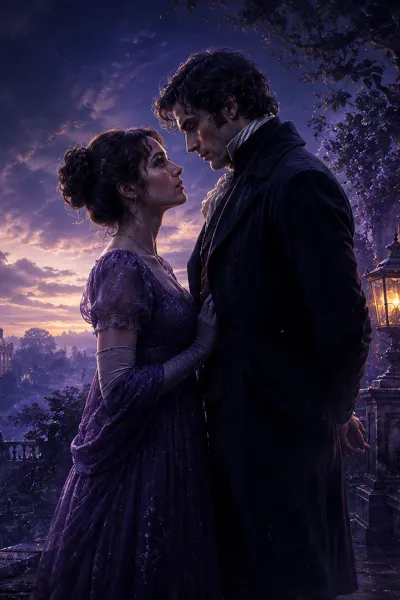
Pride and Prejudice
Jane Austen
C2orig.B1.8C1.1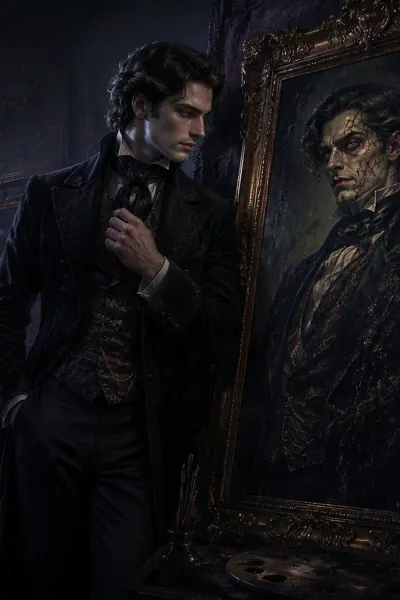
The Picture of Dorian Gray
Oscar Wilde
C1.8orig.B1.8C1.1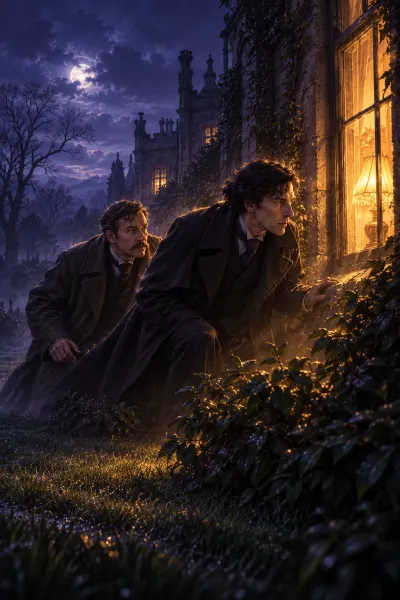
The Adventures of Sherlock Holmes
Arthur Conan Doyle
C1.8orig.B1.8C1.0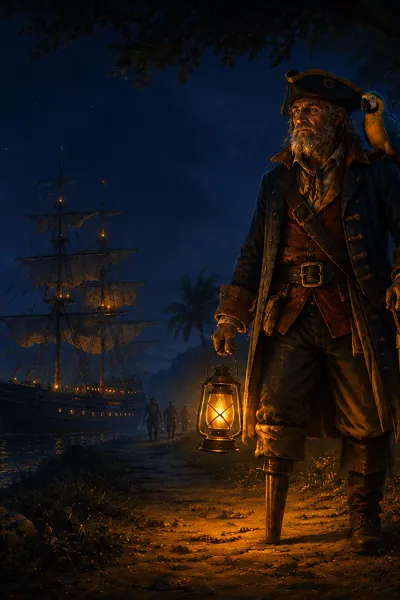
Treasure Island
Robert Louis Stevenson
C2orig.B1.9C1.3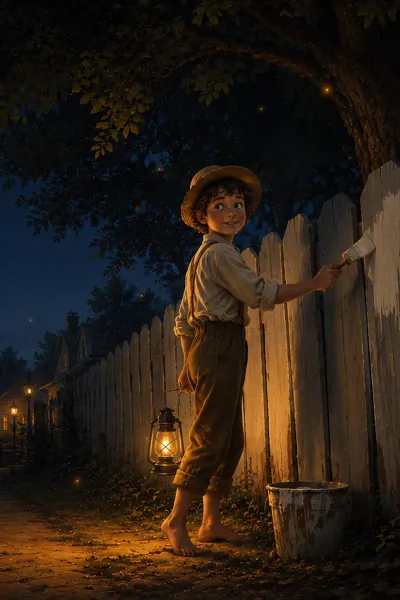
The Adventures of Tom Sawyer
Mark Twain
C2orig.B1.6C1.1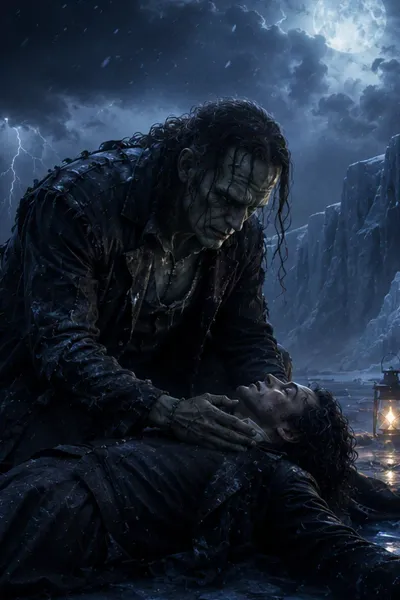
Frankenstein
Mary Shelley
C2orig.B1.7C1.2
The War of the Worlds
H. G. Wells
C2orig.B1.8C1.4
Gulliver's Travels
Jonathan Swift
C2orig.B1.7C1.0
Here is how it looks with Holmes:
B1.8
B1 edition
The first meeting with the plot, the language is at your level.
C1.0
C1 edition, when B1 starts to feel easy
The names are familiar, you remember the plot, and all your attention goes to the language.
C1.8
The original
After two editions it reads like a third meeting with old friends.
Which graded readers are the best
Every list of "the 16 best graded readers" has its own sixteen, and there is no common judge. We compare what can be measured: level and length. And the best graded reader is the one you finish, and there genre decides more than the fame of the book. Find the row with your "I want":
| I want… | Book | Edition | Time |
|---|---|---|---|
| A fairy tale, and a short one | The Wonderful Wizard of Oz | B1.2 | 3.7 h |
| A detective story | A Study in Scarlet | B1.8 | 3.8 h |
| A mystery for one evening | The Strange Case of Dr Jekyll and Mr Hyde | B1.8 | 2.3 h |
| Adventure | Treasure Island | B1.9 | 6.3 h |
| A journey | Around the World in Eighty Days | B1.8 | 5.7 h |
| A story about an animal | White Fang | B1.6 | 6.7 h |
| To laugh | Three Men in a Boat | B1.5 | 6 h |
| A love story | Pride and Prejudice | B1.8 | 10.7 h |
| A Gothic tale | Dracula | B1.7 | 14.7 h |
Time is counted at a standard speed of 180 words a minute: if you read twice as slowly, multiply by two. It is better not to start with a long book: Dracula at half an hour a day is a month of evenings. The catalog holds only classics whose copyright has expired, so there are no modern books here.
Is Sherlock Holmes available as a graded reader?
Yes, in three books, each with two editions:
| Book | Editions | Original |
|---|---|---|
| The Adventures of Sherlock Holmes, twelve stories[4] | B1.8 (9.2 h), C1.0 | C1.8 |
| A Study in Scarlet, the first appearance of Holmes[5] | B1.8 (3.8 h), B2.9 | C2 |
| The Hound of the Baskervilles | B1.8 (5.2 h), C1.2 | C1.9 |
Start with the stories: one story in a B1 edition takes about forty-five minutes, one evening. If a case does not grab you, the next one starts with a clean page.
Are graded readers suitable for children and teenagers?
The label measures language, not age. The plot does not change in an adaptation: Dracula in a B1 edition is still a story about a vampire, and Jekyll and Hyde is still about a murder. A scary or adult book does not become a children's book because its language is simpler, so choose by content as well as by level.
Children's classics go well for a teenager at B1:
Children's classics in B1 editions

For a child who has only just started, our editions are still too big. The children's line of the Cambridge exams, Starters, Movers and Flyers, ends at A2[6], and the easiest edition in the catalog stands at B1.0. Books from the article for beginners will suit such a reader.
Can you download graded readers?
Yes, free and in EPUB format. On a book's page there is an EPUB button: it opens the book in the reader, and after 30 seconds the file can be saved. Most e-book reader apps on a phone or a reader device open it. There is no PDF or FB2, and the narration cannot be downloaded either: it sounds only in the reader.
The difference is what you have at hand. Tap-for-a-definition, narration with highlighting and word cards work in the books.dev reader, and a downloaded file is just a book. If your English still needs a dictionary on every page, it is easier to read online.
Online, books.dev opens in the browser, with no sign-up. On a phone you can add it to the home screen, like an app; there is no separate app in app stores, and the reader does not work without internet. Comparisons with other services are in the articles on where to read English books online and on English reading apps.
Do graded readers need exercises?
Questions after a chapter are good when someone checks the answers. For yourself, it is easier to check understanding without them, in three ways:
- Retell the chapter in two or three sentences, without looking at the text. If you cannot, reread the last page.
- Save only the words the scene cannot do without. They come back later as cards: a hard word soon, an easy one in a few weeks.
- Listen to a chapter you have already read: every edition has narration. If you recognise the scene by ear, you understood it. Where else to listen to classics is in the article on English audiobooks.
How to read with tap-for-a-definition and not lose the plot is in the article on how to read books in English.
What are graded readers?
Books where a story is retold in simpler language for learners, with shorter sentences and more common words. Publishers usually write them to fixed word counts for each level. On books.dev the editions are written by a language model, and a program measures their level.
Are graded readers worth it?
Reading a lot of easy text has support in research: a meta-analysis of 49 studies of extensive reading found a positive effect, and a bigger one for adults than for children and teenagers[7]. That study is about extensive reading in general, not about graded readers specifically, and an average is not a promise.
What level of graded reader should I start with?
Read the first page of a B1 edition and count the stops. Up to five, and the plot is clear: this is your level. More than that: take one of the easiest editions in the article on easy English books. Below B1 we have no editions yet.
Where can I read graded readers free online?
Here: every book in the catalog opens free, right in the browser, with no sign-up. For other sites, see the article on where to read English books online.
Is a graded reader "wrong" English?
No. The grammar in the editions is ordinary: the words and the structure of sentences become simpler. But the editions are written by a language model, and a person does not proofread them, so an occasional rough spot is possible. The same program that measures the original sets the level label on each edition.
Why is an adaptation almost as long as the original?
Nothing is cut out of a typical edition: a long sentence becomes two or three short ones, and a rare word gets an explanation in brackets. The figures are in the section on the three numbers above.
Can I read the original straight away?
You can, if twenty stops per page do not bother you. At B1–B2 it will be slow reading with a dictionary. If your goal is to read for pleasure and finish the book, start with an edition and climb the ladder.
Is the original text better than a graded reader at B2?
It depends on the stops. If a B2 edition reads smoothly and you want the author's voice, try the original, or the C1 edition as a middle step. Only one original in the catalog stands below C1: The Wonderful Wizard of Oz, B2.6.
Why does "B2" on a publisher's series cover differ from your label?
A series labels a book by the reader it will be easy for, while our label measures the text itself. That is why books of B2 and C1 series come out as the top of B1 on our scale. With our own C1 editions the gap runs the other way: we prepared them for B2, but the text came out harder. How the measurement works is on the page how we measure reading levels.
At a glance
| What matters | Graded readers on books.dev |
|---|---|
| Levels of editions | B1 — 73 books B2 — 53 books C1 — 20 books A1–A2 — none yet |
| Where to start | A short book — The Wonderful Wizard of Oz, B1.2 Just So Stories — B1.4 A novel — Pride and Prejudice, B1.8 Jane Eyre — B1.8 |
| What stays from the original | Events, characters and lines; a typical B1 edition is 99% of the original's length |
| What changes | Different words — 47% of the original Words per sentence — 8.2 instead of 18.4 |
| Words beyond A1–B2 on a page of 275 words (medians on 16 November 2026) | Original — about 20 C1 edition — about 10 B2 edition — about 9 B1 edition — about 5 |
| How many words you need to know | About 98% of the words of a text to read fiction freely[8]; there is no sharp threshold, and understanding grows smoothly[9] |
| An original below C1 | One: The Wonderful Wizard of Oz, B2.6. There is also a B1.2 edition |
| A ladder on one book | The Picture of Dorian Gray: B1.8 edition → C1.1 → original C1.8 |
| Labels of publisher series | Books of B2 and C1 series are the top of B1 on our scale: a series labels the reader, our label measures the text |
| Price and narration | Free, and every edition can be listened to |
How we counted and what the research says
Here are the definitions and the full medians behind the figures of the article.
How the numbers are counted
- Length is the number of words in the whole text of the edition.
- Different words is the number of different lemmas, that is, dictionary forms: "run", "ran" and "running" count as one word.
- Words per sentence is the average over the whole text.
- Coverage is the share of words of the text whose lemma is in the CEFR-J Wordlist 1.5 at levels A1–B2.
- Words beyond A1–B2 per page is 275 × (1 − coverage), where 275 words is the site's standard page.
Editions are grouped by the level of their label, shares are counted from the original of the same book, and the table gives medians:
| Original | C1 edition | B2 edition | B1 edition | |
|---|---|---|---|---|
| Words per sentence | 18.4 | 13.1 | 12.8 | 8.2 |
| A1–B2 coverage | 92.8% | 96.4% | 96.9% | 98.0% |
| Beyond A1–B2 per page | 19.7 | 10.0 | 8.5 | 5.4 |
| Different words, share of the original | 100% | 74% | 64% | 47% |
| Length, share of the original | 100% | 104% | 102% | 99% |
The length of B1 editions ranges from 22% of the original (Tao Te Ching, B1.0) to 110%. The catalog snapshot is from 16 November 2026, method version 1.2.
The coverage threshold in research
How much of a text's words you must know to understand it without a dictionary has been studied since the 1980s. Batia Laufer named a threshold of about 95% (Laufer, 1989)[9]. Hu and Nation estimated that for fiction most readers need about 98%, that is, one unknown word in fifty (Hu & Nation, 2000)[8]. That is an estimate from a regression, not a direct measurement. Schmitt, Jiang and Grabe later showed that there is no sharp threshold: understanding grows smoothly with coverage[9].
These thresholds cannot be compared directly with our numbers. In the studies the unit is a word family and the real knowledge of a particular reader; for us it is a lemma and a level word list. But the direction is the same: the median original is covered by the A1–B2 list at 92.8%, and 79 originals out of 103 do not reach 95%. The median B1 edition is at 98.0%.
How the editions are made
A language model rewrites the text of the original: with more common words and shorter sentences, keeping the events, the characters and the lines. Rare words that cannot be avoided are explained in brackets the first time they appear. Then a program measures the level of the finished edition, and it enters the catalog with the measured label, not the intended one.
Sources
9
- [1]Graded reader (Wikipedia)en.wikipedia.org
- [2]Oxford Bookworms Library (Oxford University Press España)oup.es
- [3]Charles and Mary Lamb, Tales from Shakespeare (Project Gutenberg)gutenberg.org
- [4]The Adventures of Sherlock Holmes (Wikipedia)en.wikipedia.org
- [5]A Study in Scarlet (Wikipedia)en.wikipedia.org
- [6]Cambridge English Qualifications for young learnerscambridgeenglish.org
- [7]Jeon & Day, The effectiveness of ER on reading proficiency: A meta-analysis, 2016 (Reading in a Foreign Language)nflrc.hawaii.edu
- [8]Hu, Nation, Unknown vocabulary density and reading comprehension (Reading in a Foreign Language, 2000)nflrc.hawaii.edu
- [9]Schmitt, Jiang, Grabe, The Percentage of Words Known in a Text and Reading Comprehension (The Modern Language Journal, 2011)lextutor.ca