English books and audiobooks for B1 learners
At B1 you can read a whole novel in English, as long as it is an adapted edition. The story, the characters and the chapters stay as the author wrote them; the words and sentences get simpler. On books.dev these books are free to read and come with narration, so you can listen too. And every book's level is measured from its own text, not guessed from the cover.
That last part matters more than it sounds. A book half a step above you turns into a dictionary with occasional plot. A book below you turns into homework. Both get abandoned somewhere around page twenty.
The most popular B1 books in the world
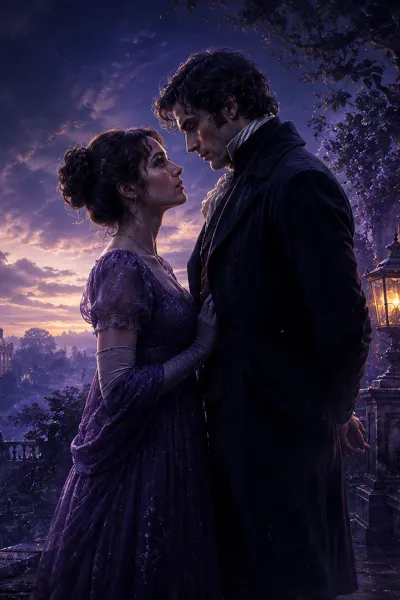
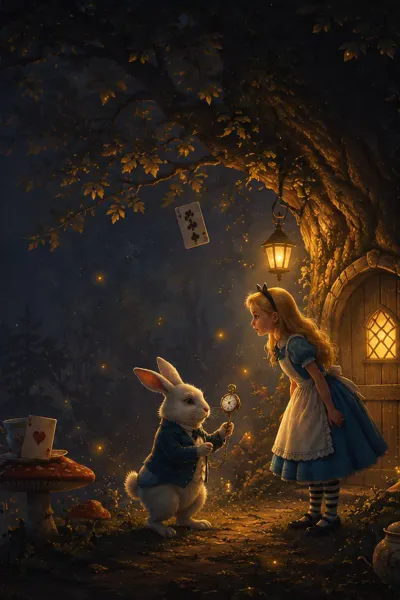
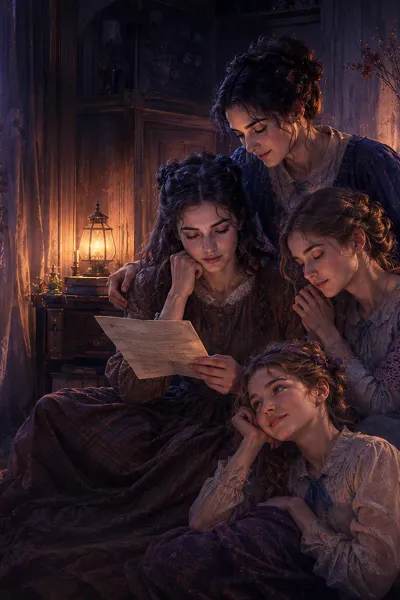
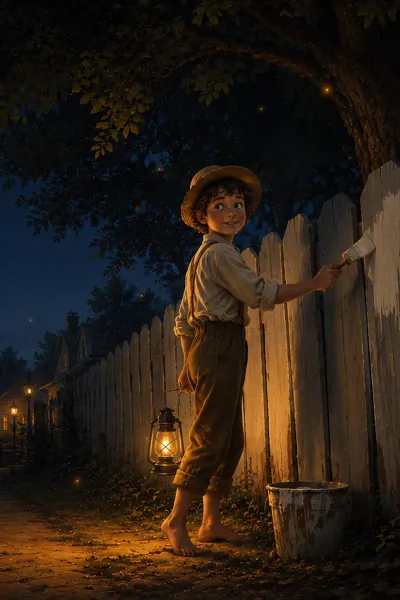



These are the B1 books that rank highest in worldwide reader demand. The rest are in the catalog: every B1 book, easiest first. The catalog is always ahead of this article: a new book shows up there the day it is published.
What a "B1 book" actually is
The label on the cover has three moving parts. Take them one at a time and it stops being mysterious.
The band: B1 on the CEFR scale
The CEFR is the six-step European scale from A1 to C2 that most courses and exams use. B1 is the third step, usually called Intermediate. At B1 you understand the main points of clear text on familiar topics and can retell a story in your own words.
For reading, that means you follow the plot rather than individual words. What still trips you up is a long description or one rare word in the wrong place, the way a single loose paving stone catches your foot on an otherwise flat street.
And the decimal, as in B1.4?
It shows where the text sits inside the band. A program calculates it from the text itself: sentence length, how common the words are, the grammar. B1.2 is near the easy edge of B1, B1.8 near the hard edge.
Only editions whose measured label is B1 go on the B1 shelf. Not "written for B1" but "came out as B1". How the measurement works and how we check it is in how we measure reading levels.
Adapted is not the same as graded readers
Most graded readers you find in shops are new short stories written for learners, or a classic squeezed into thirty pages. Almost every B1 book here is something else: an adaptation of a classic that walks next to the original chapter by chapter. Same people, same twists, same conversations, just said more plainly.
Think of a film where the hardest lines were rewritten but no scene was cut. And most of these books also exist in harder editions, up to the original. Read Tom Sawyer at B1 now, and in six months you can open the same book one level up.
One scene, three levels
Enough theory. Below is the same moment from Little Women in three editions from the site. It is Christmas, there is no money, the girls' father is away at war, and Meg explains to her sisters why there will be no presents this year. Read all three in order.
“Mother didn’t want presents this Christmas,” Meg said. “You know why. It will be a hard winter for everyone. Our men are suffering in the army. So she thinks we shouldn’t spend money for fun. We can’t do much, but we can give up little things. We should do that gladly.”
“You know why mother suggested not having any presents this Christmas. It is going to be a hard winter for everyone. She thinks we should not spend money on pleasure when our men are suffering so in the army. We can’t do much, but we can make our little sacrifices, and we ought to do it gladly.”
“You know the reason mother proposed not having any presents this Christmas was because it is going to be a hard winter for everyone; and she thinks we ought not to spend money for pleasure, when our men are suffering so in the army. We can’t do much, but we can make our little sacrifices, and ought to do it gladly.”
Notice what changed? In the first passage, one idea gets one sentence. The second brings in "sacrifices" and "ought to". The third runs everything into one long sentence held together by a semicolon, and "the reason… was because" already sounds old-fashioned and bookish.
Now the question that counts: which of the three did you read without stumbling once?
- Only the first — B1 is your level, and this article is for you.
- The first and the second — you are at the top of B1; look at B2 books as well.
- All three — time for originals: C1 books.
- Even the first was hard work — start with the shortest B1 books and take your time.
How to tell that B1 is your level
The three passages are a quick probe. The most honest test, though, is a full page of the actual book you want to read. It takes five minutes.
Read the first page without looking anything up. Close the book and tell yourself what happened: who, where, what. Then go back and count the words you did not know. A few per paragraph is fine; you will guess most of them from context. New words in every line is no longer reading, it is excavation.
One warning: page one is always the hardest page. New names, a new place, a new narrator's voice. By page two or three your eyes adjust, like walking into a dark room. Then find your row below.
| If you notice… | …it means | …so |
|---|---|---|
| You understand nearly everything, and it is a bit dull | You have outgrown B1 | Try B2 books |
| The plot is clear, a few new words per paragraph | The sweet spot | Keep going, this is your book |
| The plot is clear, but you translate every other sentence | The top edge of your level | Pick an easier book from the same shelf |
| You are not sure what is going on | The book is too hard for now | Start with short B1 books, or come back to this one in a couple of months |
If every line still sends you to the dictionary, B1 is a step too high for now. English books for beginners shows what to read first.
Why the same book feels easy to one person and hard to another
The label helps you choose; your own sense of the text decides. If you watch a lot of series in English, dialogue comes easily. If you learned from textbooks, descriptions do. So one B1 book can feel light to one reader and heavy to another, and neither is a measurement error.
Where to start: your first book
The classic mistake at B1 is choosing the most famous book as your first. Or the longest. Or, worst of all, a book that is both.
Your first book is not there to be great. It is there to be finished. One finished book, even a short one, gives you something no lesson can: proof that you can read a book in English. Three half-read ones prove the opposite.
Short books
The short books on the shelf include Alice's Adventures in Wonderland, Dickens's A Christmas Carol and Kipling's Just So Stories. Read a little every day and you can finish one in a week or two. They are all under short B1 books.
The easy end of the band
Sort the shelf from easiest to hardest and the Just So Stories, Alice and The Secret Garden come first. The logic is simple: an original that was clearly written to begin with makes for a gentler adaptation.
A story you already know
Seen the film? Read the book in your own language as a child? That is not cheating, it is a head start. When you are not busy guessing what happens next, all your attention goes to the language. Plenty of readers begin with a book they loved as kids, and they are right to.
What to pick by mood
Genre matters more than it seems. Every genre has its own vocabulary and its own pace, and if you like the genre you read longer and remember more, simply because you do not want to stop. Here are the genres where B1 has real choice.
Adventure
Close to ideal for B1, because the plot pulls you forward like a current. An unknown word does not stop you: you want to know what happens next, and you glide straight past it.
Adventure vocabulary is also concrete: actions, places, objects. That is the easiest part of a language to remember. "He buried the chest under the tree" is easier to picture than "she felt a vague unease". Everything is under B1 adventure.
Humor
Humor is a free comprehension test: if you laughed, you understood the tone and not just the words. And when a sentence seems strange, translate the whole sentence. More often than not, a joke is hiding there, not a mistake.
The best-known funny book on the shelf is Three Men in a Boat: three friends and a dog take a boat up the Thames, and everything goes wrong. Tom Sawyer and Alice belong here too. All of them are under B1 humor.
“Work consists of whatever a body is obliged to do, and Play consists of whatever a body is not obliged to do.”
Look at "a body". For Twain it does not mean a body at all; it means "a person", the way people talked in small-town America. A perfect example of why you tap a word you think you know: when a familiar word sounds odd, it probably has a different meaning there.
Animal stories
The plot usually runs in a straight line and the feelings need no explaining, which makes these a good pick when you want something warm. The shelf has Jack London's White Fang, Anna Sewell's Black Beauty, told by the horse himself, and Kipling's tales of how the elephant got his trunk. All under B1 animal stories.
“…the great grey-green, greasy Limpopo River, all set about with fever-trees…”
Say it out loud and listen to "great grey-green, greasy" roll along. Kipling first told these stories aloud to his daughter. The B1 edition simplifies the words, but the bedtime-story rhythm survives.
Love and growing up
Here you find Pride and Prejudice, Little Women and A Little Princess. Less action, more talk, letters and thoughts. At B1 that is a little harder than adventure, and also the best school for everyday spoken English: how people argue, explain themselves and make up.
One warning: Little Women is one of the longest books on the shelf. Make it your second or third book, not your first. All of them are under B1 romance.

What you will meet in a B1 text
Adaptation removes the hardest parts, but this is still real English. It helps to know in advance where you will stumble: then a bump stays a bump instead of becoming "I understand nothing".
- Past tenses everywhere. Past simple for events, past continuous for the background, the occasional past perfect for what happened even earlier.
- Reported speech. In "He said that he would come", "would come" simply means "will come", shifted back in time.
- Phrasal verbs. Find out, give up, run away. The meaning often does not add up from the parts, so these are worth a tap.
- Dialogue. Contractions (I'll, wasn't) and half-finished sentences. Watch the "he said" and "she asked" so you do not lose track of who is talking.
- The nineteenth century. Carriages, governesses, shillings. No need to learn them, just recognise what kind of thing they are.
Can you spot the three past tenses on sight? Then half the grammar of the book is already in your pocket. The book trains the rest, inside a story you care about rather than an exercise.
How to read at B1 without giving up
Most people do not abandon their first book because it is hard. They abandon it because they read it like a textbook: look up every word, write everything down, and run out of energy in ten minutes. This works better.
The full routine, from choosing a book to day fourteen, is in how to read books in English.
Tap only what the meaning depends on
If it is clear that in "she picked up the kettle" she picked up something she will pour tea from, you do not need to open "kettle". By the third time you meet it, you will know it anyway.
When the sentence really falls apart without the word, tap it. On books.dev a card opens and explains what the word means in this exact sentence. It is faster than a dictionary and does not pull you out of the story.
Lost in a sentence? Translate it whole
Sometimes you know every word and the meaning still will not come: an idiom, irony, an odd word order. Select the sentence and look at it as a whole. One of those per page is perfectly normal.
Save the words you meet twice
Learning every unknown word goes nowhere: nobody learns a list of two hundred words from one chapter. But a word that shows up a second time is one the author likes, and it will come back. Saved words go into flashcards that return at growing intervals until the word sticks.
Listen when your eyes are tired
The books have narration. In the evening, when reading feels heavy, you can listen and follow the text. The bonus is pronunciation and listening: you start recognising words by ear, not just on the page.
Why reading and listening together beats either one alone, and what a synthetic voice can and cannot do, is in English audiobooks for learners.
A little, every day
Fifteen or twenty minutes a day beats two hours on Saturday. Reading daily, you remember yesterday's chapter and do not spend the first ten minutes on "wait, who are all these people?"
Your first month
A rough route for anyone reading a book in English for the first time. The numbers are a guide, not a target: regularity beats speed.
Week 1
A short book from the easy end of B1
15 minutes a day. One goal: do not stop on every word.
Week 2
Finish the first book
Save only the words you meet for the second time.
Week 3
A second book, in a genre you love
Pick a book from the B1 shelf and listen to at least one chapter with narration.
Week 4
Keep going with the second book
20 minutes a day, plus 5 minutes reviewing your saved words.
What do you have after a month? One finished book, a second one halfway through, and a few dozen words you met in living text rather than on a list. That is the point where reading stops being a heroic effort and becomes a habit.
Common mistakes at B1
- Starting with the longest book. Pick one you can finish in a couple of weeks.
- Reading the original "to grow into it". If every sentence needs decoding, you are translating, not reading.
- Writing down every new word. Save only the ones that repeat.
- Going back to the start when you forget something. If you have the gist, keep reading; the details come back on their own.
- Putting up with a boring book. Three chapters with no spark is reason enough to switch. You owe the book nothing.
Recognise yourself in at least one? Good company: almost everyone goes through half of these. The difference is that now you know what to do about it.
When to move up to B2
Move up when it feels right, not when the calendar says so. Signs that you have outgrown B1:
- you read whole pages without opening a translation;
- you meet new words, but context explains them;
- B1 books read quickly and feel a little dull;
- you only slow down on long conversations and descriptions.
Sounds like you? Open English books for B2 learners. The best bridge is a book you have already read at B1: take the same book one level up and compare. And if B2 feels heavy, stepping back is not failure, just part of the route.
At B1, should I read an adapted book or the original?
The adapted edition. Originals of classic novels usually measure C1 or C2: long sentences, rare and old-fashioned words. At B1 that means a dictionary on every line, and the story stops being fun. The original can wait one or two levels.
How many unknown words per page is normal?
A few per paragraph is a good guide. If the plot is clear and you can guess most new words from context, the level is right. If they are in every line and the meaning slips away, take an easier book.
Are these books really free?
Yes. Reading and the dictionary on books.dev are free for everyone. You only need to open the book in your browser.
Why does one book appear at several levels?
They are different editions of the same work: adaptations of different difficulty and the original itself. From the B1 shelf you land in the B1 edition, and you can switch to another on the book's page.
What if the book turns out to be too hard?
Put it aside without guilt and take one from the easy end of B1, for example a short one. Difficulty depends on genre as well as level: Austen's conversations are harder going than London's adventures, even on the same shelf.
How fast does reading improve my level?
That depends on how much and how regularly you read. Words met in different scenes stick better than words from lists. The surest sign of progress is that books at your level start to feel easy.