English books and audiobooks for B2 learners
B2 is the level where the big classics open up. Dracula, Jane Eyre, Frankenstein, The Hound of the Baskervilles, The Great Gatsby: at B2 you read them for the story, not as an exercise. On books.dev they are free to read and come with narration, and every edition follows the original chapter by chapter.
One condition: B2 has to really be your level. The gap between B1 and B2 is not a handful of new words, it is density. Open Dracula half a step too early and the horror you get is not gothic but grammatical.
The most popular B2 books in the world
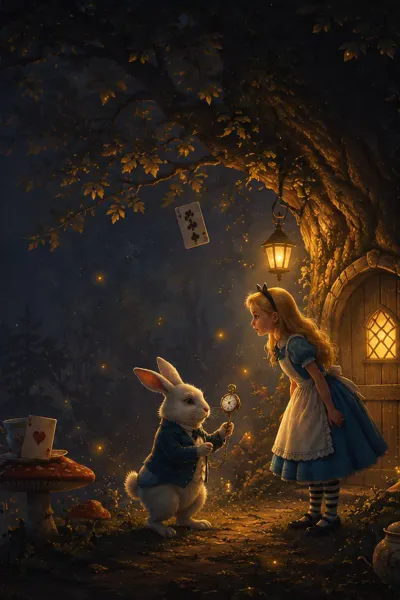
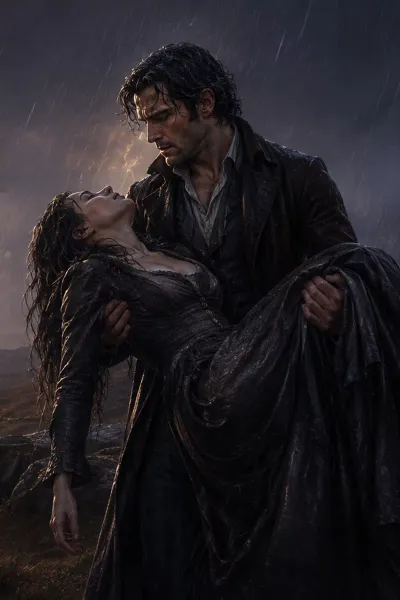
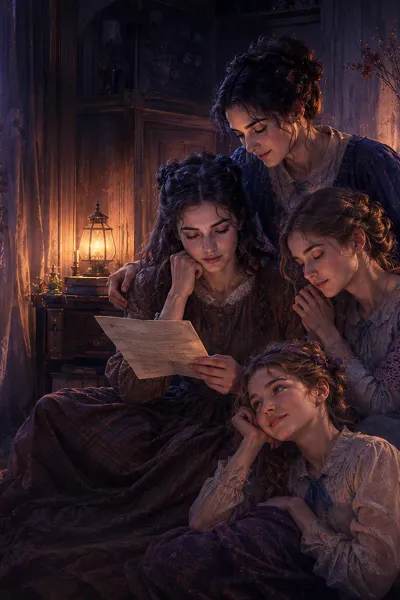
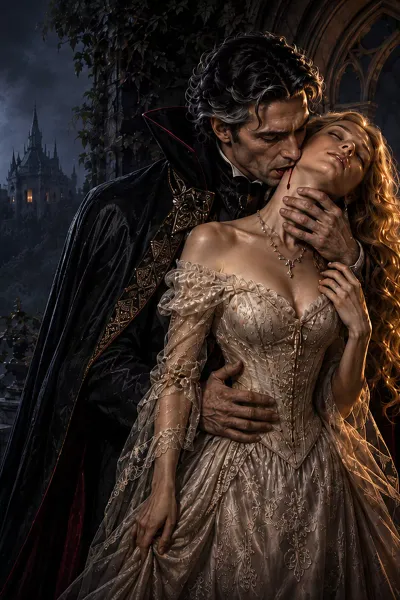
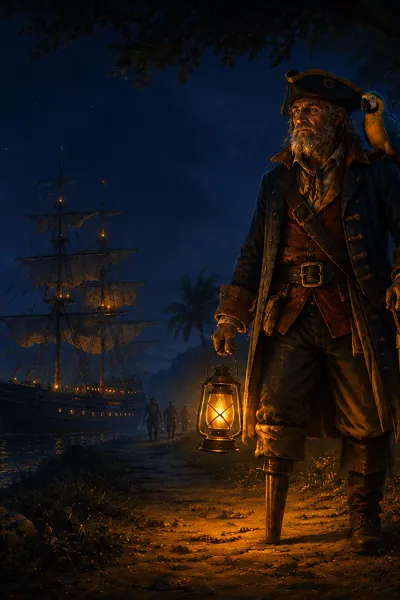
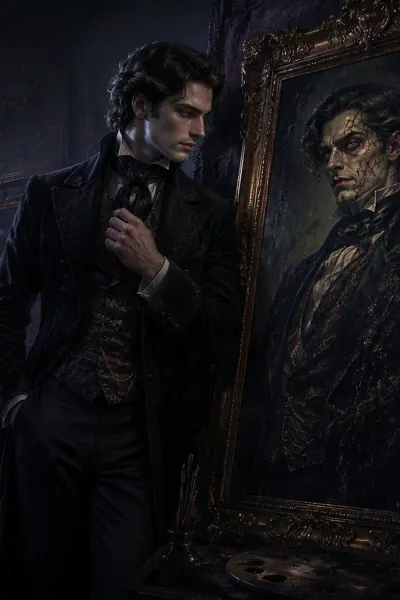
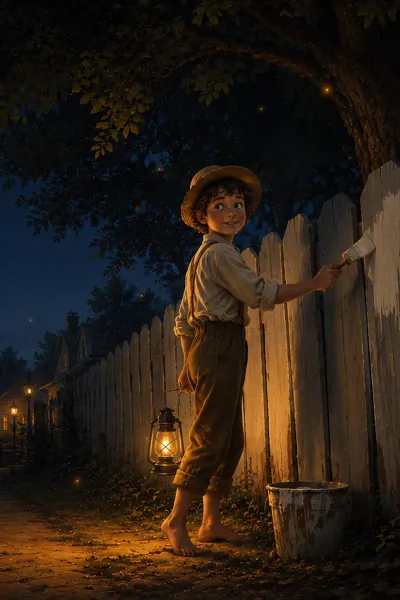
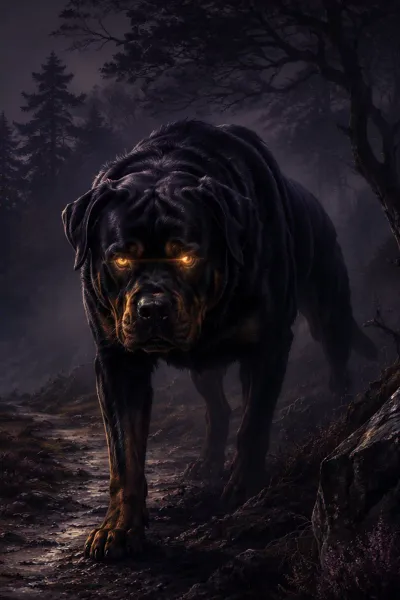
These are the B2 books with the highest worldwide reader demand. The full shelf is one click away: every B2 book, easiest first. It updates itself the moment a new book reaches the catalog.
How B2 books differ from B1
On the CEFR scale B2 is Upper-Intermediate. At this step you understand the main ideas of complex text, follow an argument or a plot twist, and read without leaning on a dictionary all the time.
If B1 is a walk on a paved path, B2 is the same walk through a forest. You can still walk, but there are roots underfoot, interesting things on both sides, and you have to pay a bit more attention. The difference comes down to four things.
- Longer sentences. One sentence now holds a cause, a detail and a feeling, joined by which, although, while.
- More description. Weather, rooms, faces. In gothic novels atmosphere is half the book, and at B2 it comes back.
- Richer vocabulary. Instead of say: whisper, mutter, exclaim. Words you understand but do not use yet.
- Trickier storytelling. Letters, diaries, a story inside a story. The edition keeps the original's structure, so you get that architecture too.
Where a label like B2.4 comes from
Every edition's level on books.dev is measured from its text by a program, not assigned. The B2 shelf holds editions labelled B2, and the decimal shows the position inside the band: B2.1 is still close to B1, B2.8 is already waving at C1. Details in how we measure reading levels.
Check yourself: B2 or still B1?
This is the level where people get stuck between levels most often. B1 books are easy now, but B2 looks intimidating. Sound familiar? Here is a ten-minute check.
Now pick your branch.
- All clear, you want more, a translation twice a page at most — B2 is yours, choose a book.
- The plot is clear, but it is slow going — start at the easy end of the band, more on that below.
- You are not sure what is happening — a couple of books from the B1 shelf will make the jump softer.
There is also a sneaky bridge: a book you have already read at B1. Tom Sawyer, White Fang, Little Women, Alice and Three Men in a Boat exist at both levels. A familiar plot takes half the load off, and you see with your own eyes how much richer the B2 text is.
Where to start
Start B2 with something that gives you a quick win. The first book at a new level is a warm-up, not a marathon.
Short books
The short books at this level include Stevenson's Strange Case of Dr Jekyll and Mr Hyde, Jack London's The Call of the Wild and The Wonderful Wizard of Oz. They are all under short B2 books.
Jekyll and Hyde is an especially good opener. It is short, tense, and almost everyone knows the twist. You know how it ends, and you still want to see how it gets there.
The easy end of the band
Sort the shelf from easiest to hardest and the first books are the ones written more plainly in the original too: The Wizard of Oz, Through the Looking-Glass, Alice. Heavy gothic sits further down the list.
B2 genres
At B2 a genre chooses more than your mood. It chooses which English you will be reading. Gothic has one vocabulary, adventure another, romance a third.
Gothic
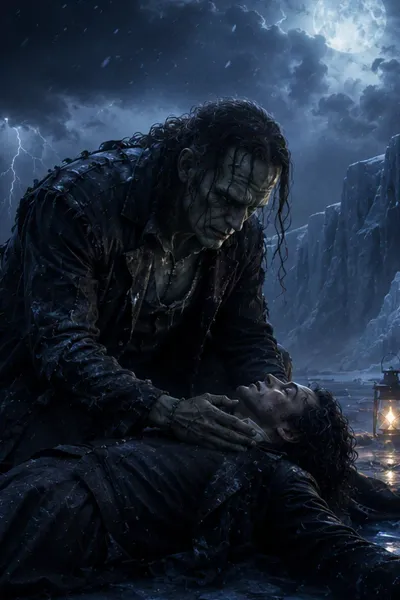
The face of this level. Dark castles, secrets, fear and passion, and for a learner the best possible vocabulary of feeling and atmosphere: dread, gloom, shudder, eerie, desolate. It is hard to put a book down just as the hero opens the locked door.
Here you find Stoker's Dracula, Mary Shelley's Frankenstein, Emily Brontë's Wuthering Heights, Wilde's The Picture of Dorian Gray and The Hound of the Baskervilles. All under B2 gothic.
“Welcome to my house! Enter freely and of your own will!”
The warmest welcome in literature, and the one that makes you want to leave at once. Look at "of your own will": the guest has to step in by choice. At B2 you can already hear why that politeness raises the hair on your neck.
One thing about the genre. Dracula is told through diaries and letters from several characters, Frankenstein through letters and a confession, Wuthering Heights through a story inside a story. For the first pages you may not know who is talking. Later that becomes part of the fun.
Detective stories
A detective story is a reading machine: every page hands you a clue, and you read on to find out whether you guessed right. At B2 you have Conan Doyle twice: The Hound of the Baskervilles, a mystery in gothic scenery, and The Adventures of Sherlock Holmes, a collection of short cases you can read one per evening. All under B2 detective stories.
Adventure
A break between gothic novels: less inner life, more action and dialogue. Here are Treasure Island, Wells's The War of the Worlds, The Call of the Wild and White Fang. All under B2 adventure.
In Treasure Island, be ready for sea words and pirate talk. That is colour, not a list to memorise: you do not need the name of every rope to understand the ship is sailing.
Love stories
Stories where the important things happen in conversations, glances and decisions. The language is subtler here: irony, things left unsaid, polite phrases with something quite different underneath. For B2 it is the best school of nuance.
Here are Jane Eyre, The Great Gatsby, Wuthering Heights and Anne of Green Gables. Gatsby is the shortest and the most recent, set in the 1920s, so its English is closer to today's. All under B2 romance.
“Reader, I married him.”
Four words, and one of the best-known lines in the English novel. Brontë turns to the reader directly, over the head of the plot, and she does it throughout the book. At B2 those asides stop confusing you and start to delight.
Humor
Three Men in a Boat, The Adventures of Tom Sawyer and Alice are on the B1 shelf too, so they make perfect bridge books. Read one at B1, then the same one at B2, and count how many jokes appear when the text gets closer to the author's. All under B2 humor.
Long books: how not to drown
B2 is where books of several hundred pages appear: Jane Eyre, Dracula, Wuthering Heights, Little Women. They are all under long B2 books.
A long novel in a foreign language is like a mountain hike. The danger is not the height, it is wanting to do it all in one day. This is what gets you to the top.
- Do not open the level with a long book. One or two short ones first, to get used to the density.
- Cut the book into chapter-sized evenings. "Read Jane Eyre" is scary. "Read a chapter" is not.
- Keep the characters in your head. Losing track of names? Write down the three or four main ones, a line each.
- Allow yourself to skim. A landscape that does not move the plot can be skimmed. Native readers do it too.
- Do not take breaks. One week without the book and you no longer remember who is related to whom.
How to read at B2: from words to scenes
The big shift at B2 is to stop reading word by word and start reading in scenes. At B1 you build meaning brick by brick. At B2 you see the whole house and fill in a missing brick yourself.
The basics of reading a book in English without quitting are in how to read books in English. Here is what changes at B2.
Guess first, check second
Met an unknown word? Finish the sentence and try to guess. Night, storm, empty house: "desolate" is probably something grim. And it is: empty, abandoned, bleak. A word you guessed sticks better than a word you looked up.
No guess, and the word matters? Tap it. The card on books.dev explains what the word means in this place, instead of throwing ten dictionary senses at you.
Idioms come whole
At B2 there are a lot of them, and they do not translate word by word. A phrase made of familiar words sounds strange? Select it and look at the whole sentence.
Listen to the dialogue
At B2 narration is most useful in conversations. Intonation reveals irony, doubt, irritation, all the things you can skip past on paper. Try listening to a chapter first and then reading it. Or the other way round: whichever order works for you is the right one.
More on reading and listening at the same time, level by level, in English audiobooks for learners.
Be choosy about saving words
There are fewer unknown words at B2, but they are worth more: they are exactly the vocabulary that separates B2 from C1. Save the ones that come back, or that you want to use yourself. They go into flashcards with spaced repetition.
What gets harder in a B2 text
Four structures you will meet in the very first chapter. It sounds like a grammar book, so they are tucked away below: open it if you want to recognise them in advance.
Four structures of a B2 text
- Regret about the past. "If I had known, I would never have come." Characters in novels regret things constantly.
- Passive and impersonal phrases. "It was said that…", "He was believed to be…". Gothic runs on rumours.
- Guesses with modals. "He must have heard us" means "I am fairly sure he heard us".
- The nineteenth century. Carriages, servants, estates and manners that no longer exist. Understand them, no need to learn them.
A B2 route: five books in a row
Do not feel like choosing? Here is an order where difficulty climbs in steps, not off a cliff.
- Jekyll and Hyde. Short, tense, an introduction to gothic without long descriptions.
- The Call of the Wild. Also short, but completely different: Alaska, action, nature.
- The Hound of the Baskervilles. A detective story in gothic scenery: moors and the legend of a monstrous dog.
- The Great Gatsby. Short but dense: irony and subtext. A test of nuance.
- Dracula or Jane Eyre. Your first long novel. By now a few hundred pages no longer scare you.
Five books is a few months of regular reading. After a route like this, B2 usually stops feeling hard, and C1 starts to look interesting.
Common mistakes at B2
- Staying on B1 to be safe. If books feel effortless, your English barely grows from them.
- Reading only gothic. It is addictive, but every genre has its own vocabulary. Mix them.
- Tapping every word out of habit. At B2 most words are clear from the scene.
- Jumping to originals too early. A classic original at B2 is decoding, not reading.
- Thinking narration is for beginners. At B2 it is exactly what brings out the tone.
When to move up to C1
Signs that you have outgrown B2:
- you read a chapter in an evening and almost never open a translation;
- you notice how the author writes, not just what happens;
- B2 editions feel smoothed out, and you want the author's own voice;
- a long novel no longer scares you.
Sounds like you? Then head to English books for C1 learners, where reading originals begins. And if B2 is still heavy, a couple of books from the B1 shelf will bring your confidence back. That is not a step back, it is a run-up.
Can I read original books at B2?
You can, but nineteenth-century classics usually measure C1 or C2 in the original, and at B2 they are hard going. Modern books written in plain language can be easier. For classics at B2, an edition that follows the original chapter by chapter is more comfortable.
How are B2 books different from B1?
Density: longer sentences, more description, richer vocabulary, trickier storytelling. If it is an edition of the same book, the plot is the same, but the text is closer to the author's.
Why does a gothic novel feel harder than an adventure at the same level?
The level measures the language, not the genre. Gothic has more description and feeling, and the story is often assembled from letters and diaries. Adventure is simpler: the action runs in a straight line.
How many B2 books should I read before C1?
There is no fixed number. Use the five-book route above as a guide: if after it a long B2 novel reads without effort and the editions feel simplified, try C1.
Is it free?
Yes. Reading and the dictionary on books.dev are free for everyone.