A Princess of Mars en anglais
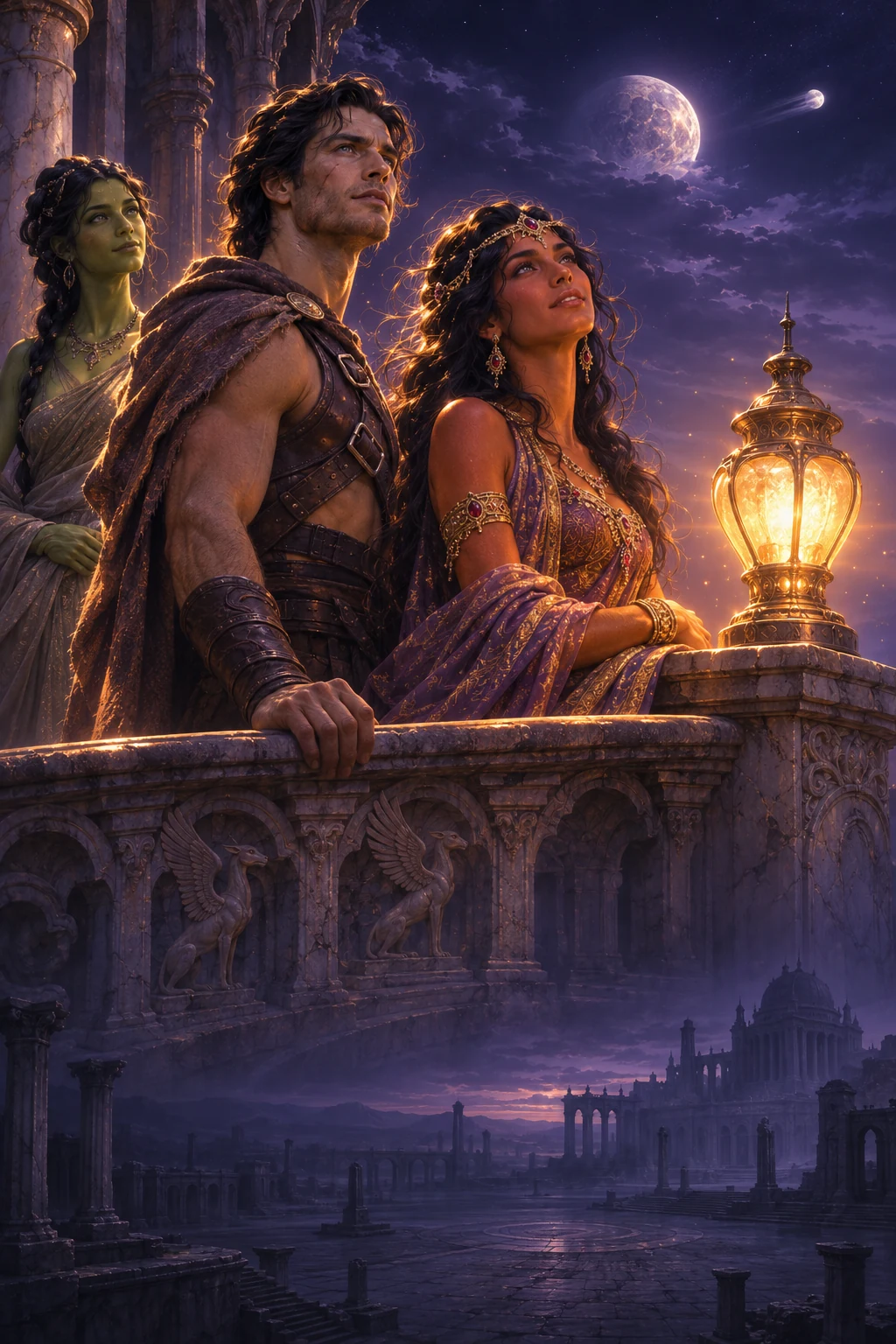
Cornered in an Arizona cave after the American Civil War, a former cavalry captain looks up at the night sky and wakes up on a dying Mars, where the weaker gravity makes him superhumanly strong and the rival empires still settle arguments with swords and airships.
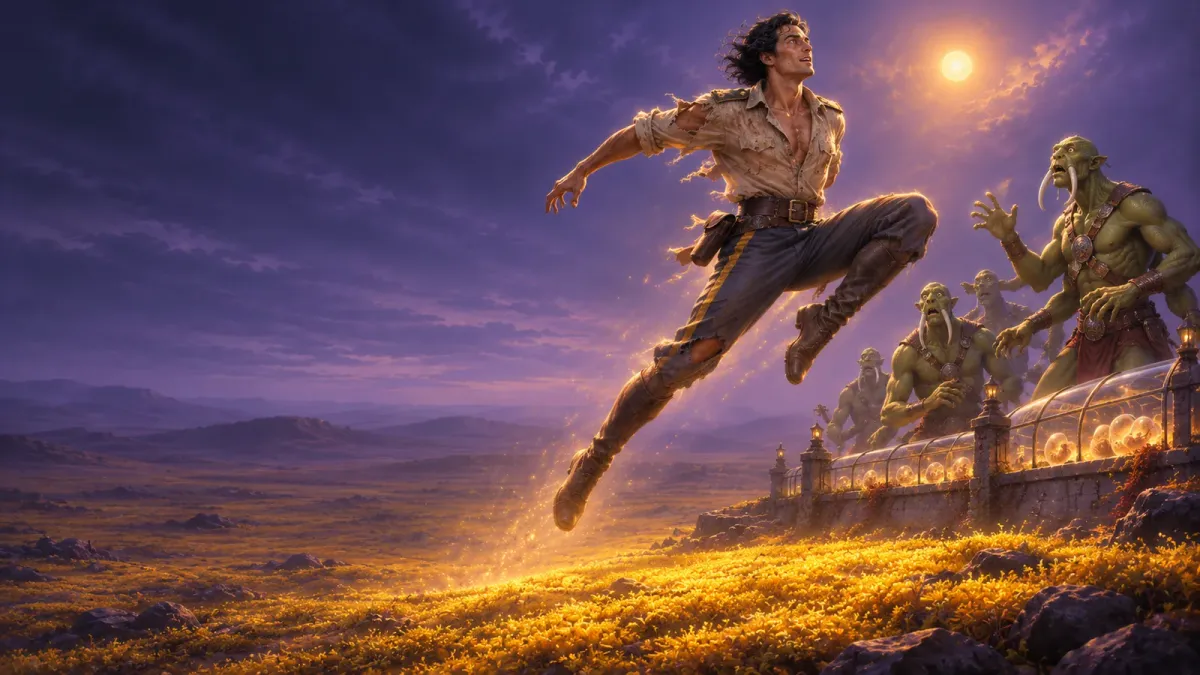
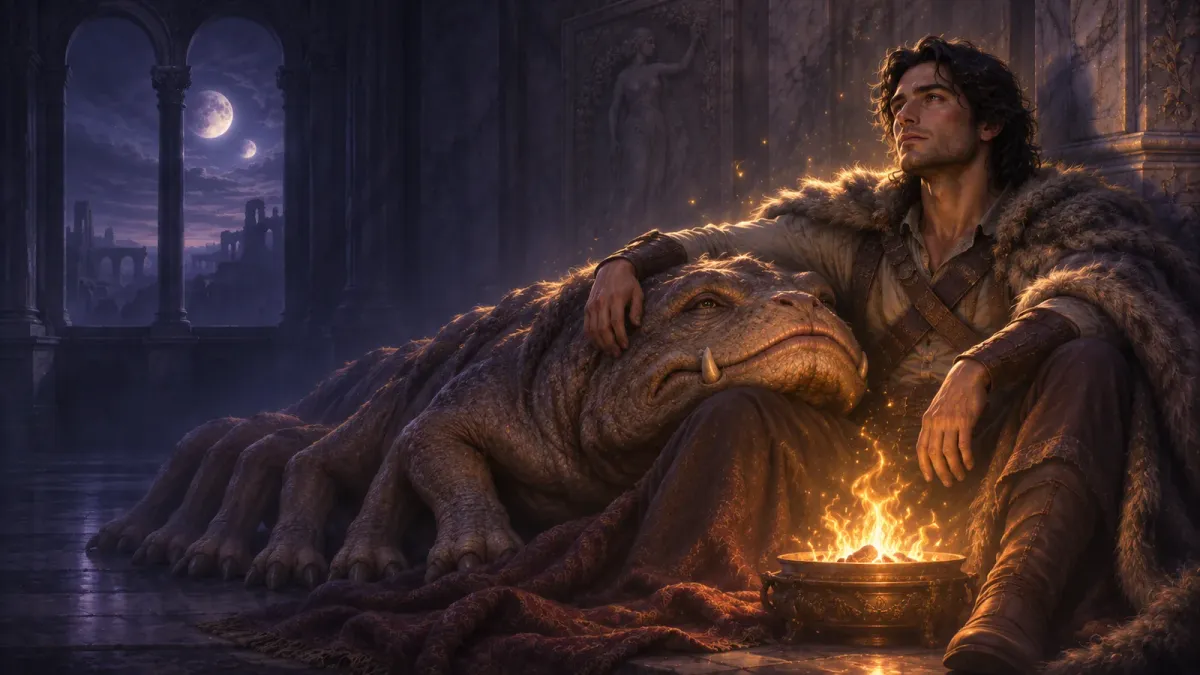
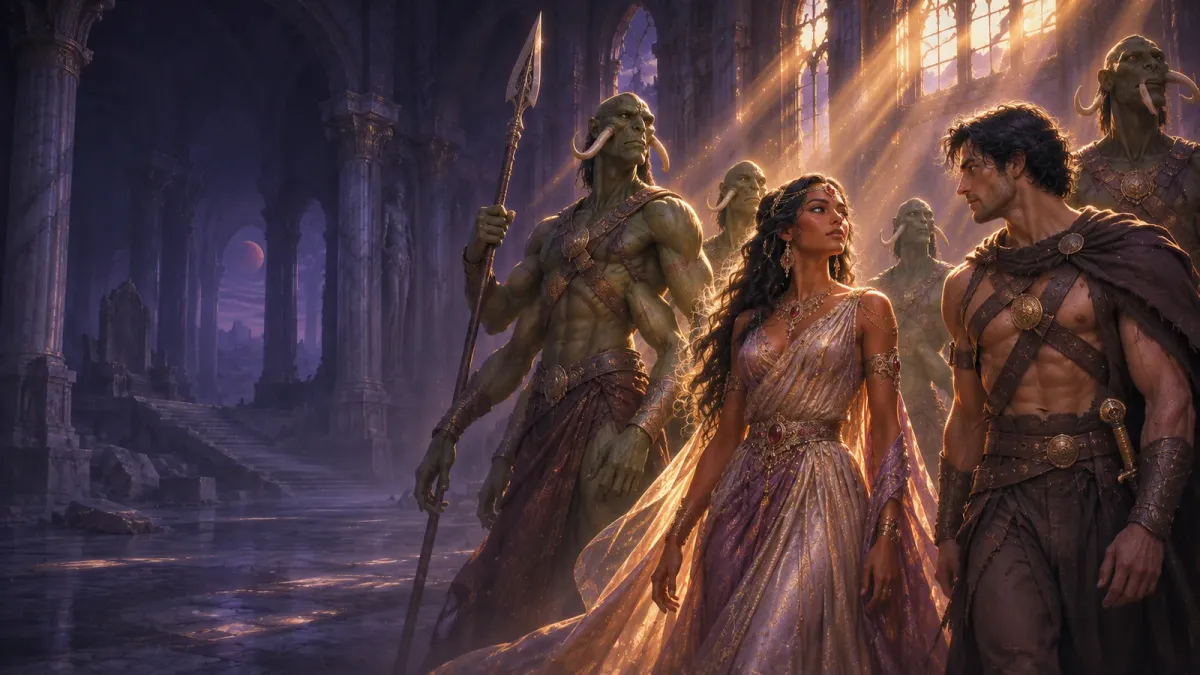
The novel opens with a framing note from 'Edgar Rice Burroughs' claiming that his strange, unaging Uncle Jack left him this manuscript in a locked vault, and then gives the floor entirely to John Carter for twenty-eight rapid chapters. The first half is an outsider's survival story inside the ruined city of Thark, where Carter learns Martian customs, adopts a ten-legged watchdog called Woola, and earns war trophies by fighting with four-armed warriors. The second half turns into a cross-continent chase after Princess Dejah Thoris is taken to the rival city of Zodanga, taking Carter through underground waterways, aerial naval battles, and palace duels before ending on a cliffhanger that sets up the next book. Burroughs writes in a brisk, plainspoken early-twentieth-century magazine style: the sentences run long, attaching action to action with 'and' and 'which', while the dialogue sounds like a polite stage play even when the speaker has tusks.
- Non-stop pulp action where every chapter ends in a duel, an escape, or a monster attack
- A dying desert planet built with its own fauna, airships, and cruel logic
- A narrator who treats four-armed warriors with nineteenth-century Southern courtesy
- The template behind a century of space operas from Flash Gordon to Star Wars
- Characters are stock types: Carter is endlessly noble, villains sneer, and the princess mostly gets captured
- Science works by wishful thinking: Carter crosses space by staring at Mars and wishing
- Long stretches of swordfights and arena bouts that follow the same pattern
- Ends on an unresolved cliffhanger meant to sell the next book
Quel genre de livre « A Princess of Mars »
L’original de « A Princess of Mars » en anglais
Choisis une version. La barre en bas de la page ouvre celle que tu choisis.
Vocabulaire par niveau
- A1 61%
- A2 17%
- B1 10%
- B2 6%
- hors dictionnaire 3%
La langue originale de « A Princess of Mars » et ce qu’il t’apporte
Difficulté de la langue C2
Our measurement puts the original text at C2. Most of the words on the page are everyday English, and no character speaks in dialect, so you will not get stuck on spelling or slang. What pushes the level up is the sentence structure: Burroughs writes long, multi-clause sentences from 1912 magazine prose, packing a whole chain of actions and courteous explanations into a single breath, sprinkled with formal military vocabulary and his own invented Martian nouns.
En pratique: The original is best for confident upper-intermediate and advanced readers comfortable with long nineteenth-century-style sentences; no adapted editions are available yet.
À quoi s’attendre
Comment le lire sans abandonner
- Do not look up words like 'thoat', 'calot', 'jed', 'jeddak', or 'padwar' in an English dictionary: Burroughs made them up, and he explains each one the first time it appears.
- Watch out for formal inversions after negative words ('Never had I seen', 'Scarcely had he spoken when', 'Nor did I wait'): put the subject back before the verb in your head to follow who is doing what.
- Several common words carry older or military meanings here—'awful' usually means awe-inspiring, 'gay' means brightly colored, 'metal' on a warrior means his wrist and arm ornaments, and 'quarters' means rooms to live in.
Un extrait de « A Princess of Mars » en anglais
Touche un mot — on affiche sa traduction
Les flèches passent d’un mot à l’autre, Entrée affiche la traduction.Original · C2135 mots
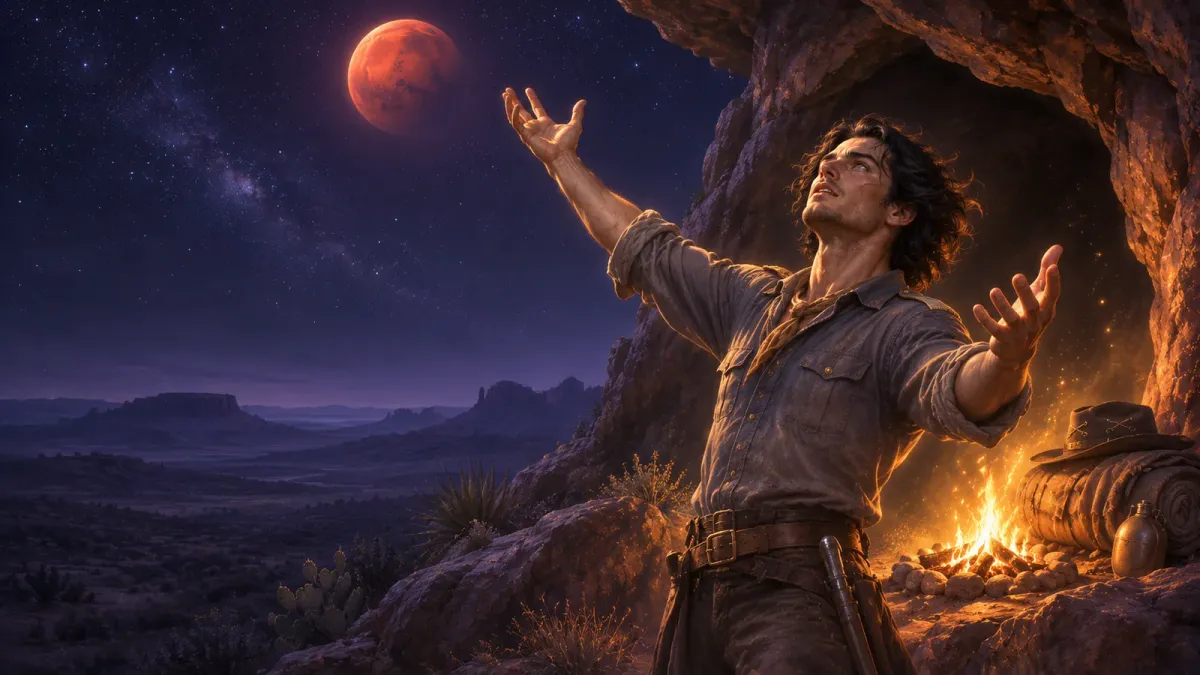
I decided to investigate, but first I lifted my head to fill my lungs with the pure, invigorating night air of the mountains. As I did so I saw stretching far below me the beautiful vista of rocky gorge, and level, cacti-studded flat, wrought by the moonlight into a miracle of soft splendor and wondrous enchantment.
Few western wonders are more inspiring than the beauties of an Arizona moonlit landscape; the silvered mountains in the distance, the strange lights and shadows upon hog back and arroyo, and the grotesque details of the stiff, yet beautiful cacti form a picture at once enchanting and inspiring; as though one were catching for the first time a glimpse of some dead and forgotten world, so different is it from the aspect of any other spot upon our earth.
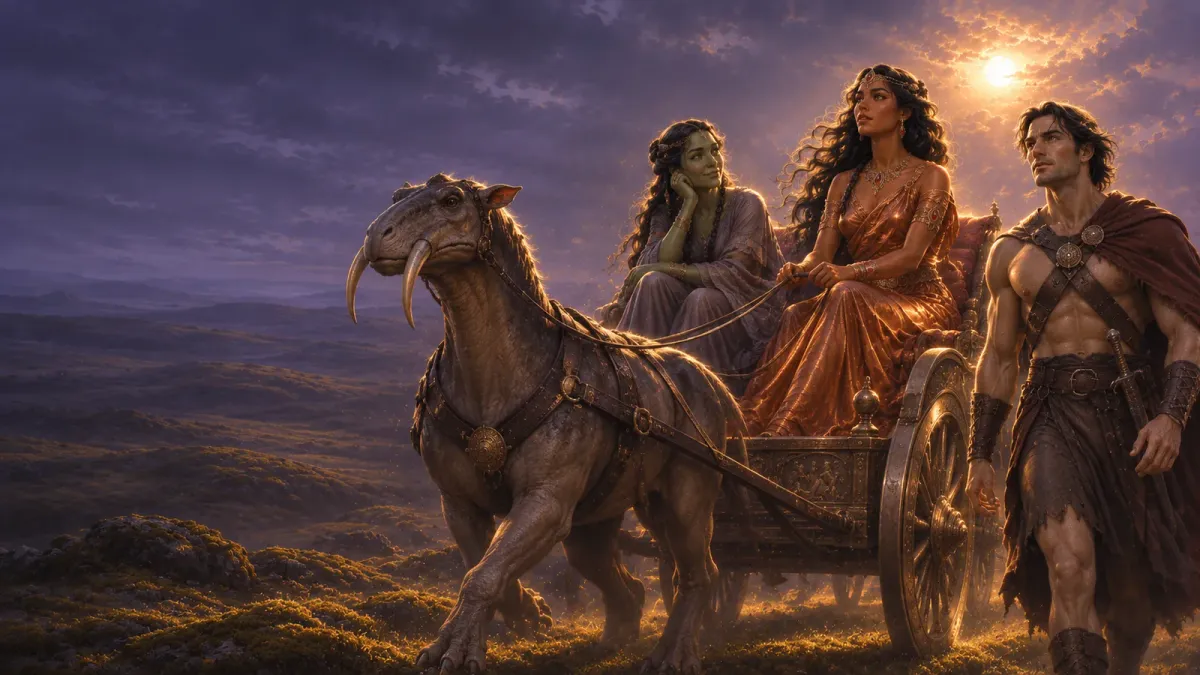
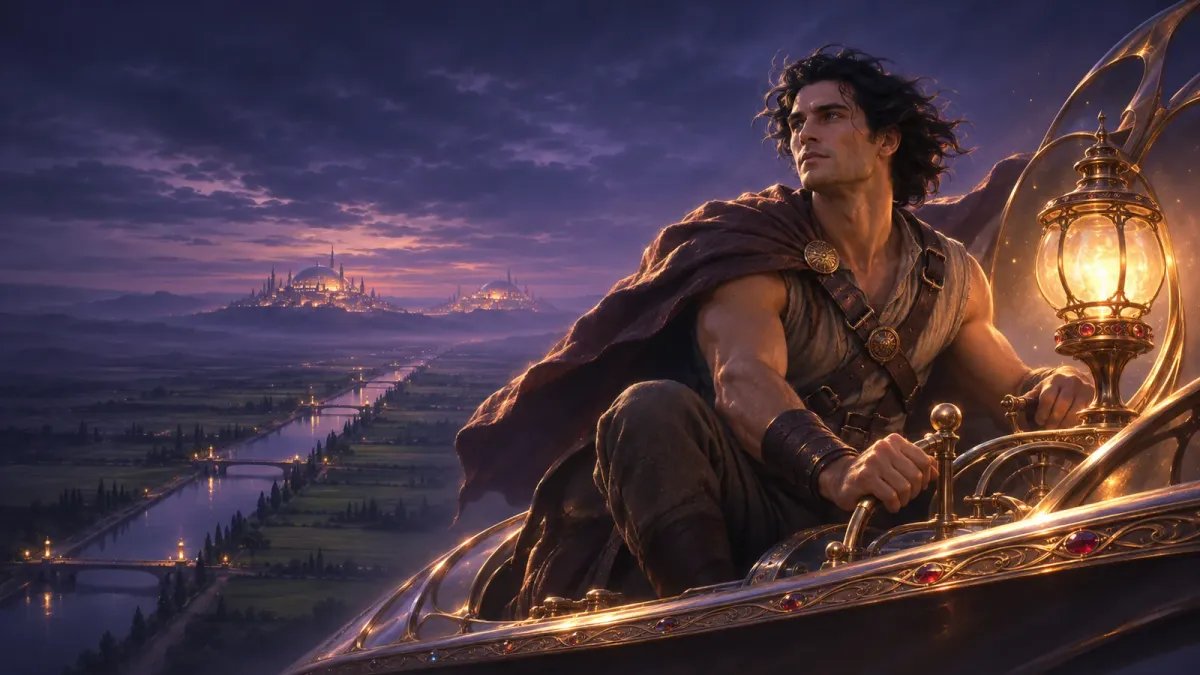
Illustrations pour « A Princess of Mars »
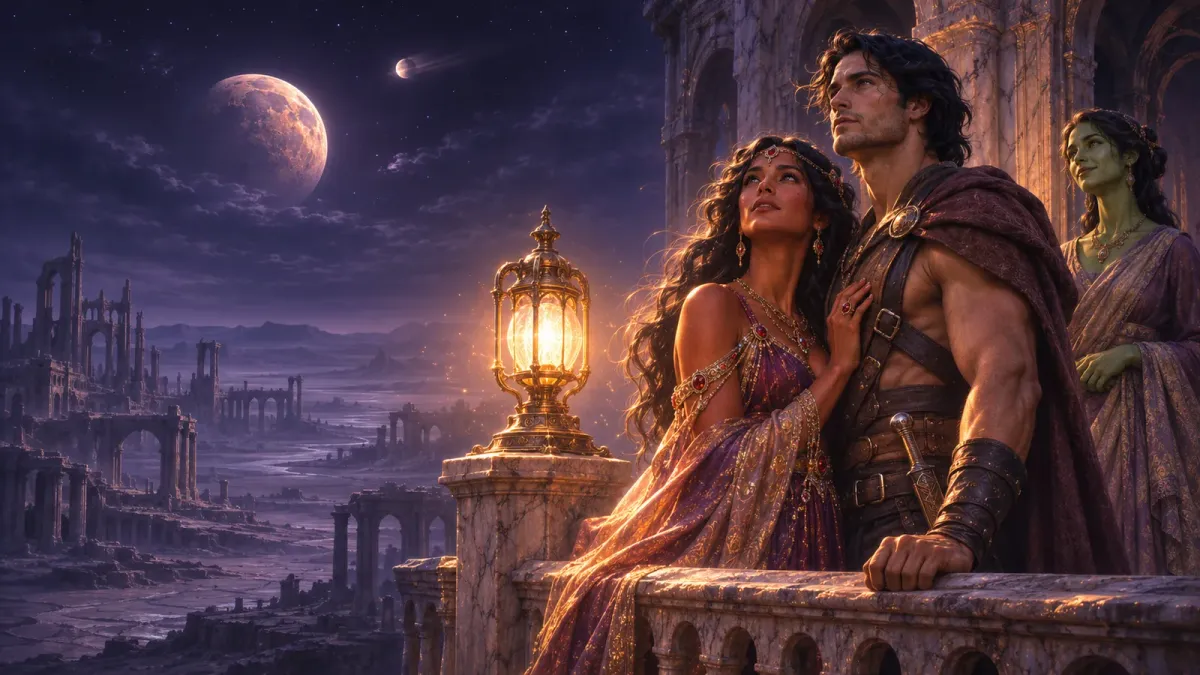
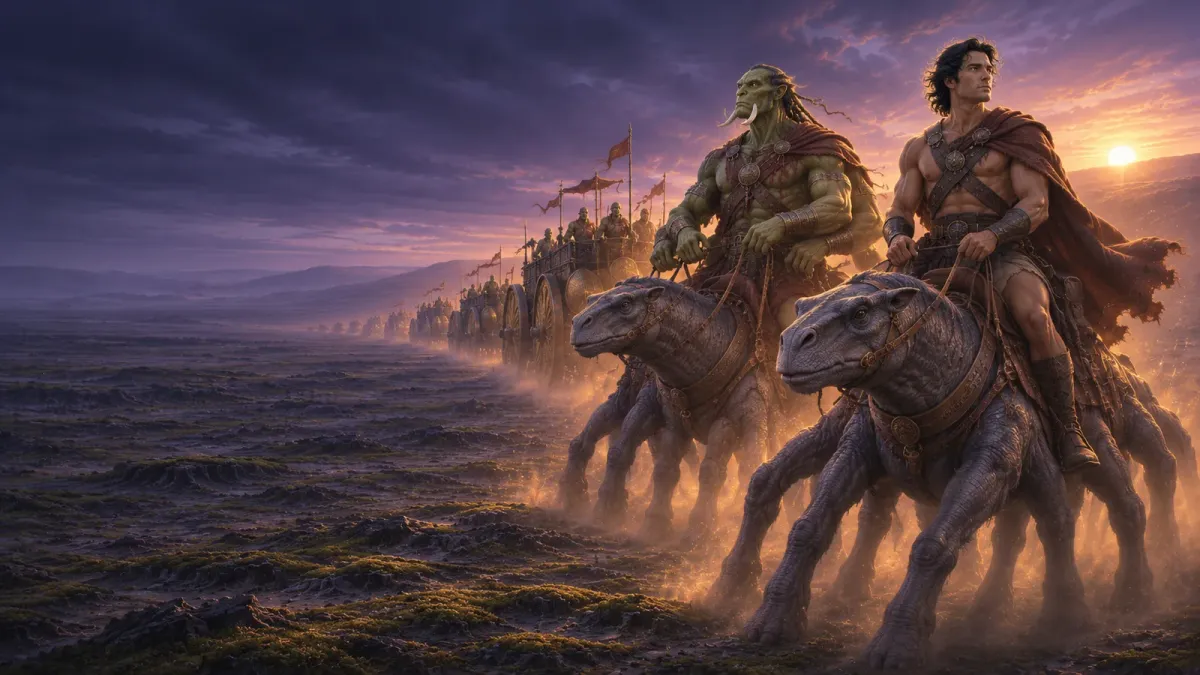
7 scènes de « A Princess of Mars », dans l’ordre de l’histoire et sans la fin.
Sommaire de « A Princess of Mars » · 30 chapitres
- Dedicationpage 1
- Forewordpage 1
- I: On the Arizona Hillspage 5
- II: The Escape of the Deadpage 14
- III: My Advent on Marspage 20
- IV: A Prisonerpage 30
Tous les 30 chapitresVoir moins
- V: I Elude My Watch Dogpage 38
- VI: A Fight That Won Friendspage 43
- VII: Child-Raising on Marspage 49
- VIII: A Fair Captive from the Skypage 56
- IX: I Learn the Languagepage 64
- X: Champion and Chiefpage 69
- XI: With Dejah Thorispage 82
- XII: A Prisoner with Powerpage 90
- XIII: Lovemaking on Marspage 97
- XIV: A Duel to the Deathpage 105
- XV: Sola Tells Me Her Storypage 117
- XVI: We Plan Escapepage 129
- XVII: A Costly Recapturepage 142
- XVIII: Chained in Warhoonpage 153
- XIX: Battling in the Arenapage 159
- XX: In the Atmosphere Factorypage 165
- XXI: An Air Scout for Zodangapage 177
- XXII: I Find Dejahpage 190
- XXIII: Lost in the Skypage 203
- XXIV: Tars Tarkas Finds a Friendpage 211
- XXV: The Looting of Zodangapage 220
- XXVI: Through Carnage to Joypage 227
- XXVII: From Joy to Deathpage 235
- XXVIII: At the Arizona Cavepage 242
Notes des lecteurs pour « A Princess of Mars »
Personne ne l’a encore noté. Donne la première note.
Ta note
Avis des lecteurs sur « A Princess of Mars »
Aucun avis pour l’instant.
L’histoire de « A Princess of Mars »
Drafted on old business letterheads
At thirty-five, Edgar Rice Burroughs was selling pencil sharpeners wholesale in Chicago and waiting for customers who were not coming. With his desk quiet, he turned over the old letterheads left from his earlier jobs and wrote the first half of the novel on the blank backs.
Erling B. Holtsmark, Edgar Rice Burroughs (1986)
Mr. Normal Bean sells a story
Worried that a wild tale would hurt his business reputation, Burroughs sent the manuscript to The All-Story magazine under the name 'Normal Bean' — a quiet promise to readers that the author's head was still screwed on right. Managing editor Thomas Newell Metcalf bought it for $400, which was several months of pay for Burroughs.
Irwin Porges, Edgar Rice Burroughs: The Man Who Created Tarzan (1975)
A typesetter ruins the joke
From February to July, The All-Story ran the tale in six parts under the title 'Under the Moons of Mars'. Along the way, a typesetter decided 'Normal Bean' had to be a spelling mistake and printed the author's name as 'Norman Bean'.
The All-Story, February–July 1912
Tarzan pays for the hardcover
Only after the Tarzan books made Burroughs a bestseller did Chicago publisher A. C. McClurg & Co. bring the Martian story out as a hardcover book in October. It finally carried the title 'A Princess of Mars', with cover and interior art by Western illustrator Frank E. Schoonover.
Robert B. Zeuschner, Edgar Rice Burroughs: The Bibliography (2016)
A cartoon test that stopped at MGM
Animator Bob Clampett teamed up with Burroughs and his son John Coleman Burroughs to turn the novel into an animated feature. They put together a color test reel and showed it to MGM, where the project quietly died.
Irwin Porges, Edgar Rice Burroughs: The Man Who Created Tarzan (1975)
Dans la culture « A Princess of Mars »
9 adaptations et mentions, 1912–2012
Dans la langue Barsoom, the other name for Mars
In these pages, Mars is 'Barsoom', complete with its own language for local beasts like the 'thoat' and the 'calot'. Later science fiction writers, Robert A. Heinlein among them, kept using the word whenever they wanted to call up a romantic, dying-desert Mars in a single word.
Dans la langue Swords on another planet
Take one Earthman, drop him onto an alien world of old empires and monsters, and hand him a blade: this book built the 'sword and planet' template. Writers like Otis Adelbert Kline, Leigh Brackett, and Lin Carter followed the blueprint openly.
The Encyclopedia of Science Fiction
Art Bad timing for a Sunday strip
United Feature Syndicate launched a 'John Carter of Mars' Sunday comic strip on the very day of the Pearl Harbor attack in December. Credited to Burroughs and drawn by his son John Coleman Burroughs, it stayed in the papers for about sixteen months.
Art Frazetta paints the red planet
When the Doubleday Science Fiction Book Club issued a hardcover edition, Frank Frazetta painted the cover. His muscular version of John Carter and Dejah Thoris gave the book the look fantasy readers still picture.
Art A real crater on Mars
Once Mariner 9 mapped the real planet, the International Astronomical Union had features to name. They gave one impact crater to Burroughs, the writer whose Barsoom stories had long shaped what people pictured when they looked up at Mars.
IAU Gazetteer of Planetary Nomenclature
Jeu From Barsoom to Dungeons & Dragons
Gary Gygax and Brian Blume turned Barsoom's battles into a tactical miniature wargame called Warriors of Mars, published by TSR. Five years later, in the 1979 Advanced Dungeons & Dragons Dungeon Master's Guide, Gygax listed Burroughs in Appendix N among the writers who inspired the game.
Advanced Dungeons & Dragons Dungeon Master's Guide (1979)
Art Marvel's monthly trip to Mars
Marvel Comics gave the hero his own monthly series, 'John Carter, Warlord of Mars', starting with writer Marv Wolfman and artists Gil Kane and Dave Cockrum. The run lasted twenty-eight issues and three annuals.
Série A boy in Brooklyn looks up
In the fifth episode of his PBS series 'Cosmos', 'Blues for a Red Planet', and in the book that went with it, astronomer Carl Sagan traced his career back to this novel. Reading it as a boy in Brooklyn is what first made him want to explore Mars and study the planets.
Carl Sagan, Cosmos (1980)
Film A two-hundred-million-dollar loss
Director Andrew Stanton brought the book to the screen for Walt Disney Pictures as 'John Carter', with Taylor Kitsch and Lynn Collins in the leads. The film cost more than $250 million to make and did so poorly at the box office that the studio took a $200 million write-down.
Michael D. Sellers, John Carter and the Gods of Hollywood (2012)
Questions et réponses sur « A Princess of Mars » en anglais
How does John Carter actually get to Mars?
He does not use a spaceship or a machine. Cornered in an Arizona cave by a paralysis he thinks may come from a gas, Carter hears a rustling behind him, steps out of his own seemingly dead body, looks out at the red star of Mars, and is drawn across the void. His body stays in the cave; he himself arrives on Mars, naked, and stands up there.
Why doesn't John Carter remember his childhood or how old he is?
Burroughs makes Carter mysteriously ageless and never explains why. In his opening note, Carter writes that he cannot remember ever being a child, always looks about thirty, and may be a hundred or older; the life he does recount includes service as a Confederate captain in the American Civil War. His 'nephew' Edgar Rice Burroughs, who frames the story, only remembers him as a grown man who never aged, and Carter's instructions were that his body be left unembalmed in a tomb whose lock opens only from the inside.
What is the difference between the Green Martians and the Red Martians?
The Green Martians, such as the Tharks, are fifteen-foot-tall nomads with four arms, tusks, and eyes on the sides of their heads; they raise their young in communal incubators without family ties and live by raiding in the dry sea bottoms. The Red Martians, to whom Princess Dejah Thoris belongs, look human apart from their copper-colored skin, though like all animals on Barsoom they too hatch from eggs. The Red Martians live in walled cities fed by canals, build fleets of airships, and run the huge atmosphere plant that keeps the whole planet breathable.
How does John Carter understand and speak the Martian language?
All the peoples of Barsoom share one spoken language, though each nation has its own writing, and Carter learns to speak it from the Thark woman Sola, unusually fast. Martians also project thoughts, especially to riding beasts and calots, and Carter finds that he can catch those thoughts while no Martian can read his mind, which gives him a tactical advantage.
Do Martians in the book wear clothes?
In the novel's text, both Green and Red Martians go nearly naked except for leather harnesses, jeweled ornaments, and weapons—what Burroughs calls their 'metal'. When Carter arrives on Mars with nothing on, that matches local custom, and rank and house are read from the emblems on the harness. Many later illustrations and the screen versions add clothing.
How is the 2012 Disney movie 'John Carter' different from the book?
The 2012 film takes the Therns and Matai Shang from the second novel, The Gods of Mars, makes them shape-shifting villains behind the war, and adds a glowing medallion that carries Carter between planets. In A Princess of Mars there are no Therns and no medallion: Carter wills himself across space from the Arizona cave, and Zodanga is simply a rival empire trying to conquer Helium. In the second book Matai Shang is the high priest of the Therns, not a shape-shifter.
En bref sur « A Princess of Mars »
15 champs de données éditoriales et de caractéristiques mesurées du texte. Tout est vérifiable.
- Titre original
- A Princess of Mars
- Auteur
- Edgar Rice Burroughs · 1875–1950
- Première publication
- 1912
- Langue originale
- Anglais
- Genre
- Aventure · Science-fiction
- Ambiance
- Romantique
- Thèmes
- Amour · Guerre · Courage · Loyauté
- Cadre
- Arizona and Mars (Barsoom) · 1866–1886
- Mots distincts
- 6 447
- Mots par phrase
- 28 mots
- Niveau de l’original
- C2Comment nous mesurons
- Versions
- C2
- Longueur de l’original
- 30 chap. · 67 010 mots
- Temps de lecture
- ~6 h 10 min
- Télécharger
- EPUB
Livres similaires que lire après « A Princess of Mars »
Dans le même esprit
8Le même genre et le même registre.
Vingt mille lieues sous les mers
Jules Verne
C2orig.B1B2
~9 h 40 min · Aventure
Le Monde perdu
Arthur Conan Doyle
C2orig.B1B2
~7 h · Aventure
L'Île mystérieuse
Jules Verne
C2orig.B1B2
~15 h · Aventure
Captain Blood
Rafael Sabatini
C2orig.
~10 h 30 min · Aventure
Le Tour du monde en quatre-vingts jours
Jules Verne
C2orig.B1B2
~5 h 50 min · Aventure

Croc-Blanc
Jack London
C2orig.B1B2
~6 h 40 min · Aventure

Le Lagon bleu
H. de Vere Stacpoole
C2orig.B1B2
~5 h 50 min · Aventure
Don Quichotte
Miguel de Cervantès
C2orig.B1B2
~41 h 40 min · Classiques