The Man Who Was Thursday v angličtině
An undercover policeman infiltrates a secret seven-man council of anarchists named after the days of the week, where he is elected Thursday and has to stop the rest of the calendar.
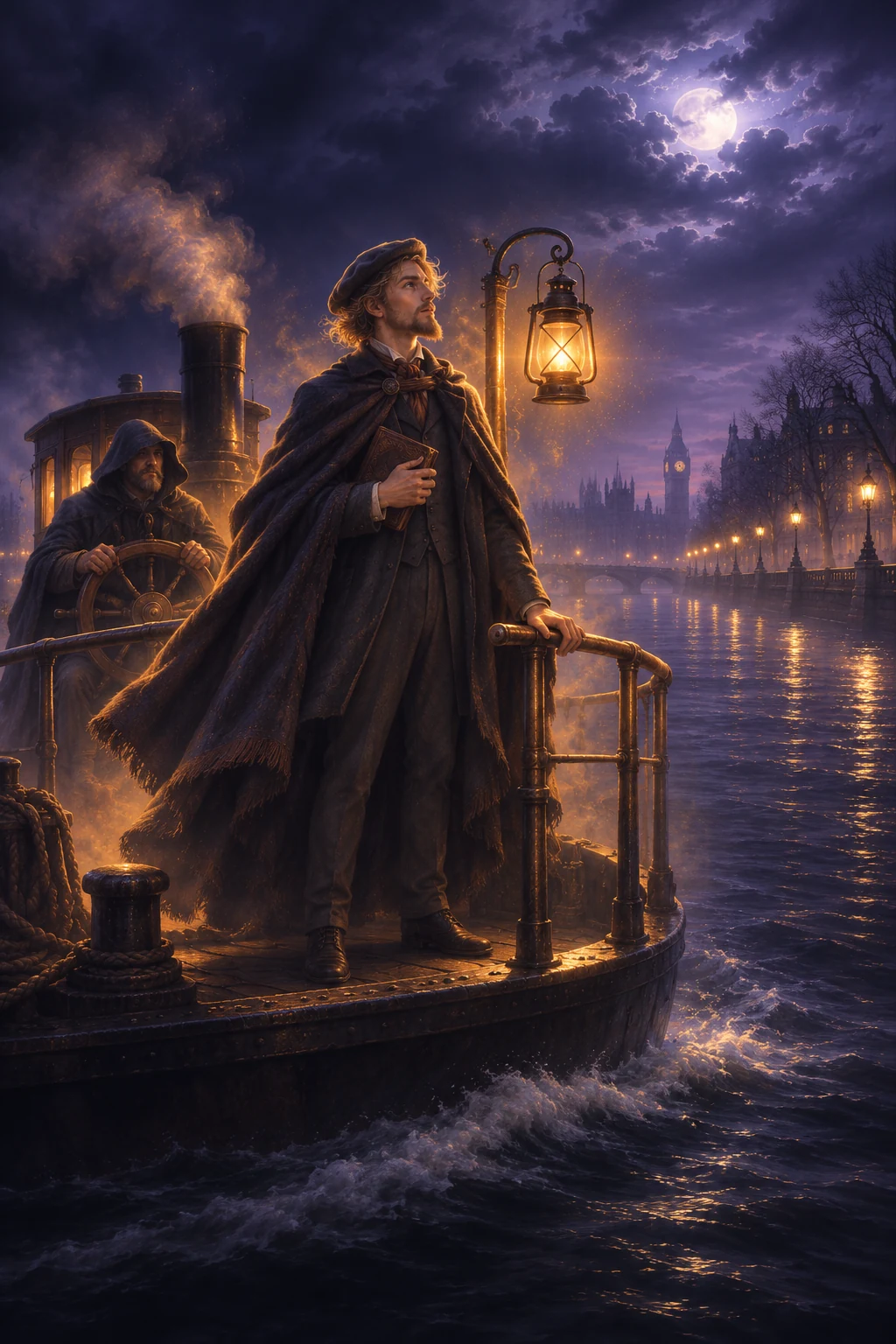
Chesterton subtitles the book "A Nightmare," and it behaves like one. It starts as an Edwardian spy story with false beards, secret passwords, and an underground meeting room, then tilts into a wild comedy of chases involving hot-air balloons and an elephant from the zoo, and finishes as a strange pageant in an English country garden. Every chapter is built around a duel—sometimes with swords in a French field, more often with ideas over a restaurant table. The prose moves quickly, driven by Chesterton's habit of turning common phrases upside down and describing the London sky as if it were painted onto a stage set.
- a spy thriller that keeps pulling the rug out from under its own plot
- characters who stop in the middle of a gunfight to argue about poetry and order
- fast, absurd action scenes across Edwardian London and France
- witty, paradoxical one-liners in almost every paragraph
- the realistic detective plot dissolves into dream logic and allegory in the final third
- characters talk like brilliant essayists rather than real policemen
- if you want a strict puzzle-mystery with footprints and alibis, this is the wrong kind of detective story
Jaká je to kniha „The Man Who Was Thursday“
Originál knihy „The Man Who Was Thursday“ (angličtině)
Vyber verzi. Lišta dole na stránce otevře tu vybranou.
Slovní zásoba podle úrovní
- A1 61%
- A2 16%
- B1 9%
- B2 7%
- mimo slovník 3%
Původní jazyk knihy „The Man Who Was Thursday“ a co ti dá
Jak náročný je jazyk C2
Our measurement puts the original text at C2, which means even confident readers will meet rare adjectives and literary idioms on every page. The grammar itself is clean and the sentences are not unusually long, because the plot moves fast. What pushes the level up is Chesterton's huge descriptive vocabulary—especially for colors, skies, and architecture—and his love of philosophical debate where familiar words are used in unexpected ways.
Co to znamená v praxi: The original suits advanced readers (C2) who enjoy wordplay and philosophical argument; only the original text is available on this page right now.
Na co se připravit
Jak číst a nevzdat to
- When a sentence seems to contradict itself—like calling a revolution conservative or a poet a policeman—trust your grammar: Chesterton uses paradox on purpose, and you have not misread the words.
- Do not stop to look up every rare color word in the sunset descriptions; get the mood of the scene and save your dictionary for the arguments between the characters.
- Watch for British nouns of the 1900s like 'hansom' (a two-wheeled horse cab) or 'electric tram', which simply name how people got around London.
Ukázka z knihy „The Man Who Was Thursday“ v angličtině
Klepni na libovolné slovo – ukážeme ti překlad
Šipkami přecházíš mezi slovy, Enter zobrazí překlad.Originál · C2155 slov
This particular evening, if it is remembered for nothing else, will be remembered in that place for its strange sunset. It looked like the end of the world. All the heaven seemed covered with a quite vivid and palpable plumage; you could only say that the sky was full of feathers, and of feathers that almost brushed the face. Across the great part of the dome they were grey, with the strangest tints of violet and mauve and an unnatural pink or pale green; but towards the west the whole grew past description, transparent and passionate, and the last red-hot plumes of it covered up the sun like something too good to be seen. The whole was so close about the earth, as to express nothing but a violent secrecy. The very empyrean seemed to be a secret. It expressed that splendid smallness which is the soul of local patriotism. The very sky seemed small.
Ilustrace ke knize „The Man Who Was Thursday“
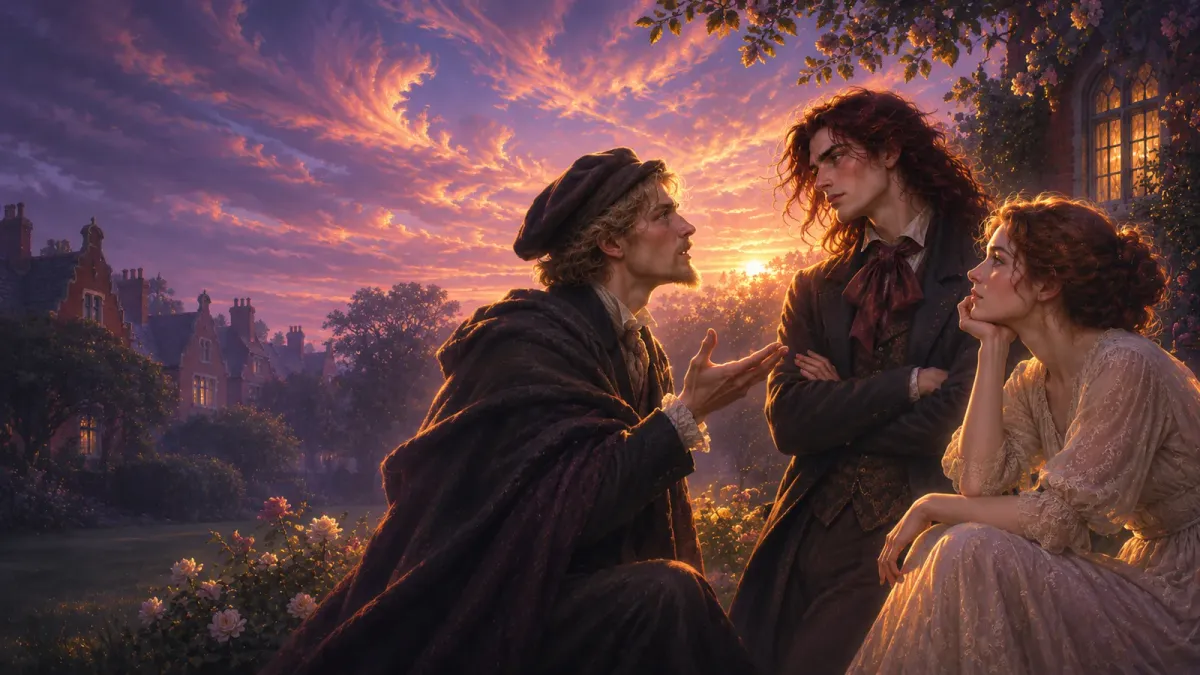
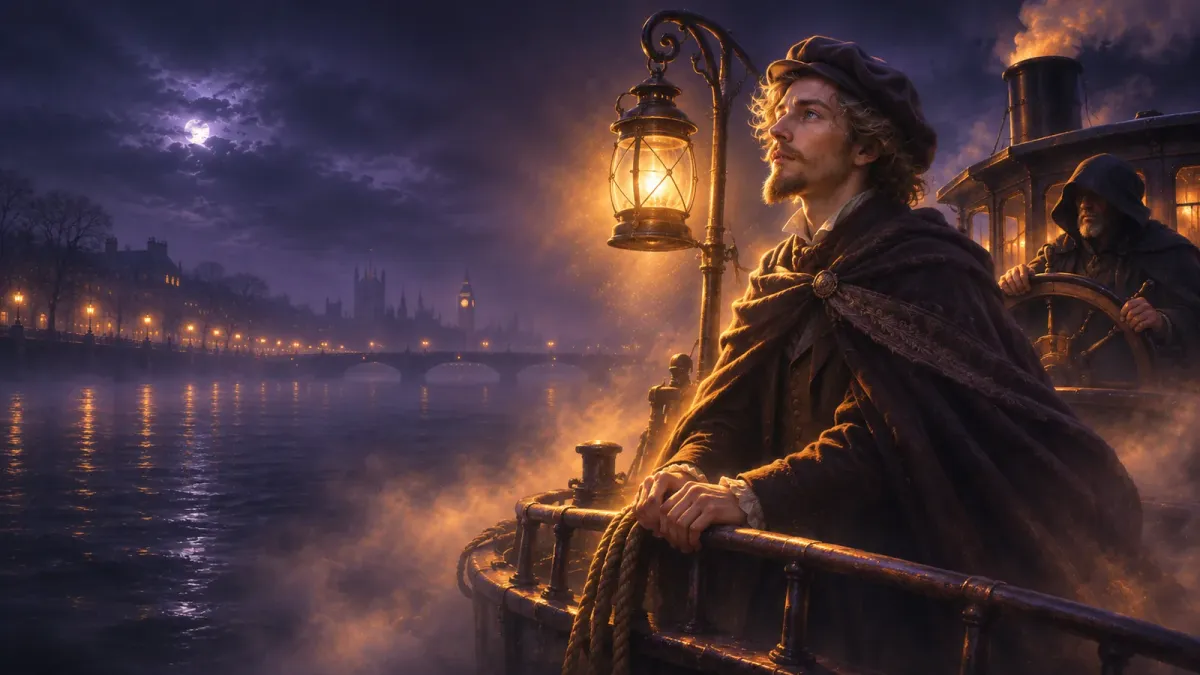
7 scén z knihy „The Man Who Was Thursday“, v pořadí podle příběhu a bez konce.
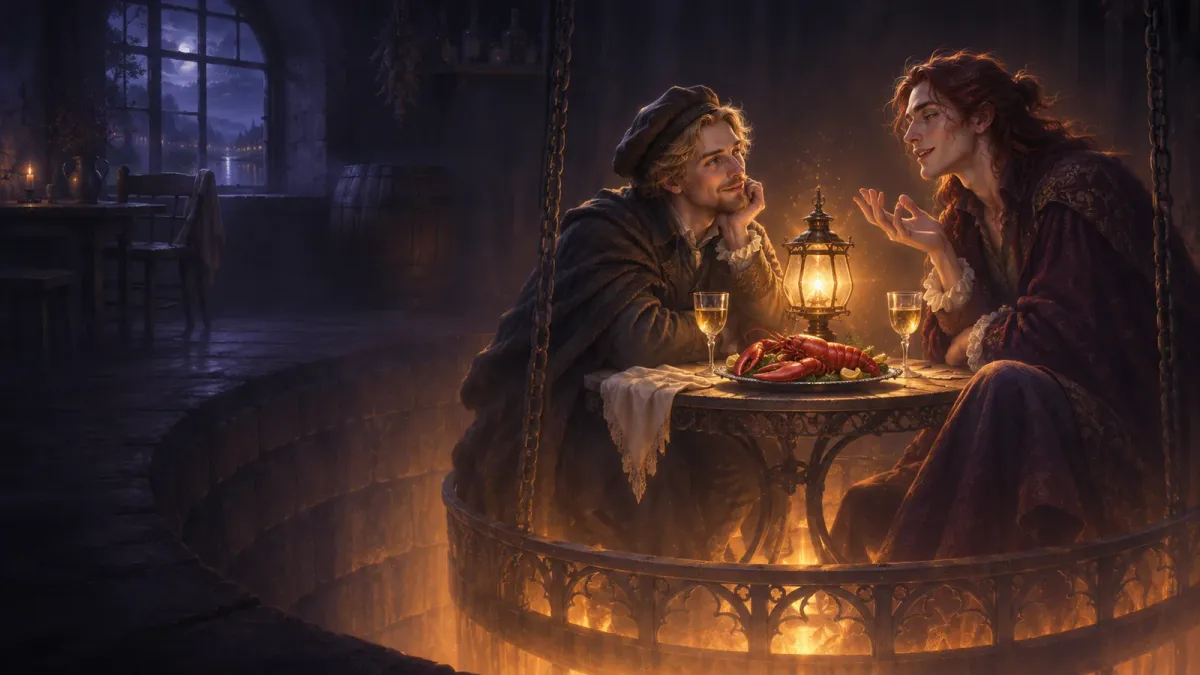
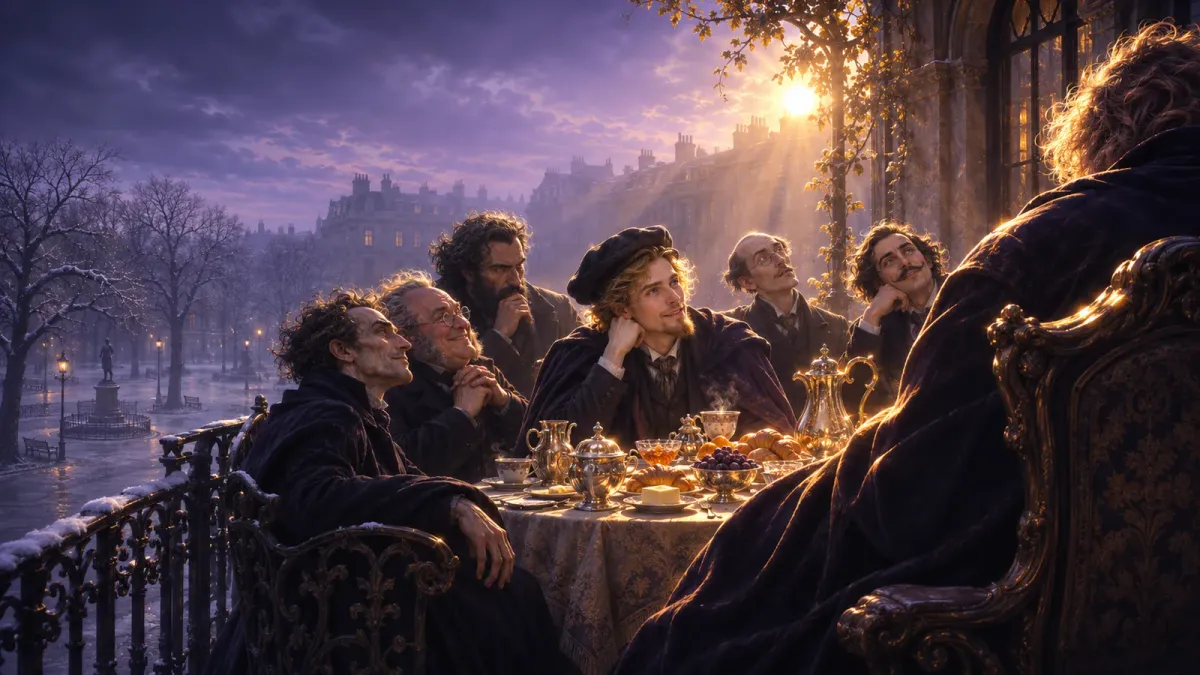
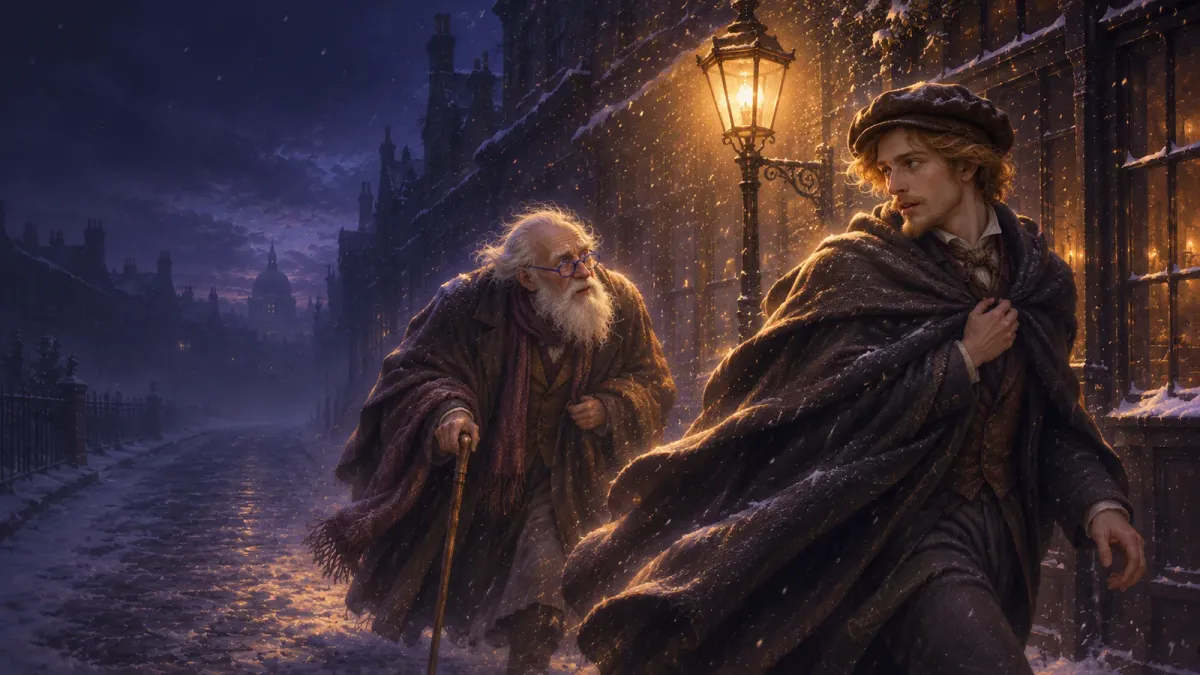

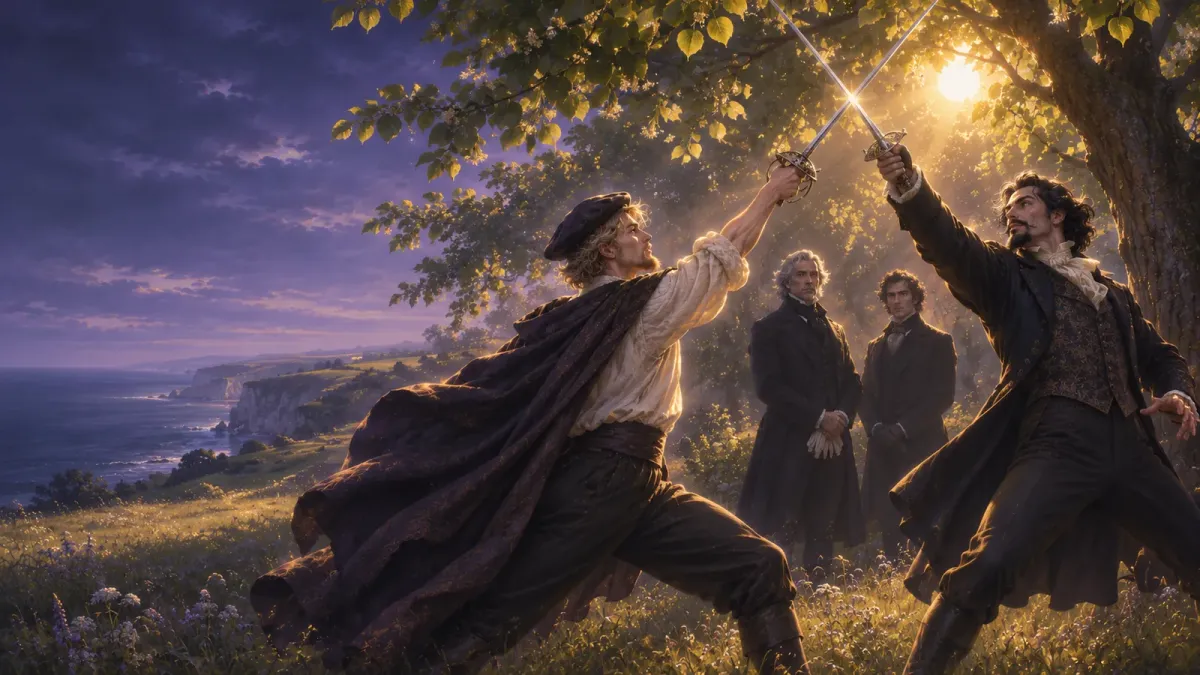
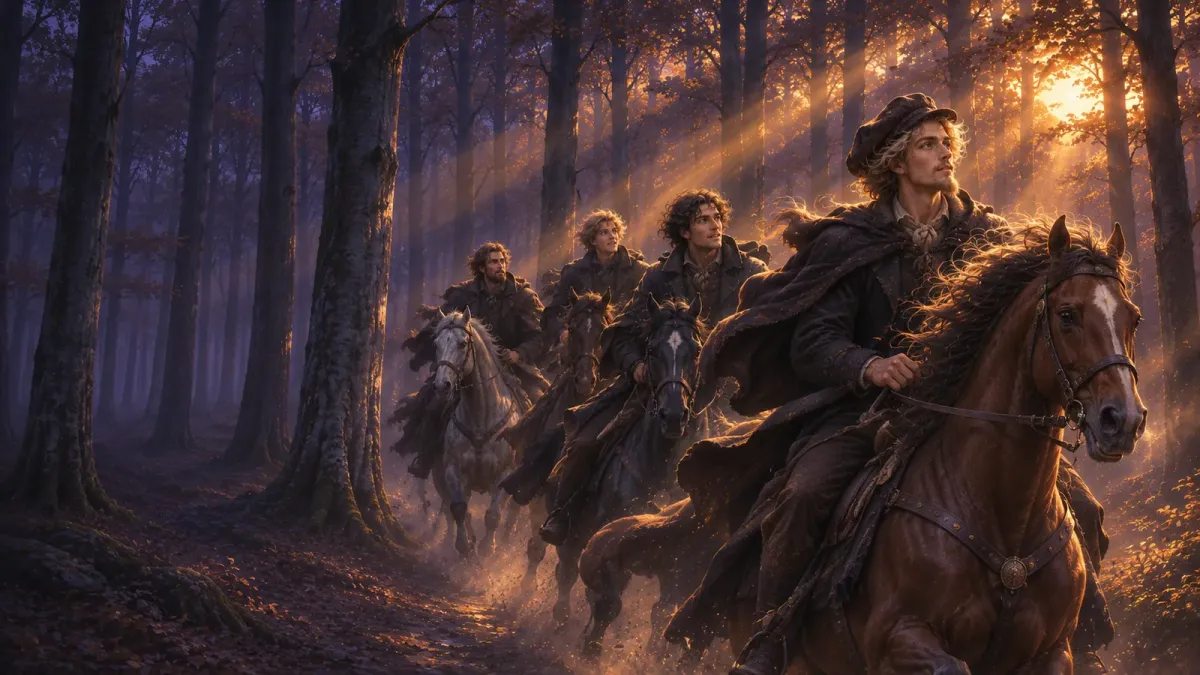
Obsah knihy „The Man Who Was Thursday“ · 16 kapitol
- Dedicationstrana 1
- I: The Two Poets of Saffron Parkstrana 2
- II: The Secret of Gabriel Symestrana 15
- III: The Man Who Was Thursdaystrana 26
- IV: The Tale of a Detectivestrana 39
- V: The Feast of Fearstrana 52
Všech 16 kapitolZobrazit méně
- VI: The Exposurestrana 63
- VII: The Unaccountable Conduct of Professor de Wormsstrana 74
- VIII: The Professor Explainsstrana 86
- IX: The Man in Spectaclesstrana 101
- X: The Duelstrana 120
- XI: The Criminals Chase the Policestrana 140
- XII: The Earth in Anarchystrana 151
- XIII: The Pursuit of the Presidentstrana 171
- XIV: The Six Philosophersstrana 185
- XV: The Accuserstrana 200
Hodnocení čtenářů knihy „The Man Who Was Thursday“
Zatím žádné hodnocení. Přidej první.
Tvoje hodnocení
Recenze čtenářů knihy „The Man Who Was Thursday“
Zatím žádné recenze.
Historie knihy „The Man Who Was Thursday“
Subtitled 'A Nightmare' from the start
Bristol publisher J. W. Arrowsmith brought the novel out in February with the subtitle 'A Nightmare' and a poem for Chesterton's boyhood friend E. C. Bentley. In those verses, Chesterton looked back at the 1890s pessimism and aestheticism the two of them had grown up under.
First edition, J. W. Arrowsmith (1908)
A family stage version in Hampstead
Chesterton's sister-in-law Ada Elizabeth Chesterton teamed up with playwright Ralph Neale to turn the book into a three-act play. It opened at the Everyman Theatre in Hampstead in January, with a foreword by Chesterton himself.
The Man Who Was Thursday: A Play in Three Acts, Ernest Benn (1926)
One last reminder before dying
On 13 June, the day before he died, Chesterton used an essay in The Illustrated London News to point out that critics kept ignoring the subtitle, 'A Nightmare', and reading the ending as a literal statement about theology. Sunday, he explained, was not the God of religion, but Nature as it looks before revelation.
G. K. Chesterton, The Illustrated London News, 13 June 1936; reprinted in Autobiography (1936)
Borges spots the nightmare underneath
Writing in his collection Other Inquisitions, Jorge Luis Borges praised the book and argued that Chesterton had a dark, Kafkaesque streak that he held back on purpose. Instead of giving in to the macabre, Chesterton bent the nightmare into detective farce and allegory.
Jorge Luis Borges, Otras inquisiciones (1952)
V kultuře „The Man Who Was Thursday“
6 adaptací a zmínek, 1908–1990
V jazyce When every rebel is a cop
In the book's central council of seven anarchists named after the days of the week, six turn out to be undercover policemen spying on each other. Critics and political writers still use that setup as shorthand for any radical group or intelligence operation where the informants outnumber the actual plotters.
Divadlo Lifts, scaffolding, and philosophy upside down
At the Moscow Kamerny Theatre, director Alexander Tairov staged a Russian adaptation by Sigizmund Krzhizhanovsky on a constructivist moving set of lifts, scaffolding, and projections designed by Alexander Vesnin. In his autobiography, Chesterton noted that the Russian adaptor had reportedly turned the book's philosophy upside down.
G. K. Chesterton, Autobiography (1936)
Divadlo Orson Welles takes it to radio
On 5 September, Orson Welles adapted and performed the novel for CBS's radio show The Mercury Theatre on the Air. It was a fast way to put a story of voices and disguises into American living rooms.
CBS radio broadcast, 5 September 1938
Film Secret agents with numbers for names
Patrick McGoohan's British television series The Prisoner trapped a former secret agent in a surreal village whose leaders are known only by numbers. Critics and scholars quickly connected its disguised bosses and existential chase back to Chesterton's nightmare.
Seriál Four parts on BBC Radio
BBC Radio has returned to the story several times over the years. Bert Coules turned it into a four-part drama with Geoffrey Matthews as Sunday and Richard Pasco as Syme, and Geoffrey Palmer later read the book aloud for listeners in 2005.
BBC Genome Project
Umění A nod from Good Omens
When Neil Gaiman and Terry Pratchett published their comic apocalypse novel Good Omens, they dedicated the book to Chesterton's memory. Their line for him was simple: 'A man who knew what was going on'.
Neil Gaiman and Terry Pratchett, Good Omens (1990)
Otázky a odpovědi o knize „The Man Who Was Thursday“ v angličtině
Is The Man Who Was Thursday related to Chesterton's Father Brown stories?
No, they do not share any characters or settings. Chesterton published this standalone novel in 1908, two years before the first Father Brown short story appeared in print. While Father Brown solves quiet murder puzzles through psychology, Gabriel Syme is caught in a loud, surreal spy chase.
Why do Lucian Gregory and Gabriel Syme argue about the London Underground at the beginning?
Their argument sets up the central idea of the whole book: whether rebellion or order is the truly poetic thing. Gregory claims an anarchist is an artist who wants to abolish the timetable, while Syme answers that the real miracle is order — that when one has left Sloane Square one does come out at Victoria, instead of the train doing any of a thousand other things. That debate is what provokes Gregory into showing Syme the secret anarchist meeting.
Why does Saffron Park at the start of the book sound like a real London suburb?
Chesterton modeled it on Bedford Park in west London, a red-brick garden suburb built in the late nineteenth century for artists, writers, and mild bohemians. He renamed it Saffron Park to mock its mix of neat suburban lawns and polite revolutionary talk, where people dressed in artistic clothes but never broke the law.
Why does the police chief who recruits Syme sit in a pitch-dark room?
The head of the philosophical police detective force works in total darkness and never shows his face to the men he recruits. Within the story, this keeps his agents from knowing who is giving the orders, and as the nightmare develops, the unseen voice in the dark room becomes the central puzzle Syme has to solve when he meets Sunday.
What happened to the previous Thursday before Syme took his place?
The Central Anarchist Council keeps seven members titled after the days of the week, and the post of Thursday is vacant. At an underground meeting reached from Saffron Park, Syme outdoes Lucian Gregory in a speech and is elected Thursday, which lets him infiltrate the top of the conspiracy.
Why can't Syme wound the Marquis de Saint-Eustache in their sword duel?
The Marquis de St. Eustache is Wednesday himself, and he fights with cold mechanical skill that makes him seem almost inhuman. The duel in the French meadow is written like a bad dream in which Syme's sword keeps striking something unnaturally hard, until the pursuit interrupts them and pulls both men onto the same side.
Ve zkratce o knize „The Man Who Was Thursday“
15 polí tirážních údajů a naměřených vlastností textu. Vše si lze ověřit.
- Původní název
- The Man Who Was Thursday
- Autor
- G. K. Chesterton · 1874–1936
- První vydání
- 1908
- Původní jazyk
- Angličtina
- Žánr
- Detektivky · Filozofie · Klasika
- Atmosféra
- Snová
- Témata
- Identita · Společnost · Povinnost · Odvaha
- Místo a doba
- London and northern France · early 20th century (around 1908)
- Různých slov
- 6 120
- Slov na větu
- 16 slovo
- Úroveň originálu
- C2Jak měříme
- Verze
- C2
- Rozsah originálu
- 16 kap. · 57 899 slovo
- Doba čtení
- ~5 h 20 min
- Stáhnout
- EPUB
Podobné co číst po knize „The Man Who Was Thursday“
Od stejného autora
1Stejné pero, jiný příběh.
Podobné ladění
7Stejný žánr a stejný tón.
Vánoční koleda
Charles Dickens
C2orig.B1C1
~2 h 40 min · Klasika

Tao te ťing
Lao-c’
C2orig.B1B2
~3 h 40 min · Filozofie
Zločin a trest
Fjodor Michajlovič Dostojevskij
C1.7orig.B1B2
~18 h 50 min · Klasika
Dobrodružství Sherlocka Holmese
Arthur Conan Doyle
C1.8orig.B1C1
~9 h 40 min · Detektivky
Captain Blood
Rafael Sabatini
C2orig.
~10 h 30 min · Dobrodružné
How to Live on 24 Hours a Day
Arnold Bennett
C2orig.
~1 h 10 min · Osobní rozvoj
Cesta kolem světa za osmdesát dní
Jules Verne
C2orig.B1B2
~5 h 50 min · Dobrodružné