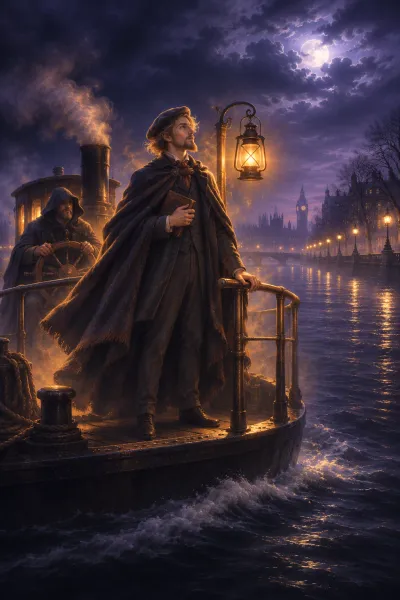
The Man Who Was Thursday auf Englisch
An undercover policeman infiltrates a secret seven-man council of anarchists named after the days of the week, where he is elected Thursday and has to stop the rest of the calendar.
Chesterton subtitles the book "A Nightmare," and it behaves like one. It starts as an Edwardian spy story with false beards, secret passwords, and an underground meeting room, then tilts into a wild comedy of chases involving hot-air balloons and an elephant from the zoo, and finishes as a strange pageant in an English country garden. Every chapter is built around a duel—sometimes with swords in a French field, more often with ideas over a restaurant table. The prose moves quickly, driven by Chesterton's habit of turning common phrases upside down and describing the London sky as if it were painted onto a stage set.
- a spy thriller that keeps pulling the rug out from under its own plot
- characters who stop in the middle of a gunfight to argue about poetry and order
- fast, absurd action scenes across Edwardian London and France
- witty, paradoxical one-liners in almost every paragraph
- the realistic detective plot dissolves into dream logic and allegory in the final third
- characters talk like brilliant essayists rather than real policemen
- if you want a strict puzzle-mystery with footprints and alibis, this is the wrong kind of detective story
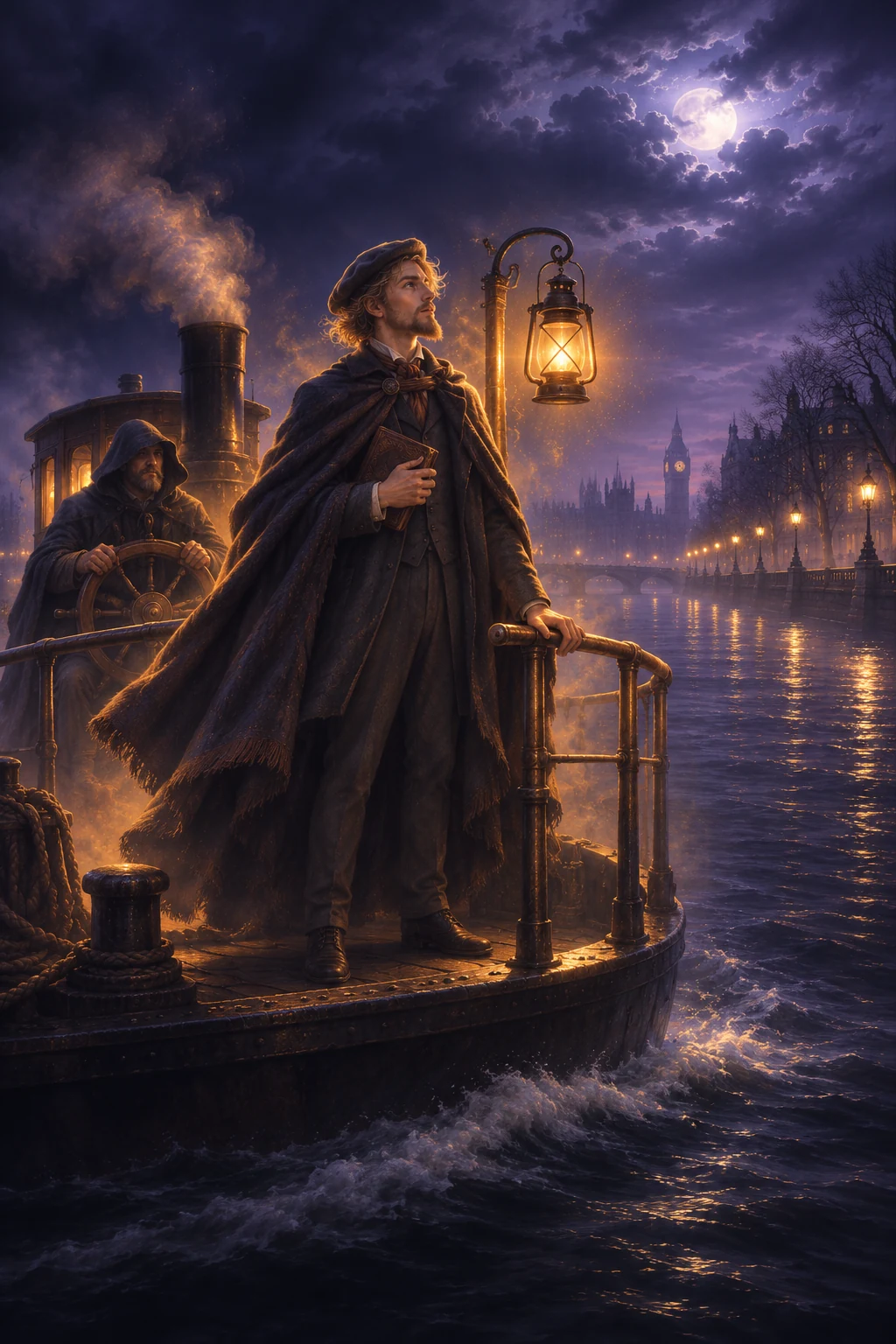
Was für ein Buch „The Man Who Was Thursday“ ist
Das Original von „The Man Who Was Thursday“ auf Englisch
Wähle eine Version. Über die Leiste unten auf der Seite öffnest du deine Auswahl.
Wortschatz nach Niveau
- A1 61%
- A2 16%
- B1 9%
- B2 7%
- nicht im Wörterbuch 3%
Die Originalsprache von „The Man Who Was Thursday“ und was sie dir bringt
Wie schwer die Sprache ist C2
Our measurement puts the original text at C2, which means even confident readers will meet rare adjectives and literary idioms on every page. The grammar itself is clean and the sentences are not unusually long, because the plot moves fast. What pushes the level up is Chesterton's huge descriptive vocabulary—especially for colors, skies, and architecture—and his love of philosophical debate where familiar words are used in unexpected ways.
Was das praktisch heißt: The original suits advanced readers (C2) who enjoy wordplay and philosophical argument; only the original text is available on this page right now.
Worauf du dich einstellen solltest
Wie du es liest und nicht aufhörst
- When a sentence seems to contradict itself—like calling a revolution conservative or a poet a policeman—trust your grammar: Chesterton uses paradox on purpose, and you have not misread the words.
- Do not stop to look up every rare color word in the sunset descriptions; get the mood of the scene and save your dictionary for the arguments between the characters.
- Watch for British nouns of the 1900s like 'hansom' (a two-wheeled horse cab) or 'electric tram', which simply name how people got around London.
Leseprobe aus „The Man Who Was Thursday“ auf Englisch
Tippe auf ein Wort – wir zeigen dir die Übersetzung
Mit den Pfeiltasten wechselst du zwischen Wörtern, Enter zeigt die Übersetzung.Original · C2155 Wörter
This particular evening, if it is remembered for nothing else, will be remembered in that place for its strange sunset. It looked like the end of the world. All the heaven seemed covered with a quite vivid and palpable plumage; you could only say that the sky was full of feathers, and of feathers that almost brushed the face. Across the great part of the dome they were grey, with the strangest tints of violet and mauve and an unnatural pink or pale green; but towards the west the whole grew past description, transparent and passionate, and the last red-hot plumes of it covered up the sun like something too good to be seen. The whole was so close about the earth, as to express nothing but a violent secrecy. The very empyrean seemed to be a secret. It expressed that splendid smallness which is the soul of local patriotism. The very sky seemed small.
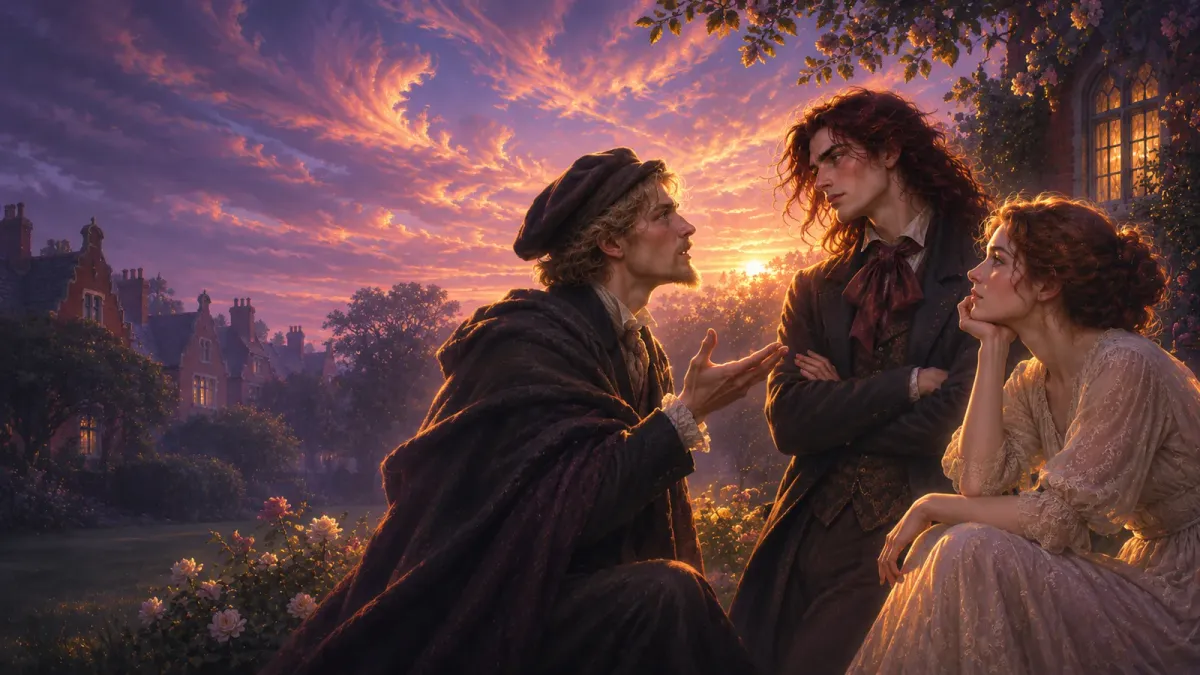
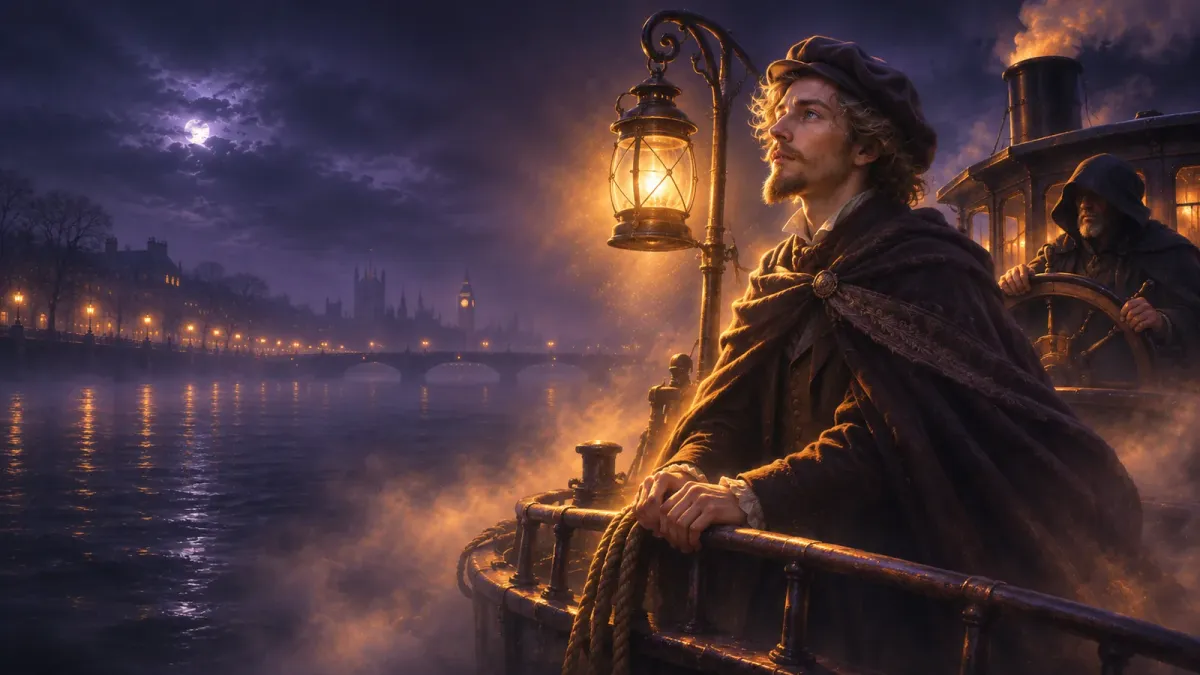
Illustrationen zu „The Man Who Was Thursday“
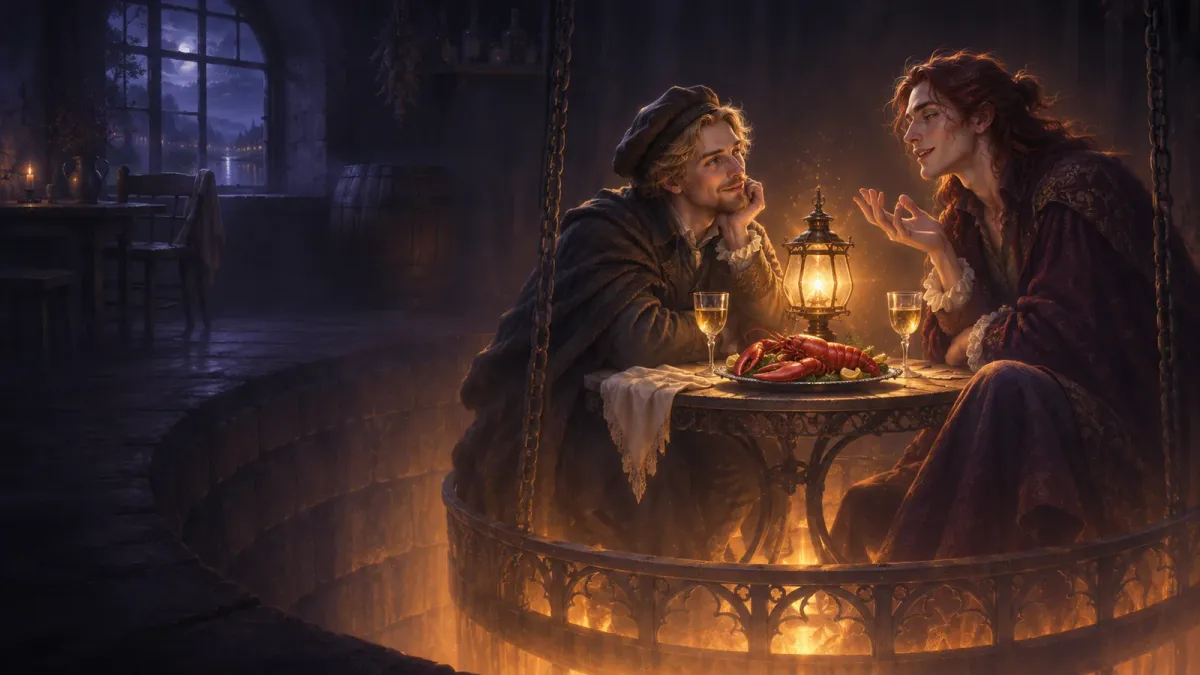
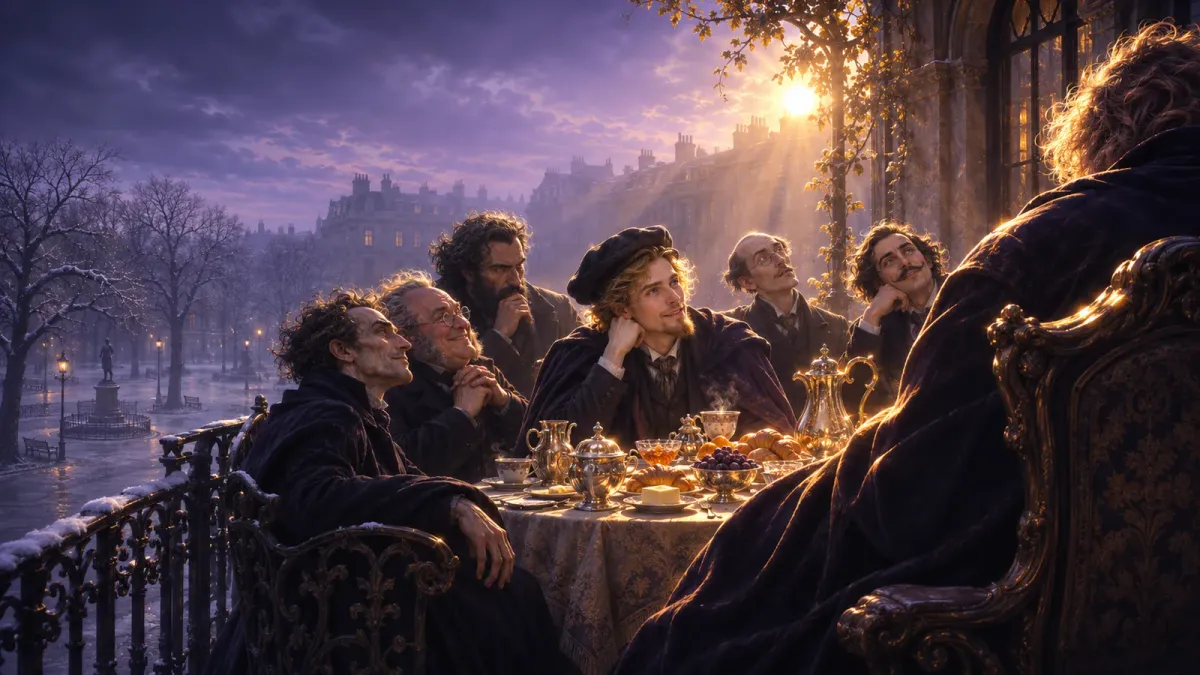
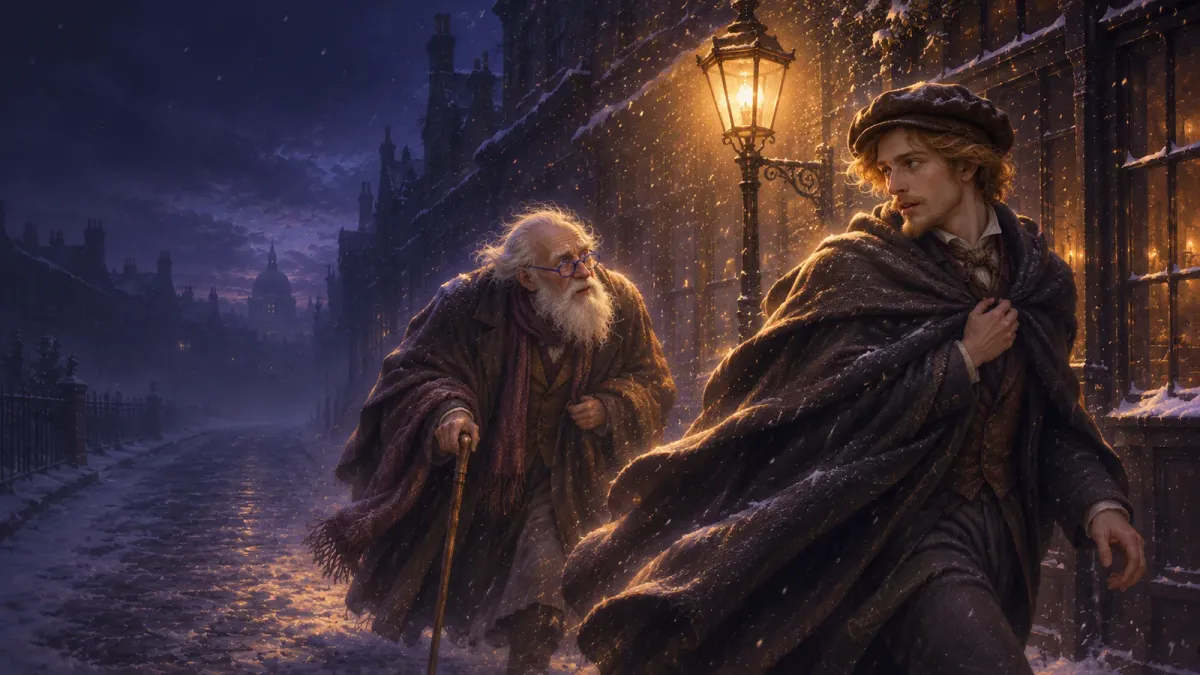
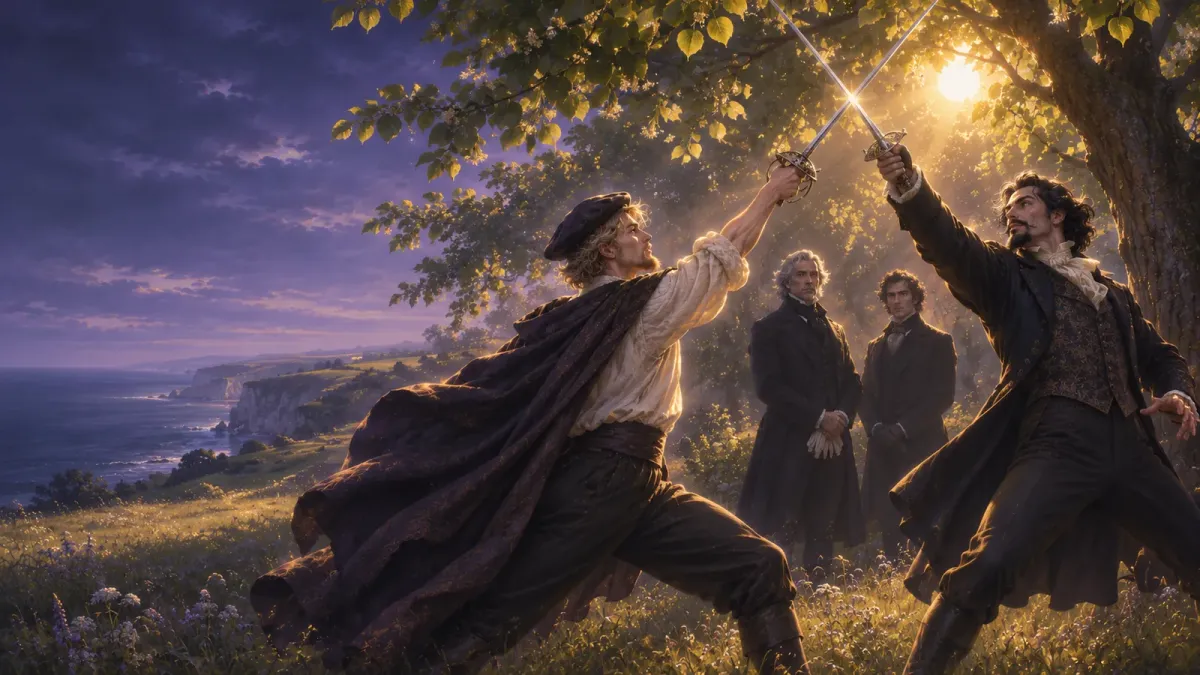
7 Szenen aus „The Man Who Was Thursday“, in der Reihenfolge der Geschichte und ohne das Ende.


Inhalt von „The Man Who Was Thursday“ · 16 Kapitel
- DedicationSeite 1
- I: The Two Poets of Saffron ParkSeite 2
- II: The Secret of Gabriel SymeSeite 15
- III: The Man Who Was ThursdaySeite 26
- IV: The Tale of a DetectiveSeite 39
- V: The Feast of FearSeite 52
Alle 16 KapitelWeniger anzeigen
- VI: The ExposureSeite 63
- VII: The Unaccountable Conduct of Professor de WormsSeite 74
- VIII: The Professor ExplainsSeite 86
- IX: The Man in SpectaclesSeite 101
- X: The DuelSeite 120
- XI: The Criminals Chase the PoliceSeite 140
- XII: The Earth in AnarchySeite 151
- XIII: The Pursuit of the PresidentSeite 171
- XIV: The Six PhilosophersSeite 185
- XV: The AccuserSeite 200
Bewertungen für „The Man Who Was Thursday“
Noch keine Bewertungen. Gib die erste ab.
Deine Bewertung
Rezensionen zu „The Man Who Was Thursday“
Noch keine Rezensionen.
Die Geschichte hinter „The Man Who Was Thursday“
Subtitled 'A Nightmare' from the start
Bristol publisher J. W. Arrowsmith brought the novel out in February with the subtitle 'A Nightmare' and a poem for Chesterton's boyhood friend E. C. Bentley. In those verses, Chesterton looked back at the 1890s pessimism and aestheticism the two of them had grown up under.
First edition, J. W. Arrowsmith (1908)
A family stage version in Hampstead
Chesterton's sister-in-law Ada Elizabeth Chesterton teamed up with playwright Ralph Neale to turn the book into a three-act play. It opened at the Everyman Theatre in Hampstead in January, with a foreword by Chesterton himself.
The Man Who Was Thursday: A Play in Three Acts, Ernest Benn (1926)
One last reminder before dying
On 13 June, the day before he died, Chesterton used an essay in The Illustrated London News to point out that critics kept ignoring the subtitle, 'A Nightmare', and reading the ending as a literal statement about theology. Sunday, he explained, was not the God of religion, but Nature as it looks before revelation.
G. K. Chesterton, The Illustrated London News, 13 June 1936; reprinted in Autobiography (1936)
Borges spots the nightmare underneath
Writing in his collection Other Inquisitions, Jorge Luis Borges praised the book and argued that Chesterton had a dark, Kafkaesque streak that he held back on purpose. Instead of giving in to the macabre, Chesterton bent the nightmare into detective farce and allegory.
Jorge Luis Borges, Otras inquisiciones (1952)
In der Kultur „The Man Who Was Thursday“
6 Adaptionen und Erwähnungen, 1908–1990
In der Sprache When every rebel is a cop
In the book's central council of seven anarchists named after the days of the week, six turn out to be undercover policemen spying on each other. Critics and political writers still use that setup as shorthand for any radical group or intelligence operation where the informants outnumber the actual plotters.
Bühne Lifts, scaffolding, and philosophy upside down
At the Moscow Kamerny Theatre, director Alexander Tairov staged a Russian adaptation by Sigizmund Krzhizhanovsky on a constructivist moving set of lifts, scaffolding, and projections designed by Alexander Vesnin. In his autobiography, Chesterton noted that the Russian adaptor had reportedly turned the book's philosophy upside down.
G. K. Chesterton, Autobiography (1936)
Bühne Orson Welles takes it to radio
On 5 September, Orson Welles adapted and performed the novel for CBS's radio show The Mercury Theatre on the Air. It was a fast way to put a story of voices and disguises into American living rooms.
CBS radio broadcast, 5 September 1938
Film Secret agents with numbers for names
Patrick McGoohan's British television series The Prisoner trapped a former secret agent in a surreal village whose leaders are known only by numbers. Critics and scholars quickly connected its disguised bosses and existential chase back to Chesterton's nightmare.
Serie Four parts on BBC Radio
BBC Radio has returned to the story several times over the years. Bert Coules turned it into a four-part drama with Geoffrey Matthews as Sunday and Richard Pasco as Syme, and Geoffrey Palmer later read the book aloud for listeners in 2005.
BBC Genome Project
Kunst A nod from Good Omens
When Neil Gaiman and Terry Pratchett published their comic apocalypse novel Good Omens, they dedicated the book to Chesterton's memory. Their line for him was simple: 'A man who knew what was going on'.
Neil Gaiman and Terry Pratchett, Good Omens (1990)
Fragen und Antworten zu „The Man Who Was Thursday“ auf Englisch
Is The Man Who Was Thursday related to Chesterton's Father Brown stories?
No, they do not share any characters or settings. Chesterton published this standalone novel in 1908, two years before the first Father Brown short story appeared in print. While Father Brown solves quiet murder puzzles through psychology, Gabriel Syme is caught in a loud, surreal spy chase.
Why do Lucian Gregory and Gabriel Syme argue about the London Underground at the beginning?
Their argument sets up the central idea of the whole book: whether rebellion or order is the truly poetic thing. Gregory claims an anarchist is an artist who wants to abolish the timetable, while Syme answers that the real miracle is order — that when one has left Sloane Square one does come out at Victoria, instead of the train doing any of a thousand other things. That debate is what provokes Gregory into showing Syme the secret anarchist meeting.
Why does Saffron Park at the start of the book sound like a real London suburb?
Chesterton modeled it on Bedford Park in west London, a red-brick garden suburb built in the late nineteenth century for artists, writers, and mild bohemians. He renamed it Saffron Park to mock its mix of neat suburban lawns and polite revolutionary talk, where people dressed in artistic clothes but never broke the law.
Why does the police chief who recruits Syme sit in a pitch-dark room?
The head of the philosophical police detective force works in total darkness and never shows his face to the men he recruits. Within the story, this keeps his agents from knowing who is giving the orders, and as the nightmare develops, the unseen voice in the dark room becomes the central puzzle Syme has to solve when he meets Sunday.
What happened to the previous Thursday before Syme took his place?
The Central Anarchist Council keeps seven members titled after the days of the week, and the post of Thursday is vacant. At an underground meeting reached from Saffron Park, Syme outdoes Lucian Gregory in a speech and is elected Thursday, which lets him infiltrate the top of the conspiracy.
Why can't Syme wound the Marquis de Saint-Eustache in their sword duel?
The Marquis de St. Eustache is Wednesday himself, and he fights with cold mechanical skill that makes him seem almost inhuman. The duel in the French meadow is written like a bad dream in which Syme's sword keeps striking something unnaturally hard, until the pursuit interrupts them and pulls both men onto the same side.
Steckbrief zu „The Man Who Was Thursday“
15 Angaben zu Ausgabedaten und gemessenen Textmerkmalen. Alles nachprüfbar.
- Originaltitel
- The Man Who Was Thursday
- Autor
- G. K. Chesterton · 1874–1936
- Ersterscheinung
- 1908
- Originalsprache
- Englisch
- Genre
- Detektivgeschichten · Philosophie · Klassiker
- Stimmung
- Traumhaft
- Themen
- Identität · Gesellschaft · Pflicht · Mut
- Schauplatz
- London and northern France · early 20th century (around 1908)
- Verschiedene Wörter
- 6.120
- Wörter pro Satz
- 16 Wörter
- Niveau des Originals
- C2So messen wir
- Versionen
- C2
- Umfang des Originals
- 16 Kap. · 57.899 Wörter
- Lesezeit
- ~5 Std. 20 Min.
- Herunterladen
- EPUB
Ähnliche Bücher was du nach „The Man Who Was Thursday“ lesen kannst
Vom selben Autor
1Dieselbe Feder, eine andere Geschichte.
Ähnlich im Geist
7Dasselbe Genre und dieselbe Stilebene.
Eine Weihnachtsgeschichte
Charles Dickens
C2Orig.B1C1
~2 Std. 40 Min. · Klassiker

Tao Te King
Laozi
C2Orig.B1B2
~3 Std. 40 Min. · Philosophie
Schuld und Sühne
Fjodor Dostojewski
C1.7Orig.B1B2
~18 Std. 50 Min. · Klassiker
Die Abenteuer des Sherlock Holmes
Arthur Conan Doyle
C1.8Orig.B1C1
~9 Std. 40 Min. · Detektivgeschichten
How to Live on 24 Hours a Day
Arnold Bennett
C2Orig.
~1 Std. 10 Min. · Selbsthilfe
Captain Blood
Rafael Sabatini
C2Orig.
~10 Std. 30 Min. · Abenteuer

Wolfsblut
Jack London
C2Orig.B1B2
~6 Std. 40 Min. · Abenteuer