The Innocence of Father Brown auf Englisch
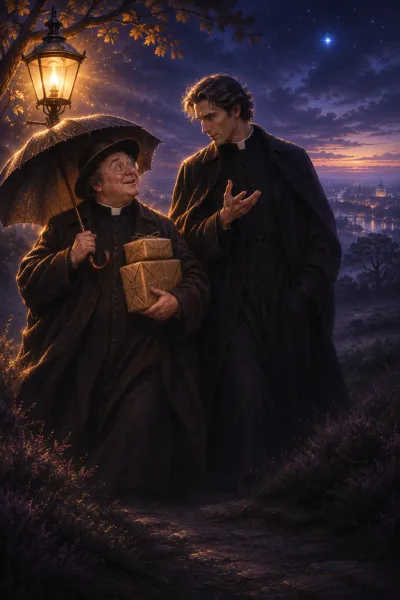
A quiet, round-faced country priest with a battered umbrella solves impossible murders not by examining footprints under a magnifying glass, but by knowing from the confessional how ordinary people talk themselves into sin.
The book collects twelve self-contained detective stories, each built around an apparent paradox — a murder in a house nobody entered, a man struck down by an invisible hammer from the sky, a general who loses a battle on purpose. Although the plots are independent, the first half of the book forms a loose duel between Father Brown and the French master criminal Flambeau, who reforms midway through and joins the priest as his unofficial partner. Chesterton writes in vivid, paradoxical Edwardian prose: the skies look like painted stage sets, and the conversations quickly turn from bloodstains to philosophy. Each story runs for roughly twenty pages and finishes with a sharp moral and logical twist.
- locked-room puzzles solved by psychology rather than cigarette ash
- a twelve-story run where a master thief slowly turns into the detective's partner
- witty, paradoxical conversations that challenge how you look at ordinary things
- short, self-contained cases you can finish in one sitting
- the physical setups of the crimes are often openly theatrical rather than realistic
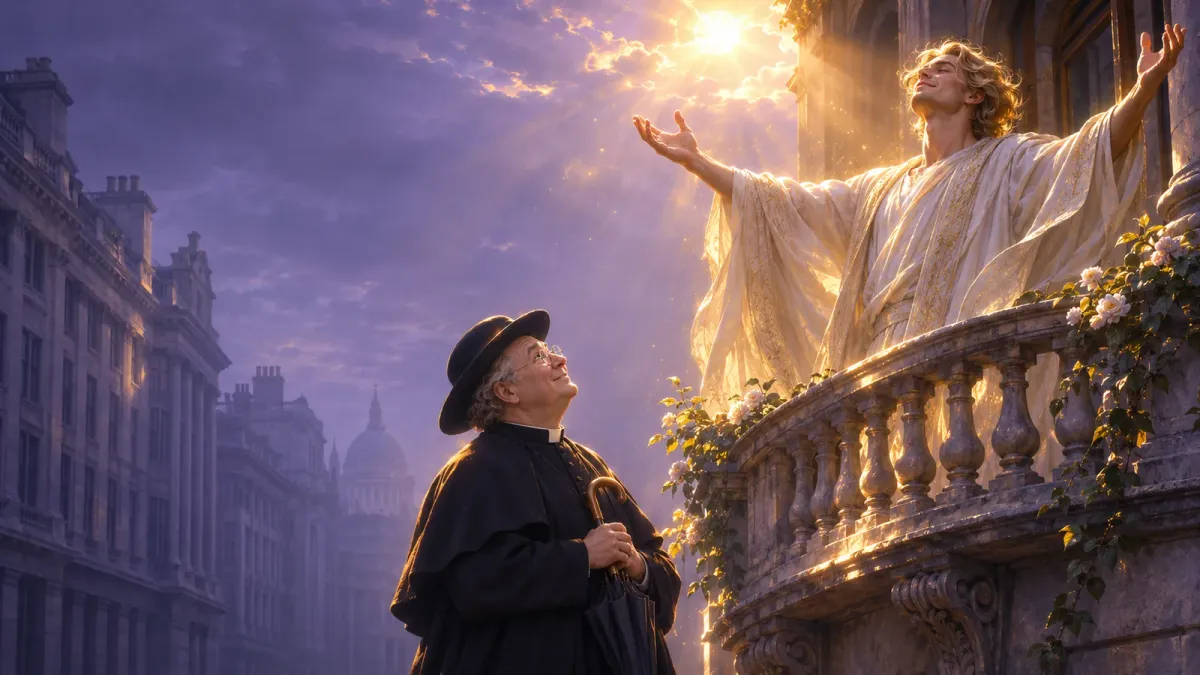
- Chesterton stops the plot to paint long, heightened descriptions of skies and landscapes
- characters frequently debate religion, reason, and morality before naming the killer
- secondary suspects are often sketched as broad social types rather than full people
Was für ein Buch „The Innocence of Father Brown“ ist
Das Original von „The Innocence of Father Brown“ auf Englisch
Wähle eine Version. Über die Leiste unten auf der Seite öffnest du deine Auswahl.
Wortschatz nach Niveau
- A1 61%
- A2 16%
- B1 8%
- B2 7%
- nicht im Wörterbuch 4%
Die Originalsprache von „The Innocence of Father Brown“ und was sie dir bringt
Wie schwer die Sprache ist C2
Our lexical measurement places the original text at C2, which means even strong readers will meet unfamiliar descriptive words on nearly every page. The grammar itself is clean and the sentences are medium in length, as much of each story moves through brisk conversation. The high level comes from Chesterton's rich Edwardian vocabulary: when he describes a sunset, a dinner party, or a theological argument, he reaches for exact, literary adjectives and unexpected comparisons rather than plain everyday English.
Was das praktisch heißt: The original suits C2 readers who enjoy rich, playful British prose; only the original text is available on this page.
Worauf du dich einstellen solltest
Wie du es liest und nicht aufhörst
- Do not let Chesterton's swirling descriptions of clouds and forests slow you down: they set the mood, while the actual clues sit in the plain dialogue and physical actions.
- Watch out for English words used in their older or stricter religious sense — 'innocence', 'charity', 'reason', and 'queer' (which here always means 'strange' or 'odd').
- When Father Brown explains a crime, pay close attention to modal verbs ('must have', 'could not have'), which carry the logic of how the trick was done.
Leseprobe aus „The Innocence of Father Brown“ auf Englisch
Tippe auf ein Wort – wir zeigen dir die Übersetzung
Mit den Pfeiltasten wechselst du zwischen Wörtern, Enter zeigt die Übersetzung.Original · C2163 Wörter
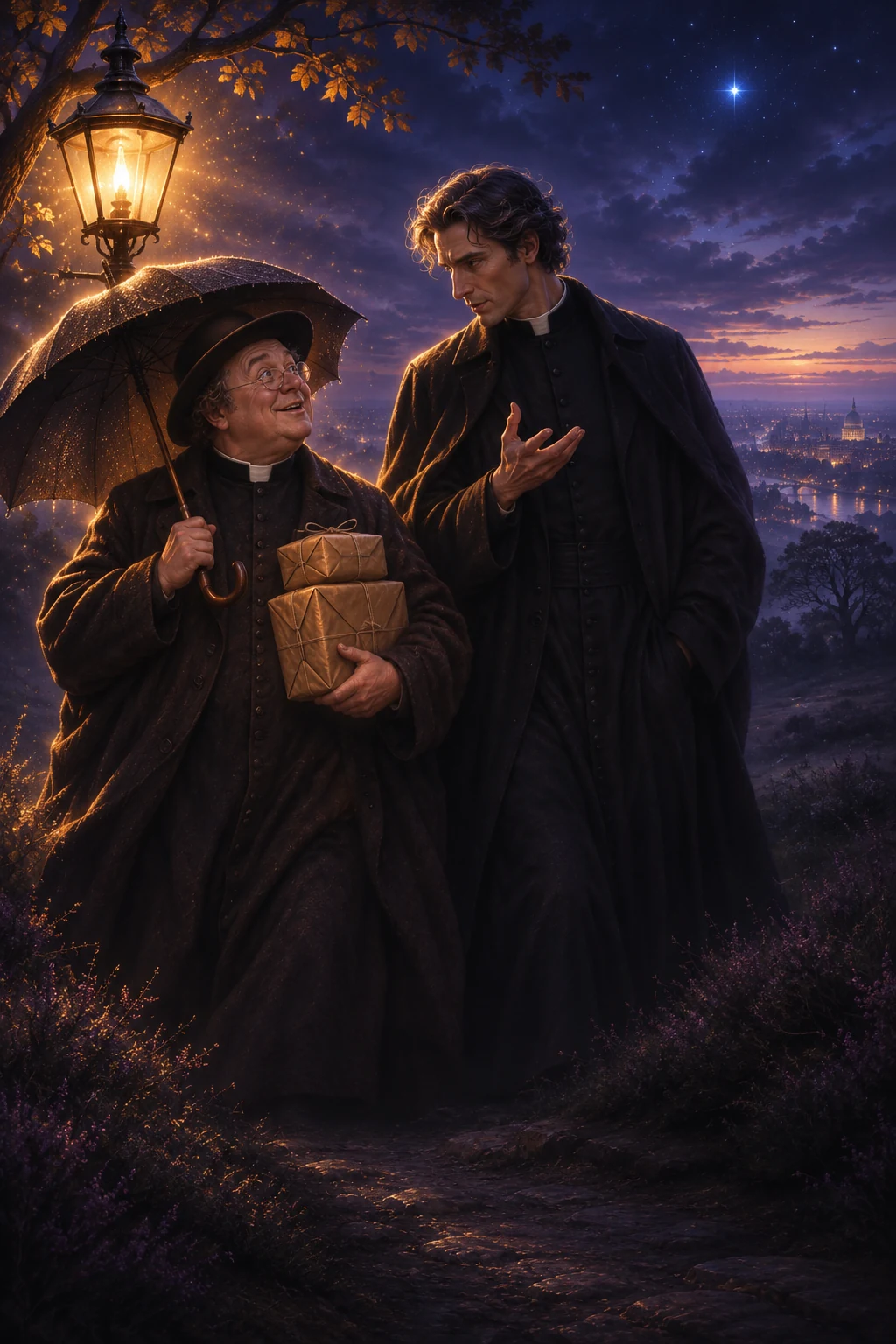
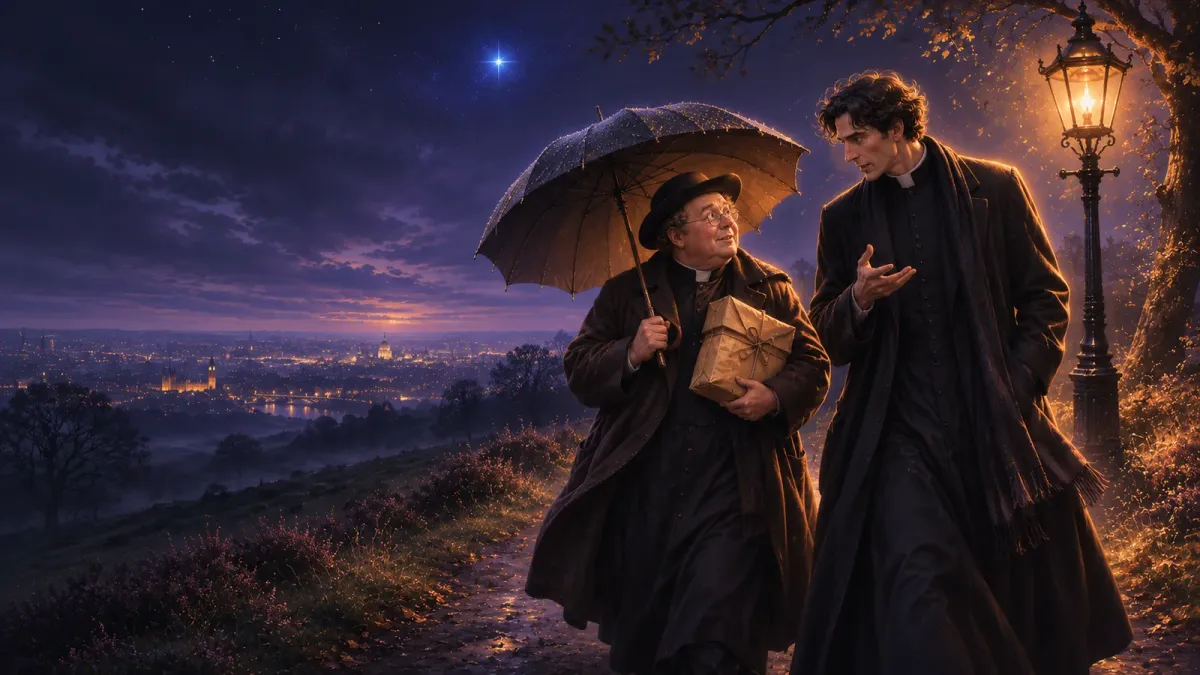
The street they threaded was so narrow and shut in by shadows that when they came out unexpectedly into the void common and vast sky they were startled to find the evening still so light and clear. A perfect dome of peacock-green sank into gold amid the blackening trees and the dark violet distances. The glowing green tint was just deep enough to pick out in points of crystal one or two stars. All that was left of the daylight lay in a golden glitter across the edge of Hampstead and that popular hollow which is called the Vale of Health. The holiday makers who roam this region had not wholly dispersed; a few couples sat shapelessly on benches; and here and there a distant girl still shrieked in one of the swings. The glory of heaven deepened and darkened around the sublime vulgarity of man; and standing on the slope and looking across the valley, Valentin beheld the thing which he sought.
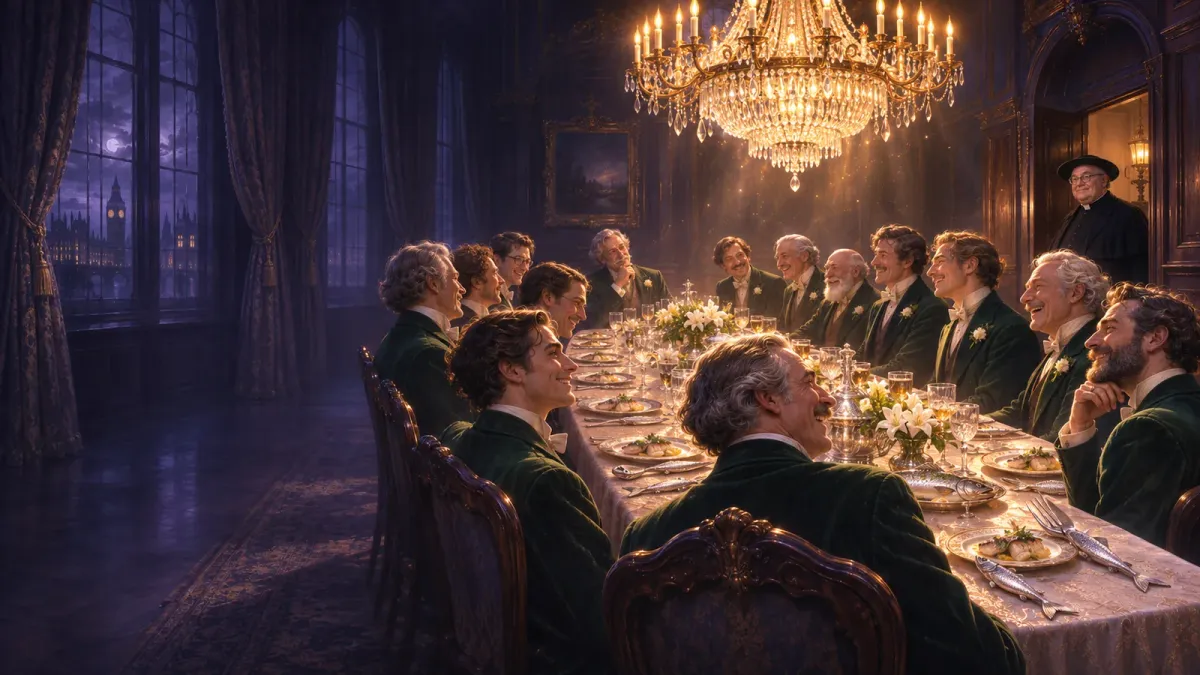
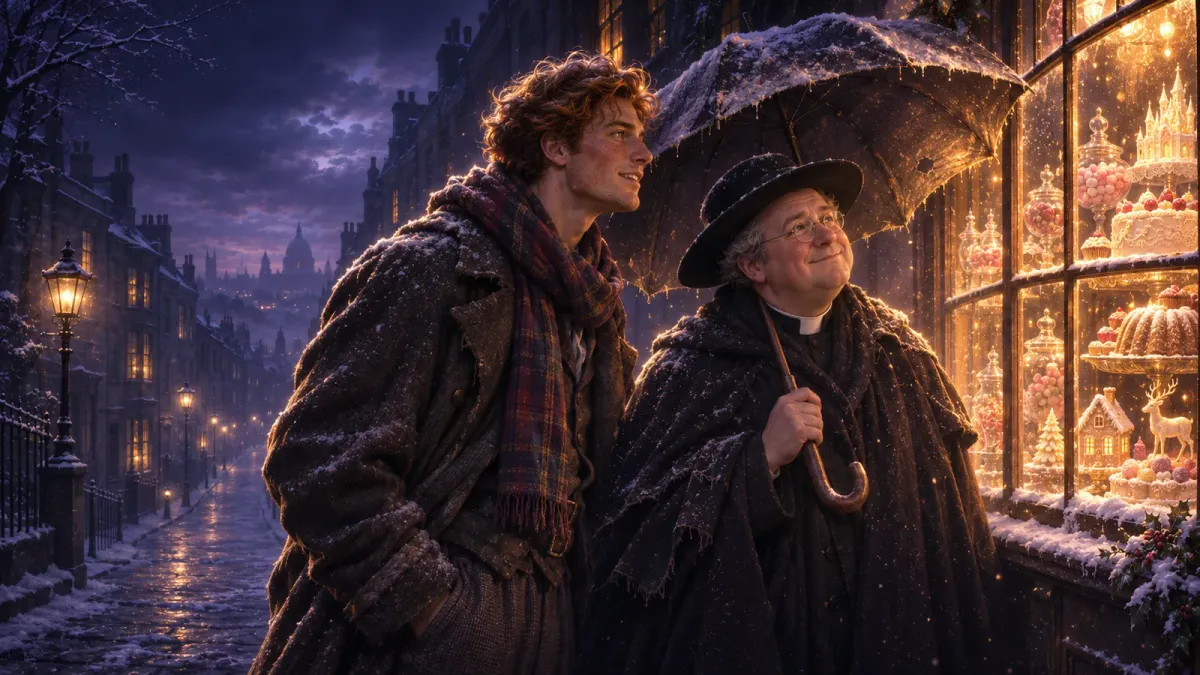
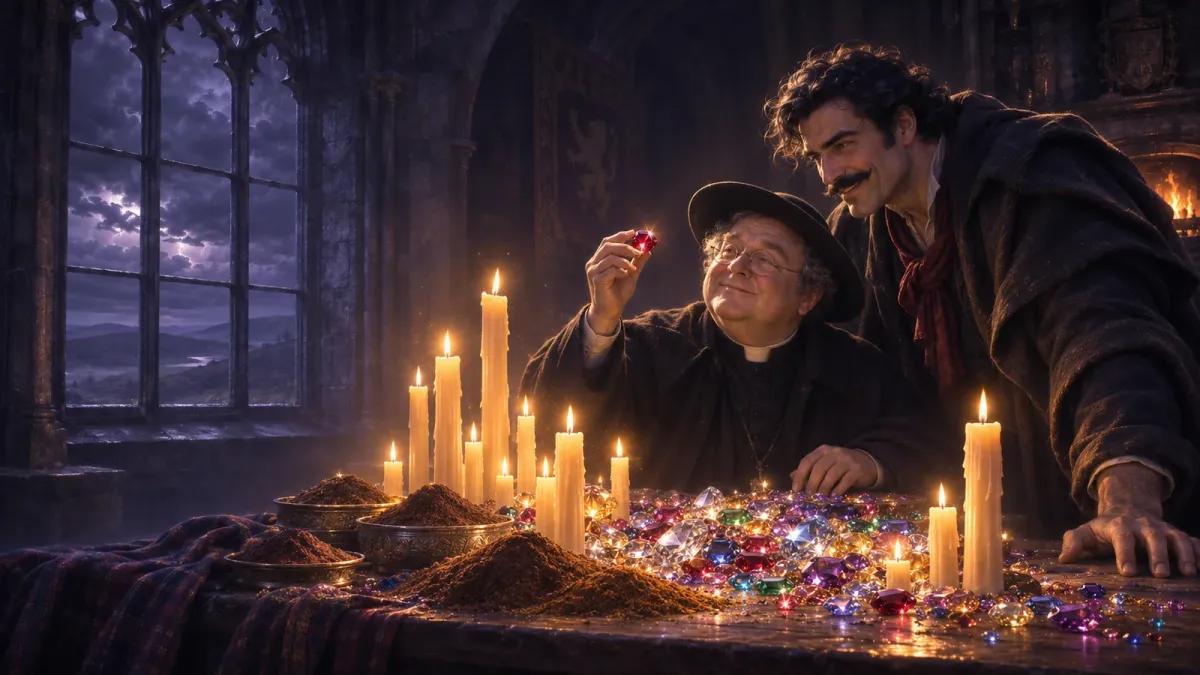
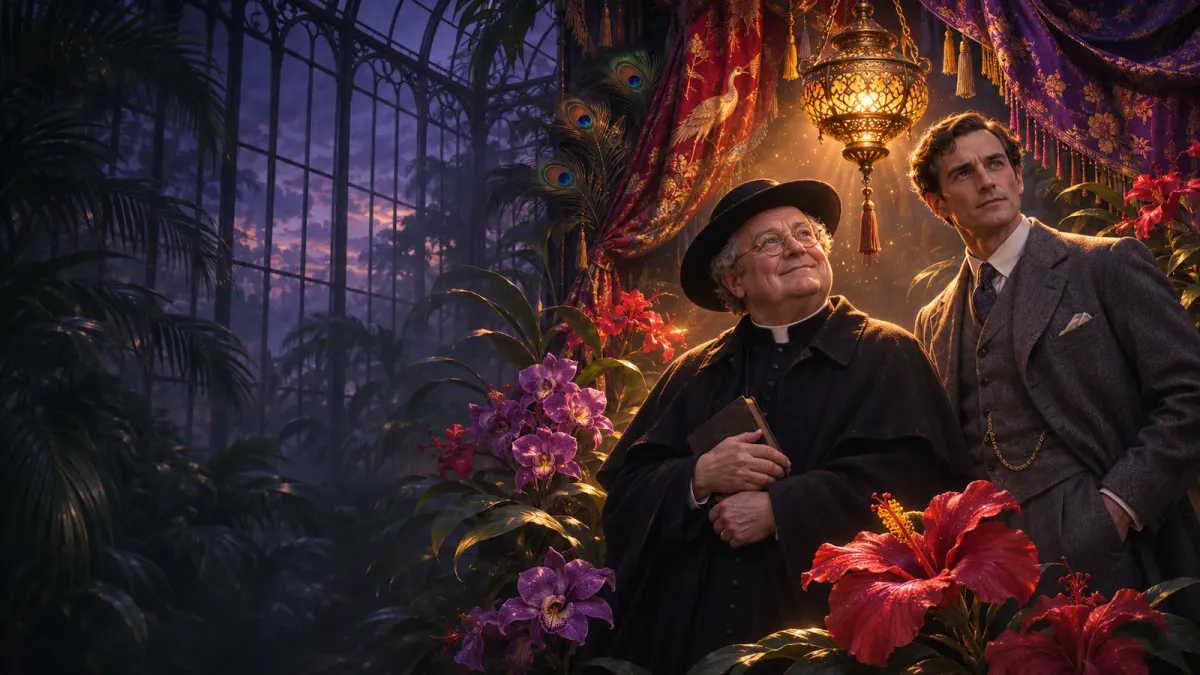
Illustrationen zu „The Innocence of Father Brown“
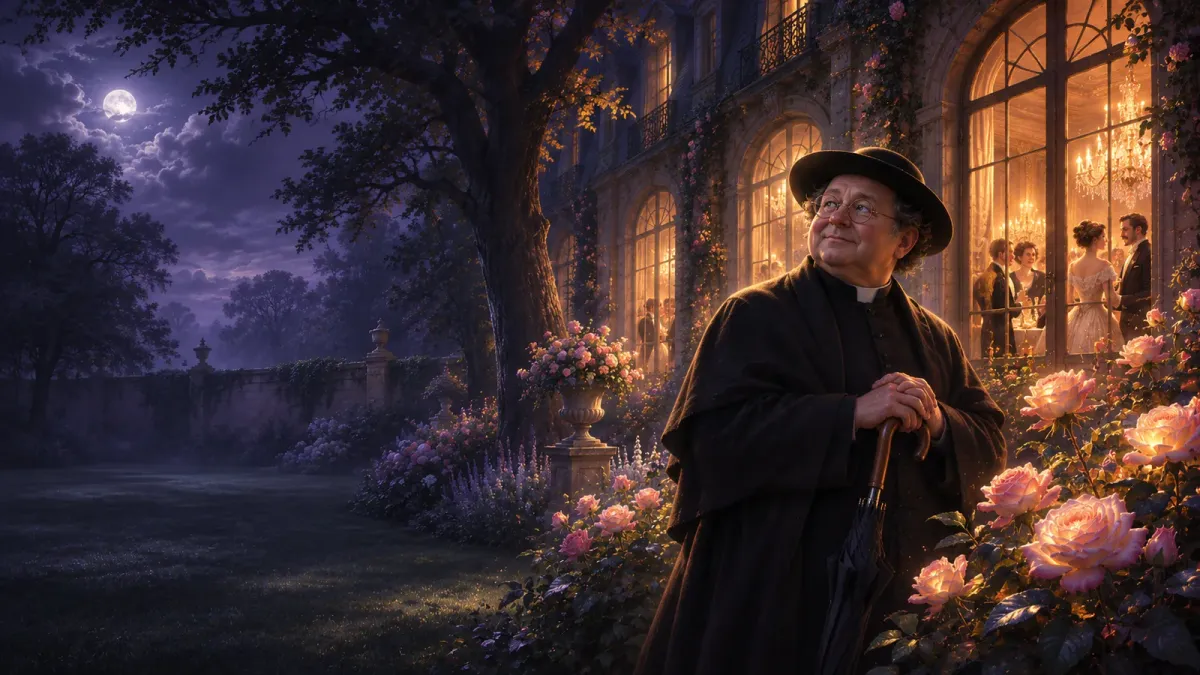
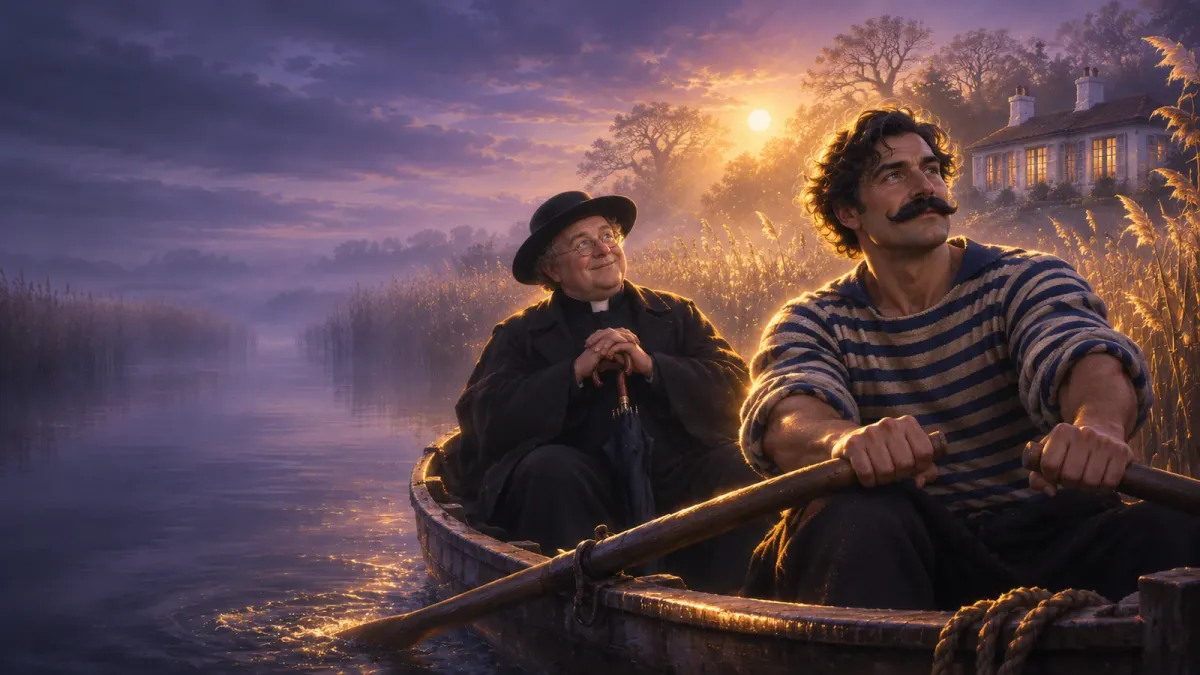
7 Szenen aus „The Innocence of Father Brown“, in der Reihenfolge der Geschichte und ohne das Ende.
Inhalt von „The Innocence of Father Brown“ · 13 Kapitel
Bewertungen für „The Innocence of Father Brown“
Noch keine Bewertungen. Gib die erste ab.
Deine Bewertung
Rezensionen zu „The Innocence of Father Brown“
Noch keine Rezensionen.
Die Geschichte hinter „The Innocence of Father Brown“
The Walk Across the Moors
On a lecturing trip in Yorkshire, G. K. Chesterton met Father John O'Connor, an Irish parish priest from Bradford, and walked with him over the moors to Ilkley. O'Connor stunned him with a blunt knowledge of human wickedness learned in the confessional. Later that day, two Cambridge undergraduates remarked within Chesterton's hearing that priests lived far too sheltered a life to know anything about evil.
G. K. Chesterton, Autobiography (1936)
Two Titles for One Priest
Readers first met the quiet Essex priest and the tall French master thief Flambeau on 23 July in The Saturday Evening Post, where the story ran as 'Valentin Follows a Curious Trail'. By September, London's The Story-Teller magazine printed the same tale under the name it kept: 'The Blue Cross'.
The Saturday Evening Post (23 July 1910); The Story-Teller (September 1910)
Twelve Cases Between Two Covers
Cassell and Company gathered the first twelve stories into a London book in July, dedicated to Chesterton's Yorkshire hosts, Waldo and Mildred D'Avigdor. Readers bought it up at once, and that appetite kept Chesterton writing four more volumes of Father Brown stories over the next twenty-four years.
Following His Own Detective
More than ten years after making a Roman Catholic priest his best-known character, Chesterton entered the Catholic Church himself on 30 July in a hotel chapel in Beaconsfield. The priest who received him was Father John O'Connor, the very man Father Brown was built on.
Maisie Ward, Gilbert Keith Chesterton (1944)
The Real Priest Answers Back
A year after Chesterton died, Father John O'Connor wrote his own account of their thirty-year friendship, calling the book Father Brown on Chesterton. In those pages, he claims the detective's shabby, bulging umbrella as a direct copy of his own.
John O'Connor, Father Brown on Chesterton (1937)
In der Kultur „The Innocence of Father Brown“
8 Adaptionen und Erwähnungen, 1911–2013
In der Sprache The Murderer Nobody Saw
In 'The Invisible Man', witnesses guarding a building swear no stranger walked in before a murder, simply because none of them noticed the ordinary postman. Mystery writers have used the 'invisible postman' ever since as shorthand for a killer who hides in plain sight by putting on a dull everyday uniform.
In der Sprache Growing a Forest of Bodies
Father Brown remarks in 'The Sign of the Broken Sword' that a wise man hides a leaf in a forest, and grows one if none is there — which is how a general in the story hides a single murder by sending thousands of men to die in a battle. People still borrow the line whenever someone buries a guilty detail inside a huge pile of similar things.
Kunst The Round Face and the Umbrella
When the stories first ran in magazines, the illustrator Sydney Seymour Lucas drew the priest beside the towering Flambeau. Those drawings fixed the look of Father Brown for good: short, round-faced, and holding on to a large umbrella.
Film Hollywood Tries the Cassock
Paramount Pictures brought the priest to the screen for the first time in Father Brown, Detective, putting Walter Connolly in the title role and Paul Lukas opposite him as Flambeau. The studio built the film's plot out of the opening story, 'The Blue Cross'.
Musik A French Score for an English Priest
The French composer Georges Auric wrote the orchestral music for director Robert Hamer's film Father Brown.
Film Mistaken for a Real Priest
Alec Guinness took the role of the detective opposite Peter Finch's Flambeau in Robert Hamer's British comedy-mystery Father Brown, another screen version drawn from 'The Blue Cross'. Walking through a French town in his screen cassock during the shoot, Guinness looked the part so well that a local child took him for an actual priest.
Alec Guinness, Blessings in Disguise (1985)
Serie Thirteen Weeks on British Television
Kenneth More stepped into the role for a thirteen-part British series made by Associated Television. The show opened with 'The Hammer of God' and worked its way through several more cases from this first collection.
Serie Moved to a Cotswold Village
BBC One started a daytime drama with Mark Williams as the priest, shifting his parish to the fictional Cotswold village of Kembleford in the early 1950s. It too began with 'The Hammer of God' and has since stayed on the air for over a decade and more than a hundred episodes.
Fragen und Antworten zu „The Innocence of Father Brown“ auf Englisch
Why is the book called The Innocence of Father Brown if he knows so much about crime?
The title is one of Chesterton's deliberate paradoxes: Father Brown is innocent in his own life, yet wiser about evil than the worldly policemen around him. Strangers constantly mistake his round face, quiet manners, and dropped parcels for naive stupidity. In truth, years of hearing confessions have taught him every excuse a human being can invent for a crime, while keeping his own soul uncorrupted.
How is the book different from the BBC series with Mark Williams?
The BBC series keeps the priest in a single cosy Cotswold village in the 1950s with a regular cast of local friends, whereas the 1911 book sends him travelling across Edwardian London, Scotland, and France. In the book, there is no Lady Felicia or Mrs McCarthy, and his main recurring companion is the French ex-criminal Flambeau. The original stories are also more philosophical and atmospheric than a standard village whodunit.
How does Father Brown's method differ from Sherlock Holmes's?
Where Sherlock Holmes works from the outside in by measuring footprints, tobacco ash, and mud splashes, Father Brown works from the inside out by imagining the killer's state of mind. In the first story, 'The Blue Cross', the great Parisian detective Valentin follows a trail of physical clues, yet only knows where to look because the priest has deliberately left that trail for him. Father Brown asks not 'what left this mark?' but 'why would a person behave so oddly?'
Does Flambeau appear in every story in the book?
No. Flambeau appears in seven of the twelve stories, and his arc gives the collection its backbone. He is the priest's quarry in 'The Blue Cross', 'The Queer Feet' and 'The Flying Stars', pulling off audacious thefts in disguise until Father Brown convinces him to give up crime in 'The Flying Stars'. From 'The Invisible Man' on he returns in several later stories as a private investigator and Father Brown's friend.
Why does Father Brown let some criminals go without calling the police?
As a priest, Father Brown cares far more about whether a culprit repents than whether he goes to prison. Because he is neither a policeman nor a hired detective, he has no official duty to make an arrest. He lets the thief Flambeau go once the stolen goods are restored and Flambeau begins to reform, and in 'The Sign of the Broken Sword' he and Flambeau agree not to expose the crime of a man already dead.
What is Father Brown's first name?
Chesterton never gives him a first name anywhere in this book, calling him simply Father Brown. The refusal to give him a grand name fits a character designed to look completely ordinary.
What does the name Flambeau mean?
In French, a 'flambeau' is a tall, flaming torch. In the book it is the name of the giant French criminal, and it contrasts sharply with the dull, everyday name of Father Brown. The pair are built as visual opposites: the towering, flamboyant Frenchman beside the short, grey-looking English priest.
Steckbrief zu „The Innocence of Father Brown“
15 Angaben zu Ausgabedaten und gemessenen Textmerkmalen. Alles nachprüfbar.
- Originaltitel
- The Innocence of Father Brown
- Autor
- G. K. Chesterton · 1874–1936
- Ersterscheinung
- 1911
- Originalsprache
- Englisch
- Genre
- Detektivgeschichten · Klassiker · Kurzgeschichten
- Stimmung
- Gemütlich
- Themen
- Gerechtigkeit · Erlösung · Schuld · Gesellschaft
- Schauplatz
- London, rural England, and France · Early 20th century (Edwardian era)
- Verschiedene Wörter
- 7.701
- Wörter pro Satz
- 18 Wörter
- Niveau des Originals
- C2So messen wir
- Versionen
- C2
- Umfang des Originals
- 13 Kap. · 78.990 Wörter
- Lesezeit
- ~7 Std. 20 Min.
- Herunterladen
- EPUB
Ähnliche Bücher was du nach „The Innocence of Father Brown“ lesen kannst
Vom selben Autor
1Dieselbe Feder, eine andere Geschichte.
Ähnlich im Geist
7Dasselbe Genre und dieselbe Stilebene.
Die Abenteuer des Sherlock Holmes
Arthur Conan Doyle
C1.8Orig.B1C1
~9 Std. 40 Min. · Detektivgeschichten
Dubliner
James Joyce
C1.7Orig.B1B2
~6 Std. 20 Min. · Klassiker
Captain Blood
Rafael Sabatini
C2Orig.
~10 Std. 30 Min. · Abenteuer
Reise um die Erde in 80 Tagen
Jules Verne
C2Orig.B1B2
~5 Std. 50 Min. · Abenteuer

Wolfsblut
Jack London
C2Orig.B1B2
~6 Std. 40 Min. · Abenteuer

Die blaue Lagune
H. de Vere Stacpoole
C2Orig.B1B2
~5 Std. 50 Min. · Abenteuer
Eine Weihnachtsgeschichte
Charles Dickens
C2Orig.B1C1
~2 Std. 40 Min. · Klassiker