Burning Daylight en anglais
?
La décimale situe le livre dans le niveau : C1.0 est le début de C1, C1.9 est presque C2 Comment nous mesurons
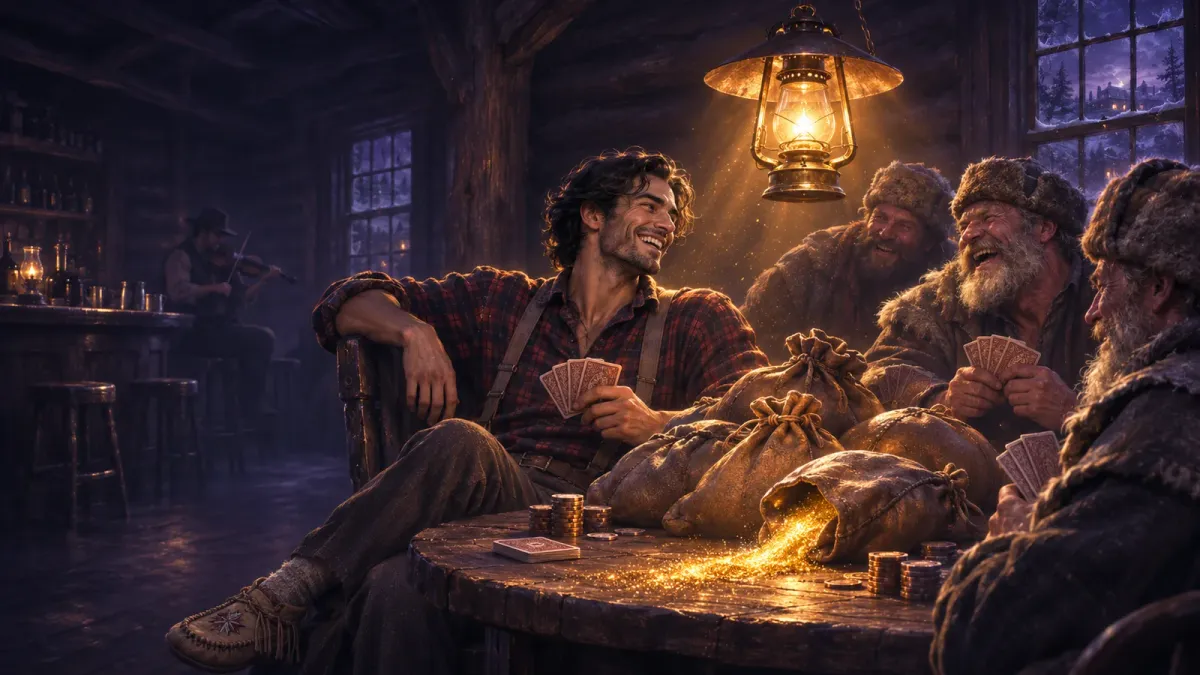
A Klondike gold king takes his thirty million dollars down to California to play Wall Street and San Francisco finance the way he used to play high-stakes poker.
London splits the novel clean in two, and the hinge is a ferry ride into California. Part One is pure Yukon: sixty-below mail runs, dog-team races, saloon Indian-wrestling, and the sudden fever of the Klondike strike. Part Two moves the exact same man into oak-panelled offices in Oakland and San Francisco, trading gold dust for traction companies, brickyards, and stock corners before a final turn toward the Sonoma hills. The narration stays in the third person, close to Harnish's shoulders, in brisk early-twentieth-century American prose that stretches out for two things: fifty-mile snowstorms and fifty-million-dollar financial raids.
- two books in one cover: a Yukon survival story followed by a Gilded Age financial thriller
- a protagonist who treats armed robbery, dog racing, and corporate takeovers as variations of the same game
- detailed, working knowledge of both Klondike prospecting and 1900s municipal land deals
- an unusually independent turn-of-the-century heroine who refuses to marry a millionaire while his money owns him
- if you only came for wolves and snowshoes, the Arctic vanishes for good halfway through
- the California chapters spend pages on stock corners, bond issues, and real-estate syndicates
- Elam Harnish is written on a tall-tale scale — he drinks, lifts, and gambles more than any three men in camp
- four supporting characters in the Yukon half speak in phonetic dialect that takes a few pages to tune your ear to
Quel genre de livre « Burning Daylight »
L’original de « Burning Daylight » en anglais
Choisis une version. La barre en bas de la page ouvre celle que tu choisis.
?
La décimale situe le livre dans le niveau : C1.0 est le début de C1, C1.9 est presque C2 Comment nous mesurons
Vocabulaire par niveau
- A1 62%
- A2 16%
- B1 8%
- B2 6%
- hors dictionnaire 4%
La langue originale de « Burning Daylight » et ce qu’il t’apporte
Difficulté de la langue C1.9
Our measurement puts the original text at C1.9 (in the C1 band). The sentences themselves are mostly straightforward and average in length, so you will not get lost in tangled grammar. The high level comes from the wide, two-world vocabulary: you need words for Arctic dog-sledding and gold mining in the first half, and the language of 1900s banking, stock manipulation, and real estate in the second. London also writes thick descriptive paragraphs about landscapes and physical effort where less common adjectives pile up quickly.
En pratique: Read the original at C1.9 if you are comfortable with rich vocabulary and want London's authentic 1910 voice; choose the B2.9 adaptation if you want the trail and business jargon smoothed out.
À quoi s’attendre
Comment le lire sans abandonner
- Do not stop to look up every Yukon term: words like 'chechaquo' (newcomer), 'mukluk' (seal-skin boot), and 'sour-dough' (veteran prospector) are explained by the action around them.
- When reading the accented dialogue of Kama, Louis, or Olaf, say the unusual spellings out loud; 'dat' is just 'that' and 't'ink' is 'think'.
- Notice how 'Daylight' is used as a person's name rather than a time of day—London almost always calls his hero 'Daylight' instead of 'Elam'.
Un extrait de « Burning Daylight » en anglais
Touche un mot — on affiche sa traduction
Les flèches passent d’un mot à l’autre, Entrée affiche la traduction.Original · C1.9126 mots
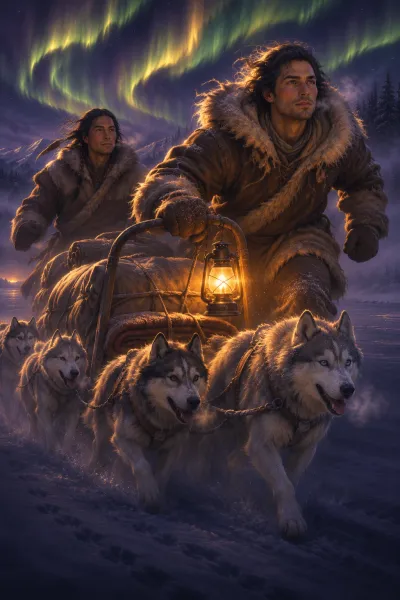
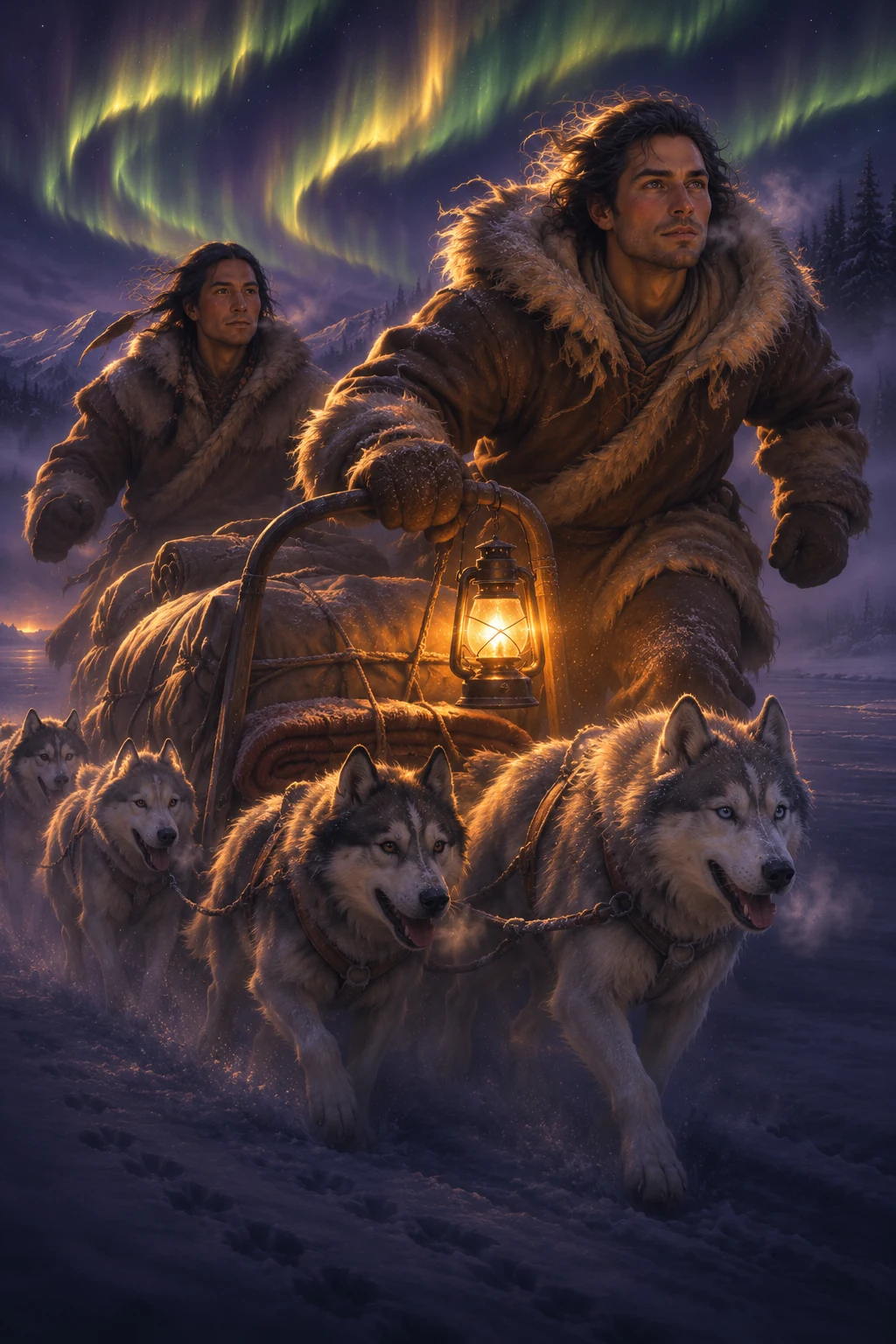
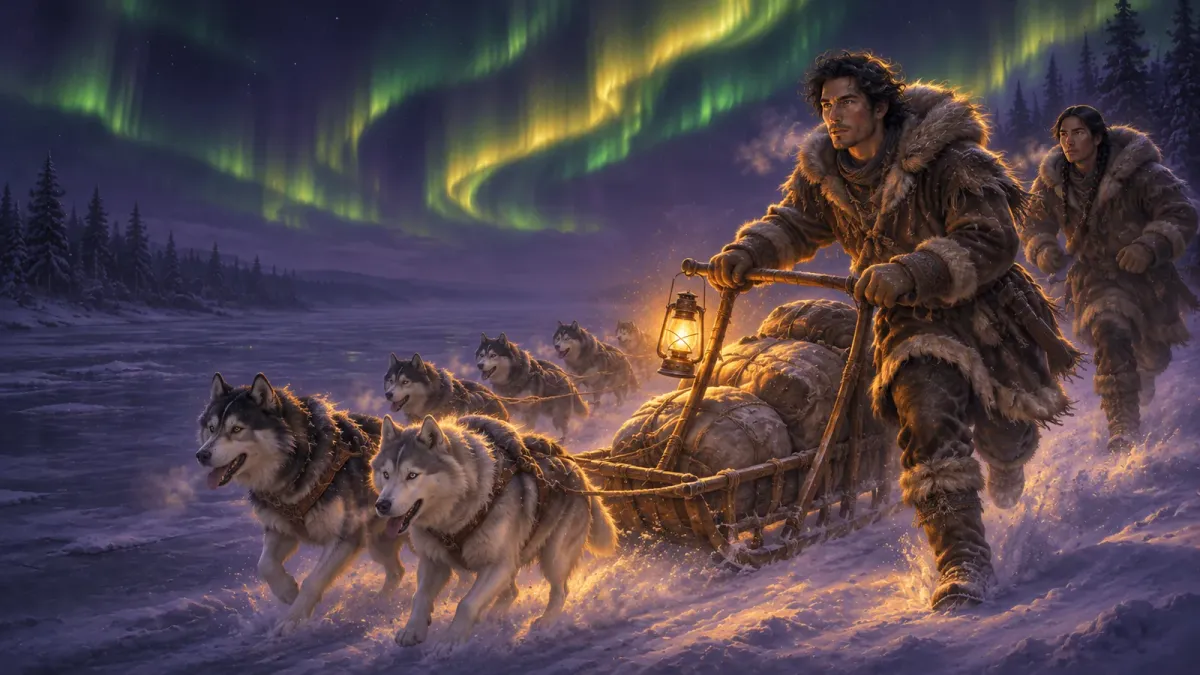
As if through a wall, Daylight had passed from the hum and roar of the Tivoli into another world—a world of silence and immobility. Nothing stirred. The Yukon slept under a coat of ice three feet thick. No breath of wind blew. Nor did the sap move in the hearts of the spruce trees that forested the river banks on either hand. The trees, burdened with the last infinitesimal pennyweight of snow their branches could hold, stood in absolute petrifaction. The slightest tremor would have dislodged the snow, and no snow was dislodged. The sled was the one point of life and motion in the midst of the solemn quietude, and the harsh churn of its runners but emphasized the silence through which it moved.
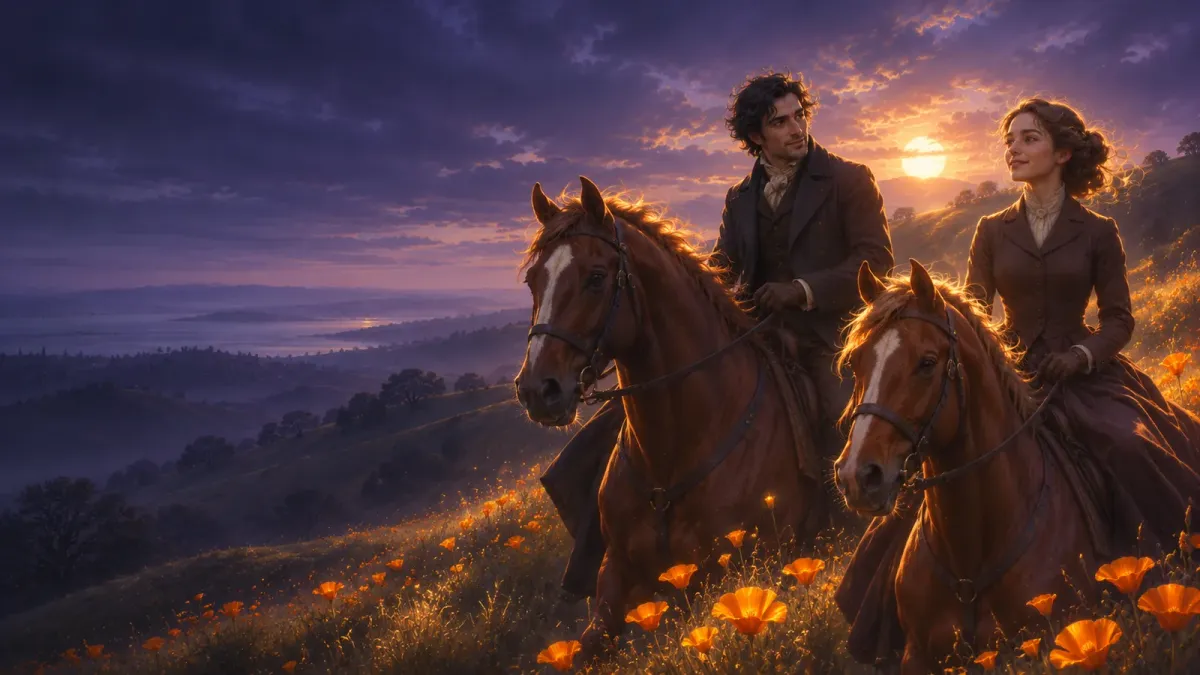
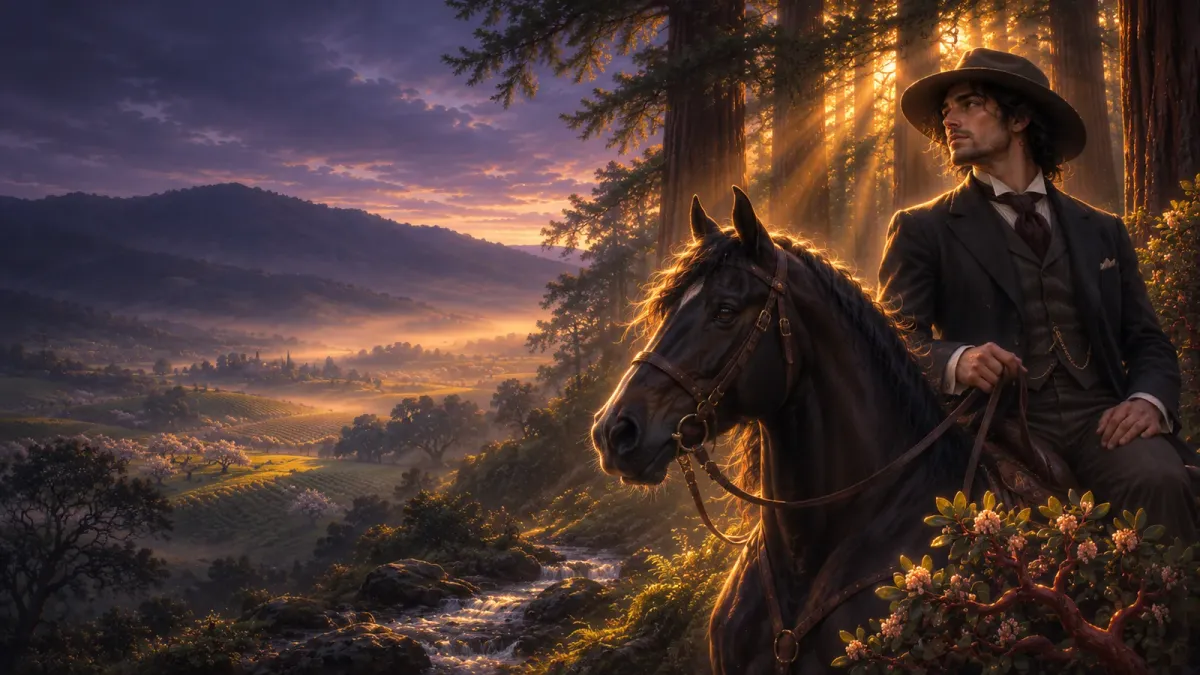
Illustrations pour « Burning Daylight »
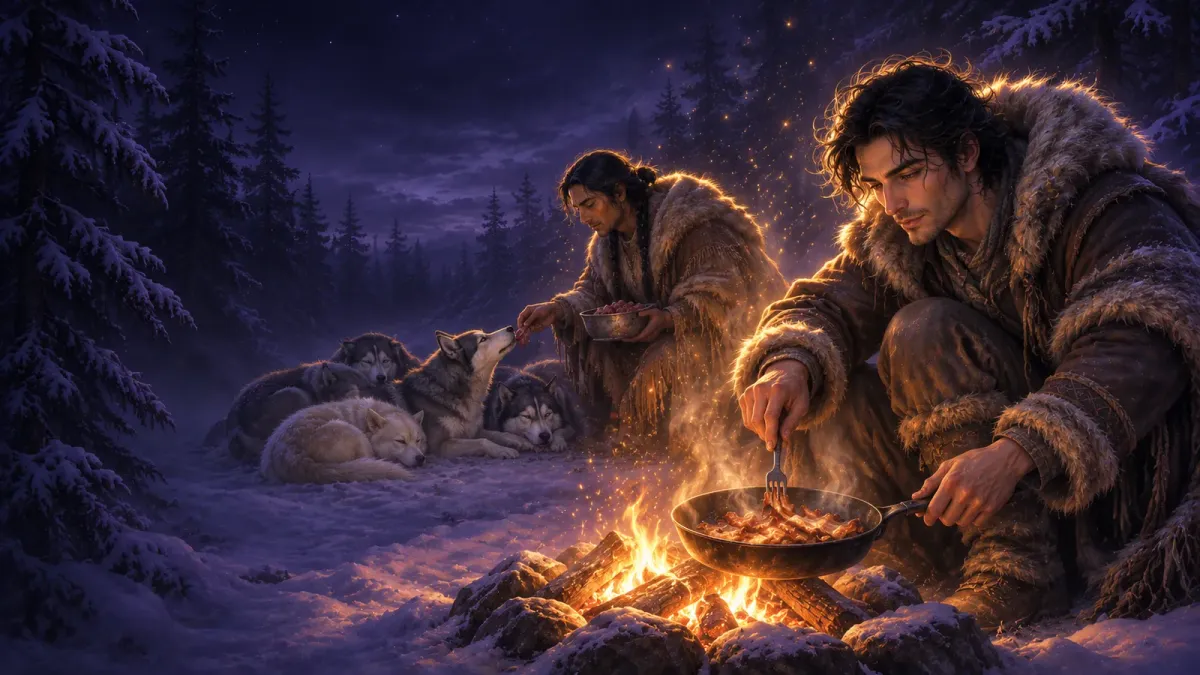
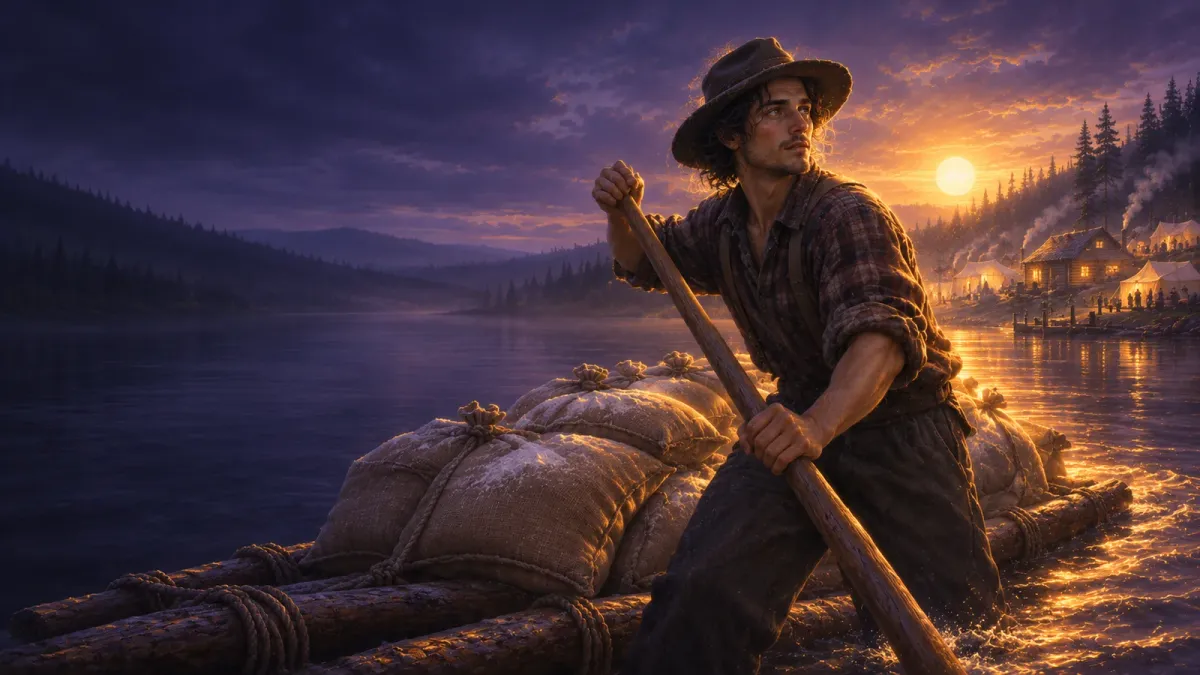
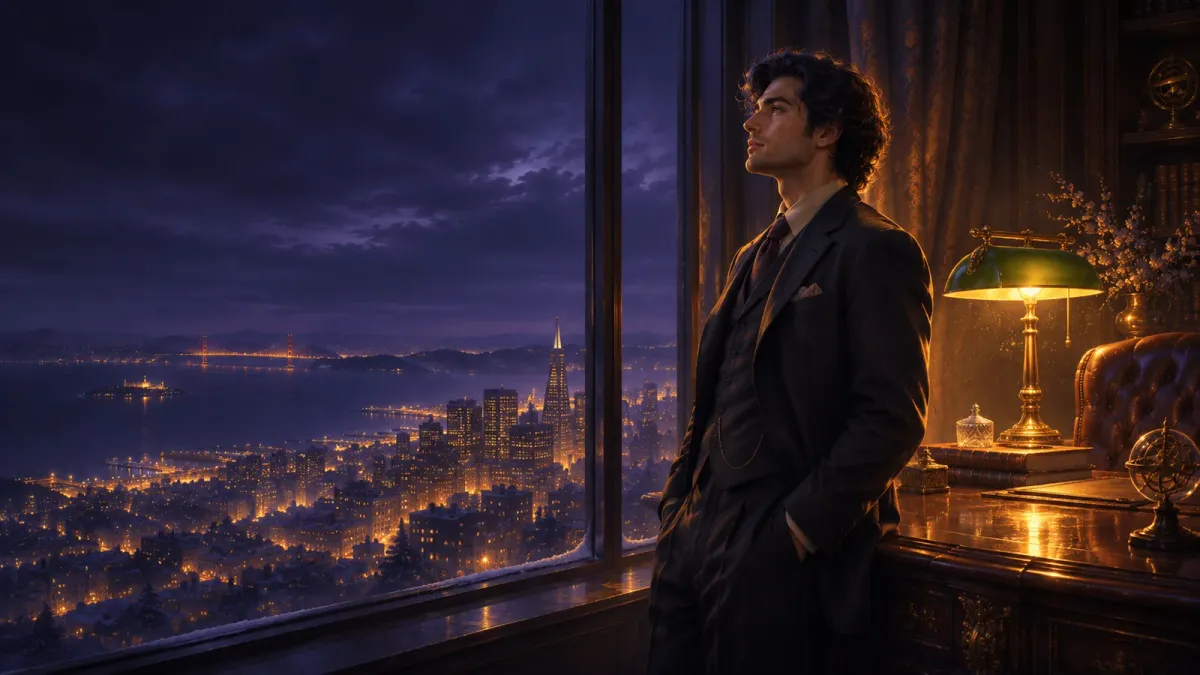
7 scènes de « Burning Daylight », dans l’ordre de l’histoire et sans la fin.
Sommaire de « Burning Daylight » · 40 chapitres
- CHAPTER Ipage 1
- CHAPTER IIpage 9
- CHAPTER IIIpage 24
- CHAPTER IVpage 40
- CHAPTER Vpage 54
- CHAPTER VIpage 63
Tous les 40 chapitresVoir moins
- CHAPTER VIIpage 73
- CHAPTER VIIIpage 81
- CHAPTER IXpage 98
- CHAPTER Xpage 106
- CHAPTER XIpage 114
- CHAPTER XIIpage 124
- CHAPTER XIIIpage 132
- CHAPTER Ipage 139
- CHAPTER IIpage 148
- CHAPTER IIIpage 156
- CHAPTER IVpage 164
- CHAPTER Vpage 173
- CHAPTER VIpage 184
- CHAPTER VIIpage 193
- CHAPTER VIIIpage 201
- CHAPTER IXpage 218
- CHAPTER Xpage 230
- CHAPTER XIpage 237
- CHAPTER XIIpage 246
- CHAPTER XIIIpage 255
- CHAPTER XIVpage 263
- CHAPTER XVpage 273
- CHAPTER XVIpage 290
- CHAPTER XVIIpage 300
- CHAPTER XVIIIpage 310
- CHAPTER XIXpage 325
- CHAPTER XXpage 336
- CHAPTER XXIpage 349
- CHAPTER XXIIpage 356
- CHAPTER XXIIIpage 370
- CHAPTER XXIVpage 377
- CHAPTER XXVpage 386
- CHAPTER XXVIpage 392
- CHAPTER XXVIIpage 401
Notes des lecteurs pour « Burning Daylight »
Personne ne l’a encore noté. Donne la première note.
Ta note
Avis des lecteurs sur « Burning Daylight »
Aucun avis pour l’instant.
L’histoire de « Burning Daylight »
Serialized to build a ranch
The story first ran in the New York Herald between June 19 and August 28, before it ever became a book. The newspaper paid well enough for the rights to keep construction going on Jack London's Glen Ellen ranch in Sonoma County, California.
New York Herald
Between two hard covers
In October, the Macmillan Company brought the novel out in hardcover. Readers who had missed the summer newspaper issues could now read it whole.
The Macmillan Company
A hero built from real fortunes
Elam Harnish was stitched together from men London watched rise and fall. His northern fortune and later losses mirror Klondike gold king Thomas Lippy, while the Oakland chapters draw on East Bay land and transit speculators like Frank C. Havens and the Realty Syndicate, whom London knew and attacked.
Sold to the silent screen
Late in the year, London signed a contract giving Bosworth Incorporated the motion picture rights to his works, with Burning Daylight as a centerpiece. Director and actor Hobart Bosworth turned it into a two-part silent film the following year.
Dans la culture « Burning Daylight »
4 adaptations et mentions, 1914–2010
Film One book, two silent features
Hobart Bosworth played Elam Harnish in a silent adaptation distributed by Paramount Pictures. Rather than cram the whole plot into one movie, the production split the novel into two separate features: an Alaskan half under the title Burning Daylight: The Adventures of 'Burning Daylight' in Alaska, and a civilization half.
Film Six reels for Metro Pictures
Director Edward Sloman brought the novel back to the silent screen for Metro Pictures. Mitchell Lewis took on the role of Elam Harnish alongside Helen Ferguson as Dede Mason in a six-reel version.
Film One last silent run
Near the end of the silent era, First National Pictures made another adaptation directed by Charles Brabin. Milton Sills and Doris Kenyon headlined the cast.
Film Trading Oakland for New York
An independent film directed by Sanzhar Sultanov put Robert Knepper in the role of Elam Harnish. This version kept the financial-world second half of London's plot, but moved the action from Oakland to 1920s New York City.
Questions et réponses sur « Burning Daylight » en anglais
Why is Elam Harnish called Burning Daylight?
It is his trail habit of waking his camp before dawn with the shout that 'daylight's burning' — meaning they are wasting the hours they could be travelling or working. He says it so often in the Yukon that the miners turn his favourite phrase into his name, and it sticks to him even when he becomes a California financier.
How does Elam Harnish get his money back when the San Francisco financiers cheat him?
The men who cheat him are the San Francisco operators John Dowsett, Nathaniel Letton and Leon Guggenhammer, the last of them tied to New York capital. When Harnish decides the stock deal was plain theft, he walks into their office with a revolver and forces them to restore the fortune — by check and by signing the stock back — before he lets them go. Raised in mining camps, he settles a rigged market deal by frontier rules.
Why does Dede Mason refuse to marry Harnish when he is a millionaire?
Working as his stenographer, she watches his thirty million dollars turn him from a generous, open-air trail man into a hard-drinking corporate bully whose body is going to seed. She tells him plainly that she does not want a husband who is owned by his own fortune.
Did Jack London take the plot of Burning Daylight from his own life?
Not the thirty-million-dollar fortune, which London never had, though he did spend the winter of 1897–1898 in the Klondike listening to the stories of the men who struck it rich. What comes straight from London's own life is the final setting: while writing the novel, he was buying up parcels of land in the Sonoma Valley to build his Beauty Ranch in Glen Ellen, the exact country where Harnish settles.
Is Burning Daylight connected to The Call of the Wild or White Fang?
No, it is a standalone novel with no shared characters, even though the first half uses the same 1890s Yukon trails, dog teams, and gold camps. Unlike those earlier books, dogs are only working transport here and the second half leaves the North behind for California.
What is the 'Hootchinoo' that the miners drink in the first chapters?
Hootchinoo is the harsh homemade liquor brewed in Alaska and the Yukon from molasses, sugar, flour, and dried fruit whenever regular whiskey ran out. The word comes from the Hutsnuwu Tlingit people of Admiralty Island, where American soldiers first met the drink, and it was later shortened into the everyday English slang word 'hooch'.
En bref sur « Burning Daylight »
15 champs de données éditoriales et de caractéristiques mesurées du texte. Tout est vérifiable.
- Titre original
- Burning Daylight
- Auteur
- Jack London · 1876–1916
- Première publication
- 1910
- Langue originale
- Anglais
- Genre
- Aventure · Classiques
- Ambiance
- Lumineuse
- Thèmes
- Ambition · Cupidité · Amour · Nature
- Cadre
- The Yukon Territory (Canada) and California — San Francisco, Oakland, and Sonoma County (USA) · 1890s to 1900s (from the Klondike Gold Rush into the early 20th century)
- Mots distincts
- 9 857
- Mots par phrase
- 16 mots
- Niveau de l’original
- C1.9Comment nous mesurons
- Versions
- C1.9
- Longueur de l’original
- 40 chap. · 112 880 mots
- Temps de lecture
- ~10 h 30 min
- Télécharger
- EPUB
Livres similaires que lire après « Burning Daylight »
Du même auteur
3La même plume, une autre histoire.
Dans le même esprit
5Le même genre et le même registre.
L'Odyssée
Homère
C1.8orig.B1B2
~11 h 50 min · Classiques
Les Aventures d'Alice au pays des merveilles
Lewis Carroll
C1.2orig.B1B2
~2 h 30 min · Classiques
Les Enfants du chemin de fer
Edith Nesbit
C1.2orig.B1
~5 h 30 min · Classiques
Prince Noir
Anna Sewell
C1.4orig.B1
~5 h 30 min · Classiques
Captain Blood
Rafael Sabatini
C2orig.
~10 h 30 min · Aventure