The Odyssey in inglese
?
Il decimale indica dove si colloca il libro nel livello: C1.0 è l'inizio di C1, C1.9 è quasi C2
After ten years of war at Troy, a Greek king spends another ten years trying to sail home through monsters and angry gods while rivals move into his palace to marry his wife.
The book is divided into twenty-four books that split neatly into two halves: the first twelve cover the search for Ulysses and his tales of monsters at sea, while the second twelve take place entirely on the island of Ithaca as he plans to take back his house. Rather than starting with his departure from Troy, the story begins near the end of his ten-year absence and fills in the famous sea adventures through a long speech Ulysses gives at a royal banquet. This 1900 edition translates the ancient Greek verse into late-Victorian British prose. The vocabulary is mostly plain, everyday English, but the sentences are long and formal, mixing straightforward action with extended speeches.
Ti piacerà se
- stories of sea voyages, monsters, and angry gods
- plots built around disguise, patience, and planning
- an ancient story told in plain prose instead of verse
- clear domestic stakes alongside mythological adventure
Non ti piacerà se
- the first four books follow the hero's son before the hero even appears
- the famous monster episodes take up less than a quarter of the book
- long formal speeches and repeated phrases slow down the action
- the second half stays inside one palace and focuses on household politics
Che tipo di libro è “The Odyssey”
Versioni di “The Odyssey” in inglese: C1
Lo stesso libro, adattato a un livello che puoi leggere senza fermarti
Scegli una versione. La barra in fondo alla pagina apre quella selezionata.
?
Il decimale indica dove si colloca il libro nel livello: C1.0 è l'inizio di C1, C1.9 è quasi C2
Lessico per livello
- A1 67%
- A2 15%
- B1 7%
- B2 6%
- fuori dal dizionario 2%
Su questa edizione Originale · C1.8
This edition is level C1.8 for very advanced learners. You understand long and difficult texts. This is the complete original text. It was rendered into English prose by Samuel Butler. The author is Homer. The work first appeared around 700 BC. It has 128231 words. Sentences have 29 words on average. Reading takes about fourteen hours.
About the level
This original text is C1.8 on the NewGen Books scale (version 1.2), measured from the text itself. On the Flesch–Kincaid formula's US school scale it reads at grade 11. In the CEFR's words, a C1 reader “can read and appreciate a variety of literary texts, provided that he/she can reread certain sections and that he/she can access reference tools if he/she wishes.”
Un estratto da “The Odyssey” in inglese
Un solo passo, così come lo racconta ogni versione.
Tocca qualsiasi parola — ti mostreremo la traduzione
Le frecce si spostano tra le parole, Invio mostra la traduzione.Originale · C1.8147 parole
Thus he spoke, and Mercury, guide and guardian, slayer of Argus, did as he was told. Forthwith he bound on his glittering golden sandals with which he could fly like the wind over land and sea. He took the wand with which he seals men’s eyes in sleep or wakes them just as he pleases, and flew holding it in his hand over Pieria; then he swooped down through the firmament till he reached the level of the sea, whose waves he skimmed like a cormorant that flies fishing every hole and corner of the ocean, and drenching its thick plumage in the spray. He flew and flew over many a weary wave, but when at last he got to the island which was his journey’s end, he left the sea and went on by land till he came to the cave where the nymph Calypso lived.
La lingua originale di “The Odyssey” e cosa ti offre
Difficoltà della lingua C1.8
This original text measures at C1.8, mainly because the sentences average 29 words in length. The core vocabulary is simpler than the score suggests: 82% of the words fall within the A1 and A2 bands, and only 4% sit beyond the 5,000 most frequent words in English. The challenge comes from following multi-clause late-Victorian prose through a 128,000-word book, along with 2% of words outside the standard dictionary, which are mostly classical proper names.
Cosa significa in pratica: Everyday vocabulary inside long, formal 1900 sentences; a steady read if you are comfortable with Roman names and multi-clause paragraphs.
Cosa aspettarsi
Come leggerlo senza mollare
- Note that this 1900 translation uses Roman names for the Greek gods and heroes (Ulysses instead of Odysseus, Minerva instead of Athena, Jove instead of Zeus).
- Break the 29-word sentences down at the semicolons; the grammar is standard, just joined into longer chains than modern English uses.
- Keep a small list of directional adverbs like 'hither' (to here), 'thither' (to there), and 'whence' (from where), as they appear often during the travel scenes.
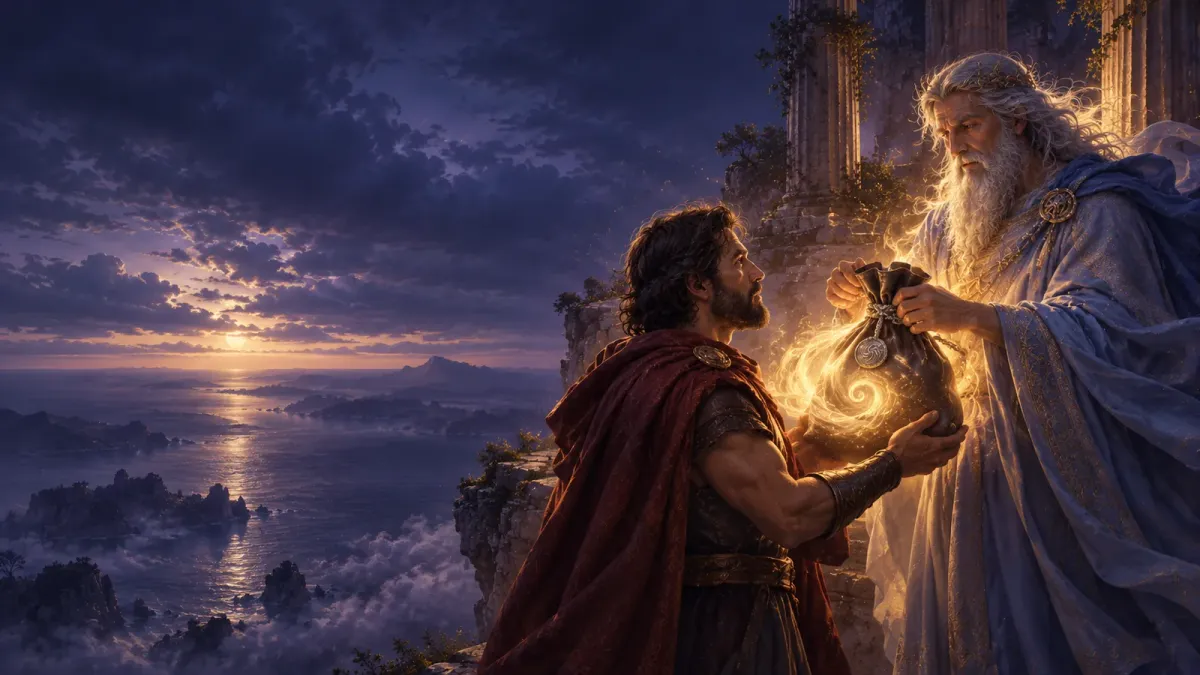
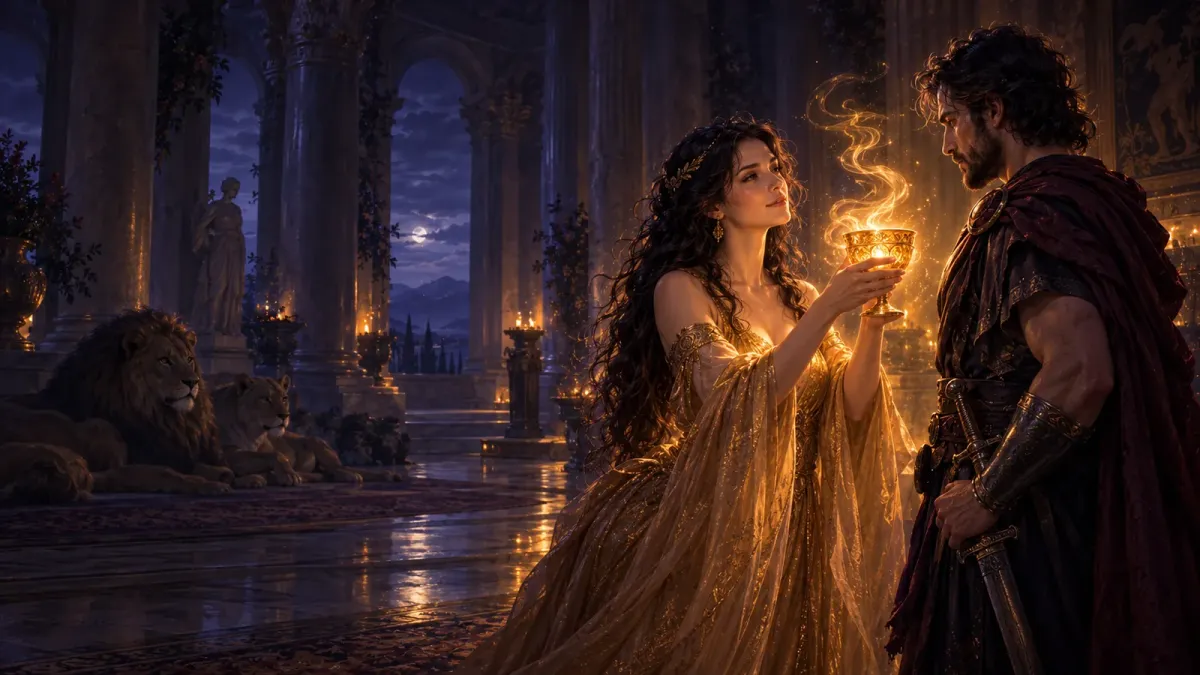
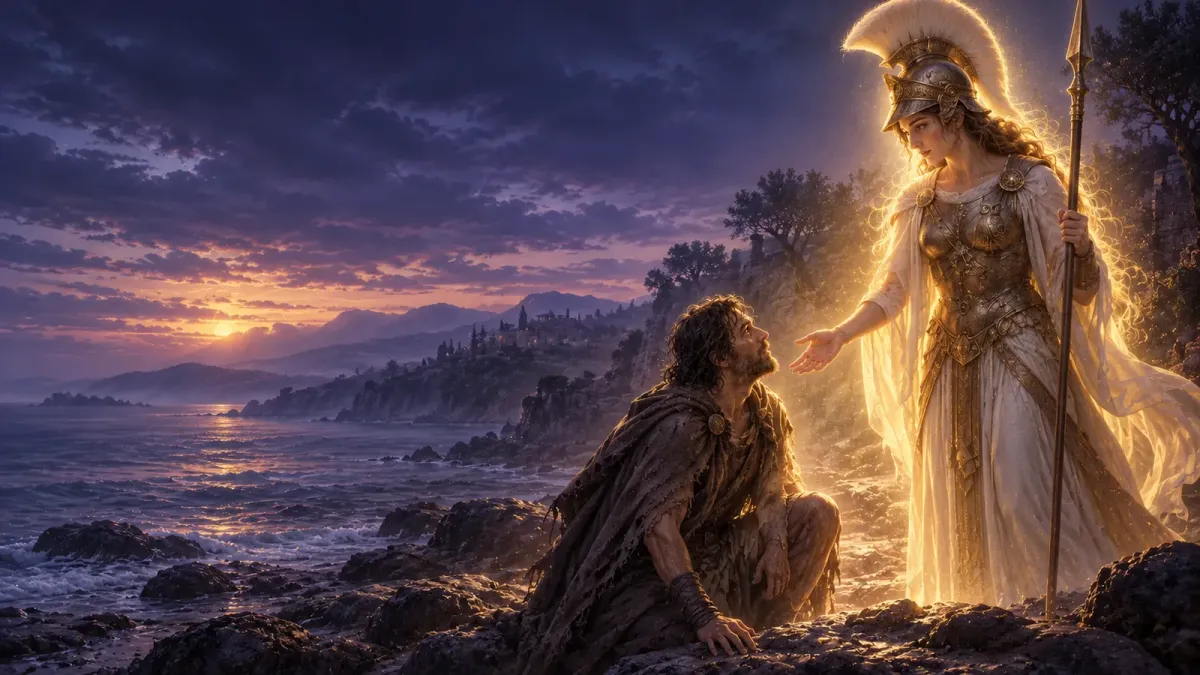
Illustrations for “The Odyssey”
5 scenes from “The Odyssey”, in story order and without the ending.
Indice di “The Odyssey” · 26 capitoli
- PREFACE TO FIRST EDITIONpagina 1
- PREFACE TO SECOND EDITIONpagina 8
- BOOK Ipagina 10
- BOOK I (continua)pagina 19
- BOOK IIpagina 28
- BOOK II (continua)pagina 36
Tutti i 26 capitoliMostra meno
- BOOK IIIpagina 44
- BOOK III (continua)pagina 53
- BOOK IVpagina 63
- BOOK IV · parte 2pagina 75
- BOOK IV · parte 3pagina 85
- BOOK Vpagina 95
- BOOK V (continua)pagina 104
- BOOK VIpagina 112
- BOOK VIIpagina 125
- BOOK VIIIpagina 139
- BOOK VIII (continua)pagina 150
- BOOK IXpagina 160
- BOOK IX (continua)pagina 173
- BOOK Xpagina 184
- BOOK X (continua)pagina 195
- BOOK XIpagina 205
- BOOK XI (continua)pagina 217
- BOOK XIIpagina 229
- BOOK XII (continua)pagina 239
- BOOK XIIIpagina 248
- BOOK XIII (continua)pagina 258
- BOOK XIVpagina 266
- BOOK XIV (continua)pagina 277
- BOOK XVpagina 286
- BOOK XV (continua)pagina 296
- BOOK XVIpagina 307
- BOOK XVI (continua)pagina 315
- BOOK XVIIpagina 323
- BOOK XVII (continua)pagina 335
- BOOK XVIIIpagina 346
- BOOK XVIII (continua)pagina 354
- BOOK XIXpagina 361
- BOOK XIX (continua)pagina 373
- BOOK XXpagina 383
- BOOK XX (continua)pagina 391
- BOOK XXIpagina 398
- BOOK XXI (continua)pagina 406
- BOOK XXIIpagina 414
- BOOK XXII (continua)pagina 424
- BOOK XXIIIpagina 433
- BOOK XXIII (continua)pagina 441
- BOOK XXIVpagina 447
- BOOK XXIV (continua)pagina 457
Valutazioni dei lettori per “The Odyssey”
Ancora nessuna valutazione. Lascia la prima.
La tua valutazione
Recensioni dei lettori su “The Odyssey”
Ancora nessuna recensione.
La storia di “The Odyssey”
Oral epic committed to writing
After centuries of oral performance by travelling bards using formulaic verse, the twenty-four books of the poem were set down in the newly adopted Greek alphabet around the late eighth or early seventh century BC.
Standardised at the Library of Alexandria
Hellenistic scholars, most notably Aristarchus of Samothrace, collated wildly differing manuscripts to establish the canonical twenty-four-book division and text that survived antiquity.
First printed edition in Florence
The scholar Demetrius Chalcondyles edited the editio princeps of Homer's works in Greek, bringing the epic into the European print era.
George Chapman's complete English verse translation
Chapman published his landmark English translation of the Odyssey in rhyming couplets, a version that centuries later inspired John Keats's famous sonnet.
Samuel Butler's plain prose rendering
Determined to strip away archaic Victorian ornamentation, Samuel Butler published 'The Odyssey, Rendered into English Prose for the Use of Those Who Cannot Read the Original', having argued in his 1897 book 'The Authoress of the Odyssey' that the poem was actually written by a young Sicilian woman.
The Authoress of the Odyssey (1897)
Nella cultura “The Odyssey”
12 adattamenti e menzioni, 1640–2020
Scena Il ritorno d'Ulisse in patria
Claudio Monteverdi composed one of the earliest modern operas in Venice, adapting the final books of the poem to dramatise Odysseus's tense reunion with Penelope.
Arte Ulysses Deriding Polyphemus
J. M. W. Turner painted Odysseus's gilded ship sailing into a blazing sunrise as the blinded Cyclops writhes on the cliff above, now a centrepiece of London's National Gallery.
Arte Ulysses and the Sirens
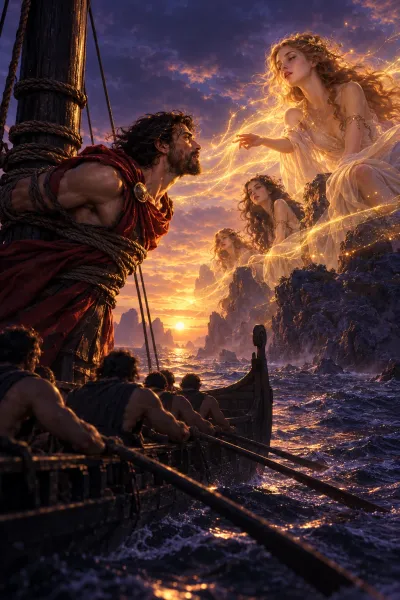
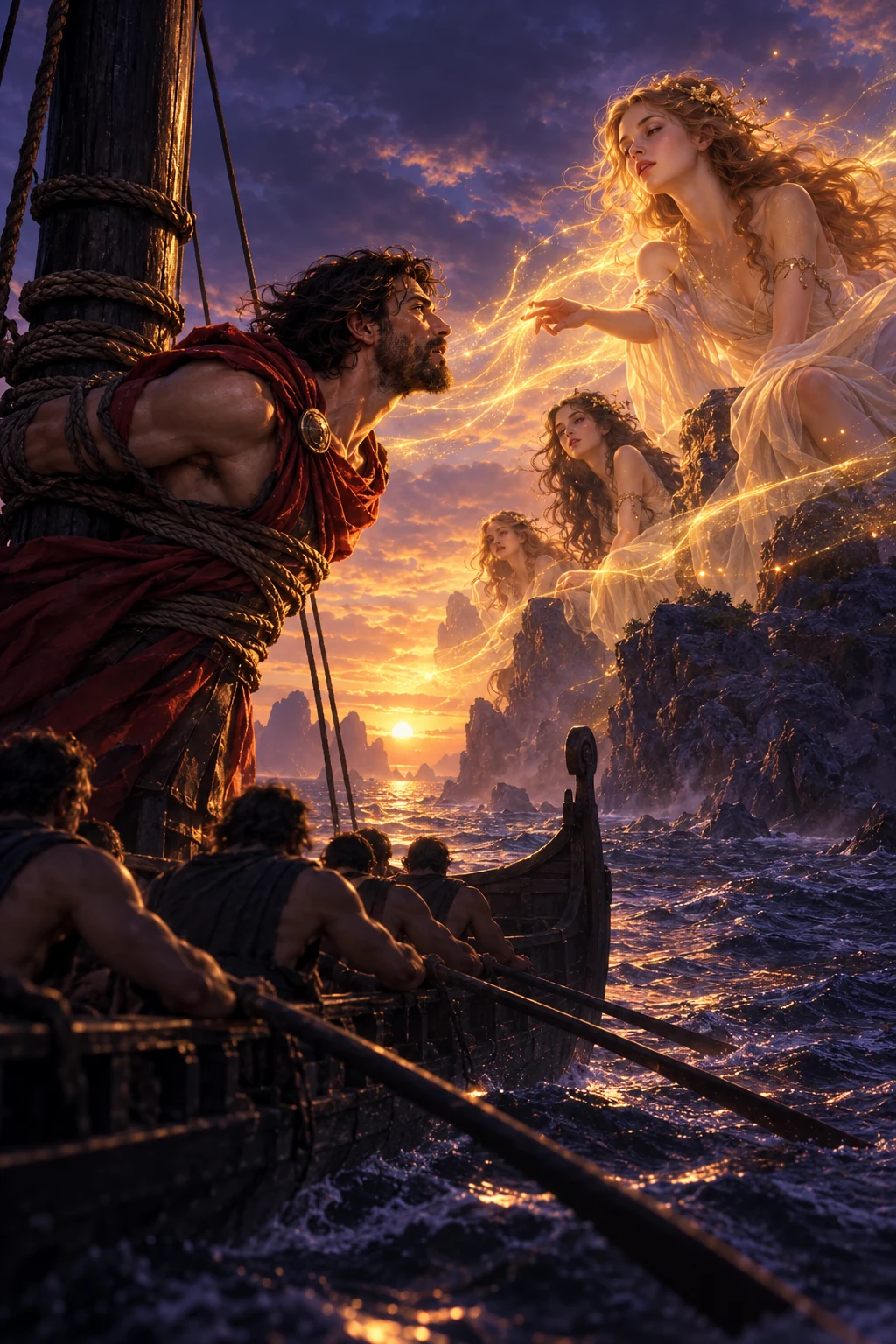
John William Waterhouse depicted Odysseus bound upright to his mast while his ears-plugged crew row past winged sea-nymphs, creating one of the most reproduced images of the poem.
Film Ulisse
Mario Camerini directed Kirk Douglas as the bearded hero and Silvana Mangano in a dual role as both Penelope and Circe in a lavish Italian sword-and-sandal epic.
Musica Tales of Brave Ulysses
The British rock band Cream released this psychedelic track inspired by Odysseus's encounters with the Sirens and Aphrodite, famous for Eric Clapton's pioneering use of the wah-wah pedal.
Serie The Odyssey
Andrei Konchalovsky directed a two-part television miniseries starring Armand Assante that brought the full sweep of the sea voyages and the slaughter of the suitors to broadcast audiences.
Film O Brother, Where Art Thou?
Joel and Ethan Coen transplanted the epic to Depression-era Mississippi, recasting Odysseus as an escaped convict, the Cyclops as a one-eyed Bible salesman, and the Sirens as river washerwomen.
Gioco Immortals Fenyx Rising
Ubisoft's open-world adventure game weaves Homer's myths into interactive puzzles, including recreation of Odysseus's legendary feat of shooting an arrow cleanly through twelve axe heads.
Nella lingua An odyssey
The Greek title 'Odysseia' entered everyday language as a common noun meaning any long, wandering, and eventful journey.
Nella lingua Between Scylla and Charybdis
Odysseus's passage through the narrow strait guarded by a six-headed monster and a deadly whirlpool gave English its classic idiom for being trapped between two equally perilous choices.
Nella lingua Siren song
The enchanting island singers who lure sailors to shipwreck on the rocks gave us the term for an appeal that is hard to resist but fatal if heeded.
Nella lingua Mentor
When Odysseus sails for Troy, he leaves his son Telemachus in the care of his trusted friend Mentor—whose shape the goddess Athena takes to guide the boy—turning the character's name into the standard word for a wise adviser.
Domande e risposte su “The Odyssey” in inglese
do I have to read the Iliad before the Odyssey
No, you can read the Odyssey on its own. Any necessary background about the Trojan War is explained by the characters themselves as they talk about the past. You only need to know that the war lasted ten years and that the Greeks won.
why is Odysseus called Ulysses in this book
This 1900 translation by Samuel Butler uses the Latinized names that were standard in British schools at the time. Odysseus is called Ulysses, Athena is Minerva, Poseidon is Neptune, and Zeus is Jove. The characters and story are exactly the same.
is the Trojan Horse in the Odyssey
The Trojan Horse is only mentioned briefly in a few songs and conversations as a past event. The main story of the Odyssey takes place ten years after the fall of Troy. Neither the Iliad nor the Odyssey tells the full story of the fall of the city as it happens.
why doesn't Penelope just marry one of the suitors
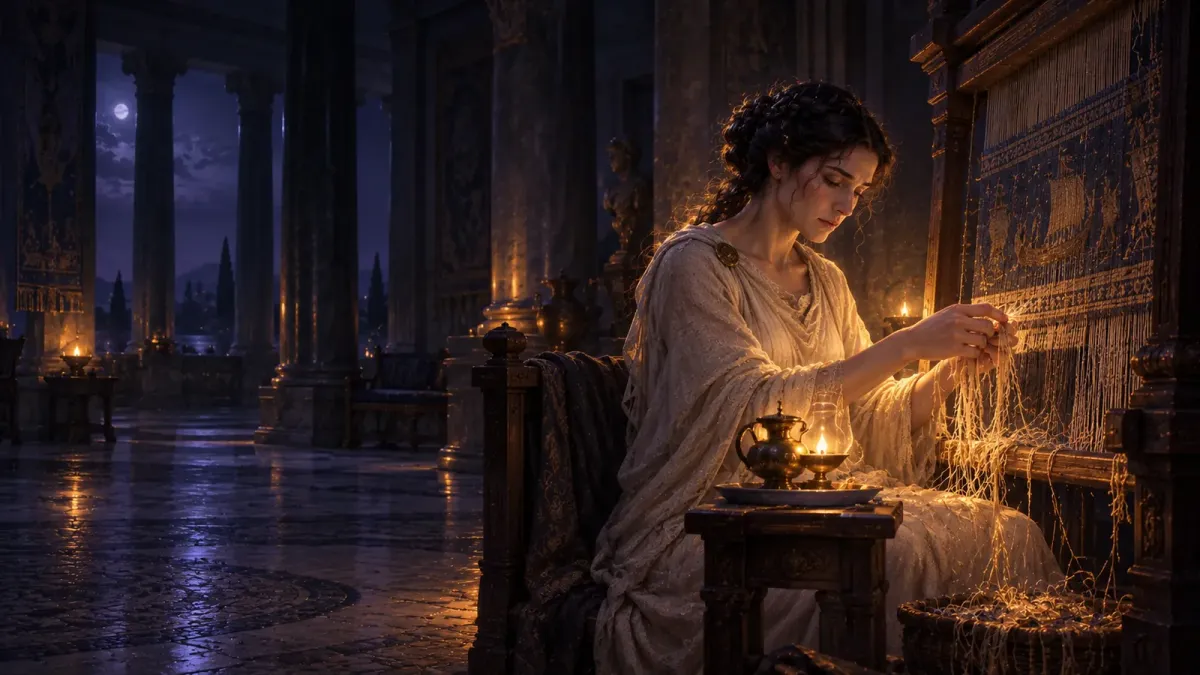
She still hopes her husband is alive and uses clever delays to avoid choosing anyone. For three years she tells the suitors she will choose a husband once she finishes weaving a burial shroud for her father-in-law, weaving by day and unpicking the threads by torchlight every night. The book opens shortly after her maids betray the trick and the suitors refuse to leave the house until she decides.
why does it take Ulysses ten years to get home
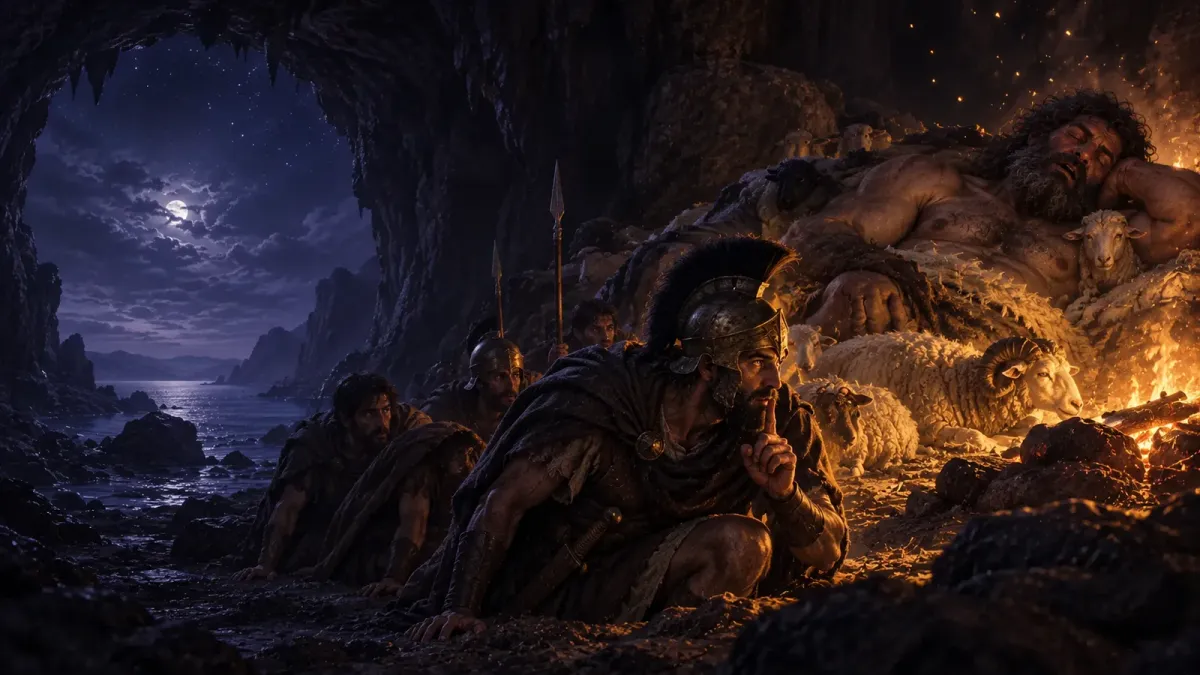
He blinds the Cyclops Polyphemus, who happens to be the son of the sea god Neptune, and Neptune punishes him by wrecking his ships and blowing him off course. For seven of those ten years, however, he is not actually sailing at all, because the nymph Calypso keeps him on her island and will not let him leave.
why doesn't Odysseus show up until Book 5
The first four books focus on Ithaca so you can see the problem at home before meeting the hero. Following his son Telemachus shows how badly the suitors are ruining the household and why Ulysses's return matters so much.
how much of the Odyssey is actually about the monsters
Only four of the twenty-four books cover the famous monsters like the Cyclops, the Sirens, and Scylla and Charybdis. Ulysses tells all of those adventures in a single long flashback during a dinner banquet in Books 9 through 12. The entire second half of the book takes place on dry land in Ithaca.
is this translation in poetry or regular sentences
This edition is written entirely in regular prose paragraphs, not poetry. The translator, Samuel Butler, believed that verse translations added too much decorative filler and wanted to tell the story in plain English for people who could not read ancient Greek.
was the Odyssey based on a real person
No, Ulysses is a legendary figure from Greek mythology, not a documented historical king. The story was passed down orally by singers for centuries before being written down around the eighth century BC, mixing Bronze Age memories with folktales about sea monsters.
In breve su “The Odyssey”
16 campi di dati editoriali e caratteristiche misurate del testo. Tutto verificabile.
- Titolo originale
- The Odyssey / Rendered into English prose for the use of those who cannot read the original · “The Odyssey”
- Autore
- Homer
- Prima pubblicazione
- -700
- Lingua originale
- Inglese
- Genere
- Classici · Avventura
- Atmosfera
- Onirico
- Temi
- Casa · Sopravvivenza · Lealtà · Vendetta
- Ambientazione
- The Mediterranean Sea and the Greek island of Ithaca · The Bronze Age, after the Trojan War
- Parole distinte
- 6.654
- Parole per frase
- 29 parole
- Livello dell’originale
- C1.8
- Versioni
- C1.8
- Lunghezza dell’originale
- 49 cap. · 128.026 parole
- Tempo di lettura
- ~11 h e 50 min
- Traduttore
- Samuel Butler
- Scarica
- EPUB
Simili cosa leggere dopo “The Odyssey”
Affini per spirito
8Lo stesso genere e lo stesso registro.
I ragazzi della ferrovia
Edith Nesbit
C1.2orig.B1
~5 h e 30 min · Classici
Il giardino segreto
Frances Hodgson Burnett
C1.2orig.B1
~7 h e 30 min · Classici

Zanna Bianca
Jack London
C2orig.B1B2
~6 h e 40 min · Avventura
Il giro del mondo in ottanta giorni
Jules Verne
C2orig.B1B2
~5 h e 50 min · Avventura
Le allegre avventure di Robin Hood
Howard Pyle
C2orig.
~10 h e 20 min · Avventura
The Story of King Arthur and his Knights
Howard Pyle
C2orig.
~10 h e 30 min · Classici
La guerra dei mondi
H. G. Wells
C2orig.B1C1
~5 h e 30 min · Fantascienza
La laguna azzurra
Henry De Vere Stacpoole
C2orig.B1B2
~5 h e 50 min · Avventura
Scheda del libro 0.2.0 · 22 ott 2026